
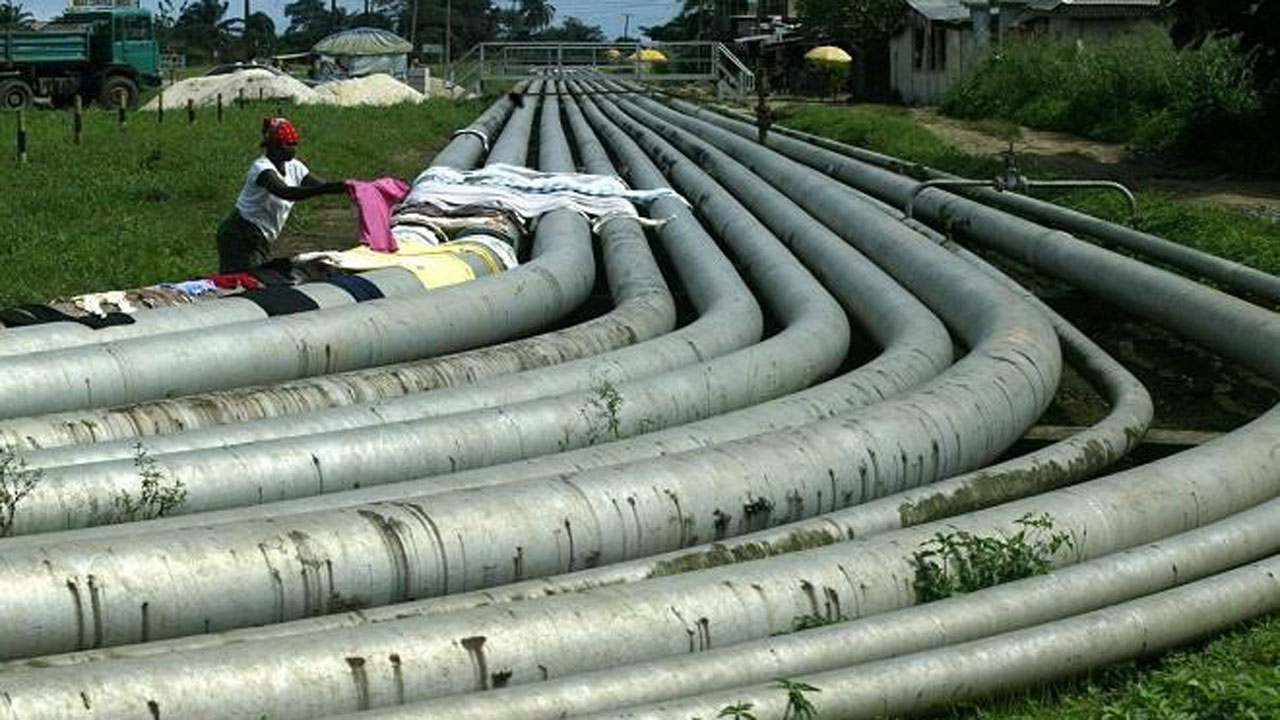
₦17.5 Trillion Pipeline Security Scandal:
Akinyemi Petitions National Assembly Through Salam and Adeola
Citizen (Dr.) Bolaji O. Akinyemi, Apostle & Nation Builder and Chairman, Board of Trustees of Project Victory Call Initiative (PVC-Naija), has submitted a formal petition to the National Assembly through Hon. Bamidele Salam, Chairman, Public Accounts Committee of the House of Representatives, and Senator Solomon Olamilekan Adeola, Chairman, Senate Committee on Appropriations.
The petition, titled:
PUBLIC PETITION AND CITIZENS’ ADVISORY NOTE
On Re-Prioritising the 2026 Federal Budget Around SEA: Security, Education & Agriculture
is addressed further to:
The President of the Senate
The Speaker, House of Representatives
Distinguished Senators and Honourable Members of the National Assembly
Dr. Akinyemi identifies himself as “a concerned citizen and stakeholder in nation-building.”
The petition is dated 4th December 2025.
0. Background: Why This Petition Cannot Wait
Akinyemi draws Parliament’s attention to a disturbing fiscal revelation:
> NNPC Ltd.’s audited financial statements reportedly show that ₦17.5 trillion was spent in just 12 months on “pipeline protection, energy-security costs and under-recovery.”
By comparison, the entire national security budget (Defence, Police, NSA, Intelligence Services, etc.) for the same period was ₦3.25 trillion.
Meaning:
> Nigeria spent more than five times its national security budget on pipeline “security”—yet insecurity worsened nationwide.
At a time of nationwide terror attacks, rising PMS prices (₦1,000–₦1,200/litre), displacement of millions, and underfunded security agencies, this spending pattern represents not only a fiscal anomaly but a moral crisis.
Akinyemi therefore submits two inseparable demands:
1. An urgent parliamentary investigation and forensic audit of the ₦17.5 trillion pipeline/energy-security expenditure.
2. A strategic re-prioritisation of the 2026 budget around SEA: Security, Education & Agriculture.
1. Why SEA Must Be Nigeria’s Development Benchmark
Akinyemi cites the following:
UN WFP projects up to 35 million Nigerians may face hunger in 2026.
Nigeria has 20.2 million out-of-school children, the highest globally.
Agriculture employs over 70% of Nigerians, yet receives 2–4% of federal budgets.
Education budgets have remained between 5–8%, far below UNESCO’s 15–20% benchmark.
Meanwhile, in a single year, ₦17.5 trillion went into opaque energy-security and pipeline-related headings.
He argues:
> “If we continue budgeting this way, we will continue reproducing insecurity, ignorance and hunger.”
SEA provides a simple test:
> A budget is not pro-people unless it significantly prioritises Security, Education and Agriculture.
2. Looking Back: Buhari Years (2015–2023)
Akinyemi reviews the Buhari era across SEA sectors:
2.1 Security – More Money, Less Safety
Security budgets peaked at ₦2.7 trillion (2022).
Yet terror, banditry, kidnappings and farmer–herder conflicts worsened.
Over 70% went to personnel, not strategy, intelligence, or mobility.
2.2 Education – Chronic Underfunding
Budget shares stayed at 5–8%, never reaching 10% in any year.
Result:
Decaying schools
Teacher fatigue
Recurring strikes
Rising out-of-school children
2.3 Agriculture – Below Maputo Commitments
Agriculture received 1.8–2%, against the AU Maputo target of 10%.
Result:
Low productivity
High food inflation
Rising hunger
Overall: high spending without structural change, and chronic neglect of education and agriculture.
3. Tinubu Years (2023–2025): Bold Macros, Weak SEA Prioritisation
Akinyemi notes that macro reforms are significant, but harsh on citizens without SEA reinforcement.
3.1 Security
Despite ₦6.57 trillion in the 2025 budget, the President declared a security emergency in November 2025—evidence that strategy, welfare and intelligence remain inadequate.
3.2 Education
2024 and 2025 allocations remain around 6–7%, below UNESCO’s 15–20% benchmark.
3.3 Agriculture
Allocations improved but remain under 5%.
WFP warns of record hunger in 2025–2026.
3.4 Subsidy Savings & FAAC
Up to ₦14 trillion may have flowed to states post subsidy removal — yet SEA outcomes remain dismal.
4. Citizen Demands for the 2026 Budget
Akinyemi proposes a People’s Development Budget, anchored on SEA.
Key requests:
4.1 Security
Rebalance to technology, intelligence, mobility.
Improve salaries, insurance and welfare.
Reform NYSC into a 2-year SEA service scheme (6 months training + 18 months national deployment).
4.2 Education
Raise allocation to 12% in 2026, rising to 15–20% by 2030.
Enforce free, compulsory basic education.
Establish an Out-of-School Children Recovery Fund.
Invest heavily in technical and vocational training.
4.3 Agriculture
Allocate 7% in 2026, rising to 10% by 2028.
Recapitalise the Bank of Agriculture with transparency.
Strengthen BOI for agro-processing.
Link youth empowerment to agriculture.
5. Financing SEA Without Debt Explosion
Proposals include:
Ring-fencing fuel subsidy savings for SEA.
Cutting wasteful recurrent spending.
Conditioning federal transfers on SEA performance.
6. What Akinyemi Asks the National Assembly To Do
1. Investigate & freeze opaque ₦17.5 trillion pipeline-related expenditures.
2. Adopt SEA benchmarks for the 2026 budget.
3. Amend key laws (NYSC, UBE Act).
4. Enforce proactive oversight with quarterly SEA hearings.
7. Closing: From Budget Lines to Human Lives
Akinyemi concludes:
> “If Nigerians are not safer, not learning, and not feeding themselves, then the budget—no matter how elegant—has failed.”
He urges Parliament to make 2026 the turning point where Nigeria stops funding scarcity and scandals and starts funding security, classrooms and farms.
Respectfully submitted,
Citizen Bolaji O. Akinyemi
Apostle & Nation Builder; Concerned Citizen of the Federal Republic of Nigeria.