
About 40 percent of university lecturers in Nigeria now sleep in their offices due to the worsening housing crisis, Professor Timothy Nubi, a specialist in estate management and sustainable housing advocate, has revealed.
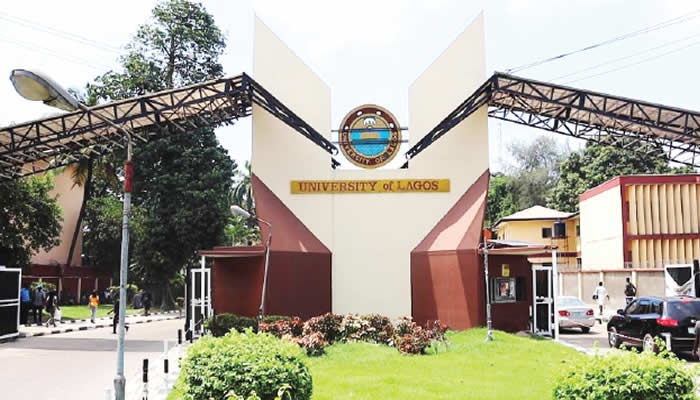
Speaking on Wednesday at the Film Screening and Conversation on Solidarity and Movement Building to Advocate for Inclusive Housing for the Urban Poor at the University of Lagos (UNILAG), Nubi highlighted the growing difficulties faced by academics in securing affordable accommodation, particularly in Lagos. The event was organised by the Heinrich Boll Foundation in collaboration with the Centre for Housing and Sustainable Development (CHSD), the African Cities Research Consortium (ACRC), and Rethinking Cities.
“The rising cost of accommodation has forced almost 40 percent of lecturers to sleep in their offices,” Nubi said. “You see them taking baths around the faculty every morning. That is the state of the country.” He noted that even modest rental units near the university, such as two-bedroom apartments in Akoka, can cost as much as ₦3.5 million per year, roughly seven months of a professor’s salary.
The professor explained that the situation reflects the broader housing pressures on Nigeria’s middle class. He added that the national housing deficit, previously estimated at five million units, is now believed to be between 17 million and 22 million units, a shortfall that continues to grow. The CHSD was established partly to produce research to guide housing policy and build capacity for policymakers.
Nubi also cited historical examples to stress the social importance of inclusive housing. He referenced the Great Fire of London, which led to the Poor Relief Act and later public housing schemes designed to integrate low-income residents into communities. “In some countries today, developers are required to allocate housing units for teachers, drivers, and other workers who cannot afford market rents. That is how mixed communities are built,” he said.
The UNILAG don urged stronger collaboration among researchers, policymakers, and civil society to develop practical solutions to Nigeria’s housing challenges. Civil society representatives at the event criticised forceful evictions in cities such as Makoko and Oworonshoki in Lagos, noting that these actions have worsened housing insecurity.
Buhle Booi, a South African housing activist, shared lessons from the “Reclaim the City” movement in Cape Town, which advocates for the recovery of public land for affordable housing. Booi stressed the need for legislative backing, transitional housing schemes, and government responsibility for displaced residents.
Temilade Sesan of the ACRC compared Lagos’ housing challenges with those in Cairo, Egypt and Nairobi, Kenya, highlighting that Nairobi’s progress stems from an Affordable Housing Act that benchmarks housing affordability using domestic workers’ minimum wage. She emphasised the need for structured, inclusive policies to address urban housing crises effectively.