

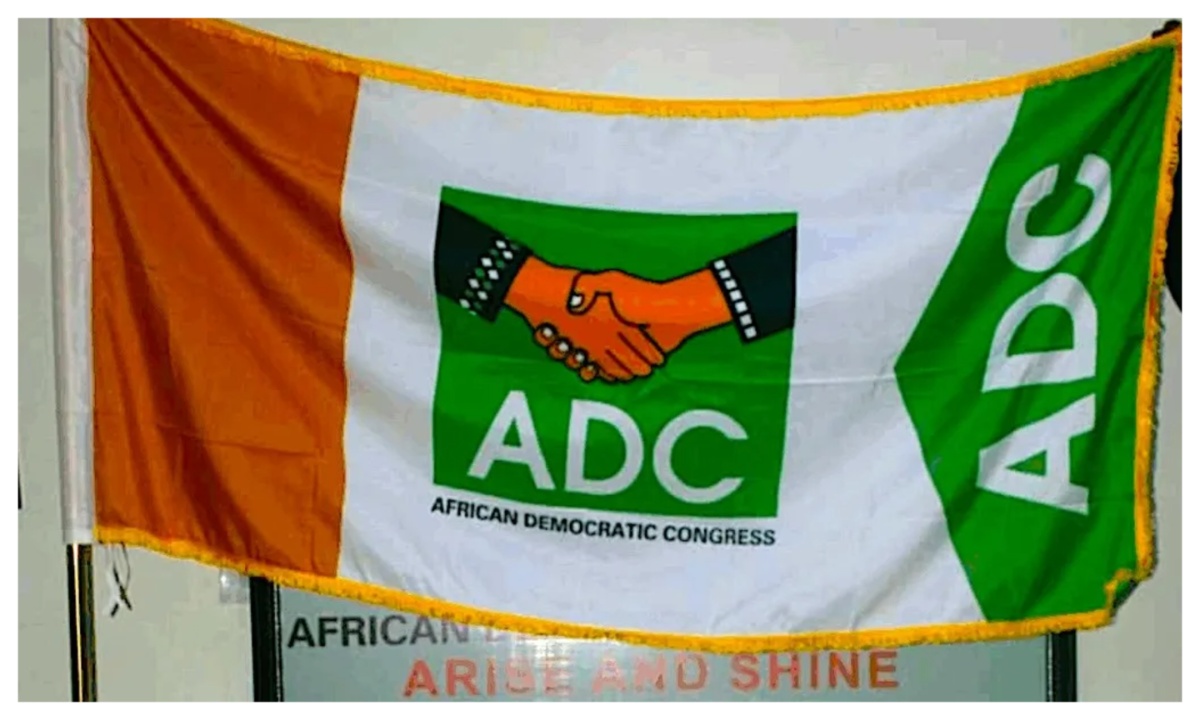
The African Democratic Congress (ADC) has strongly criticised the Supreme Court over its recent ruling affirming the President’s power to suspend elected governors and state assemblies during a state of emergency, warning that the judgment poses a grave threat to Nigeria’s federalism and democratic order.
In a statement issued on Tuesday and signed by its National Publicity Secretary, Mallam Bolaji Abdullahi, the party described the decision as one that effectively creates a “constitutional tyrant” by concentrating excessive powers in the Presidency.
According to the ADC, although the ruling appears “academic” on the surface, its implications are far-reaching and dangerous.
“Although the ruling appears innocuously academic, it represents a potential inflection point in our democratic development, one that may alter the nature of our democracy forever,” Abdullahi said.
The party noted that the apex court held that once a state of emergency is declared, the President has the discretion to determine the measures required to restore peace and security, including taking what it termed “extraordinary measures.”
ADC argued that such wide discretion could be easily abused.
“The obvious implication of this position is that the President, or his agents, could contrive a security situation in any state whose governor is deemed ‘unfriendly’ and proceed to suspend both the Governor and the State House of Assembly,” the statement read.
The opposition party said the judgment contradicts the constitutional principle that no arm or tier of government is superior to another, insisting that its practical effect places state governments firmly under presidential control.
“The clear effect of the ruling grants the President firm control over the political conduct of state governors. This is an extremely dangerous threat to Nigeria’s federalism and democracy,” Abdullahi stated.
ADC also questioned the safeguards cited by the Supreme Court to prevent abuse of presidential powers, including proportionality, legislative oversight, and judicial review.
“When confronted with a President willing to do anything to retain power, proportionality is clearly out of the question,” Abdullahi said, alleging that the current administration has shown intolerance toward opposition parties.
On legislative oversight, the party claimed that the National Assembly has been weakened.
“With the President’s effective conquest of the National Assembly, and a legislature that has shamefully reduced itself to a mere appendage of the Presidency, legislative oversight is equally implausible,” the statement added.
The party further argued that judicial review has been compromised by the ruling itself.
“This very judgment has settled any doubt as to the nature of review that is now possible, when the highest court prioritises the letter of the law over its spirit,” Abdullahi said.
ADC warned that the country is sliding toward what it described as “constitutional tyranny,” a form of autocracy achieved through legal mechanisms rather than military coups.
“Constitutional tyranny does not always arrive through military coups. It often advances gradually, as rulers steadily erode democratic norms and institutions,” the party cautioned.
The statement concluded that recent developments have shown that neither the legislature nor the judiciary can be relied upon to halt what it described as Nigeria’s democratic decline.