

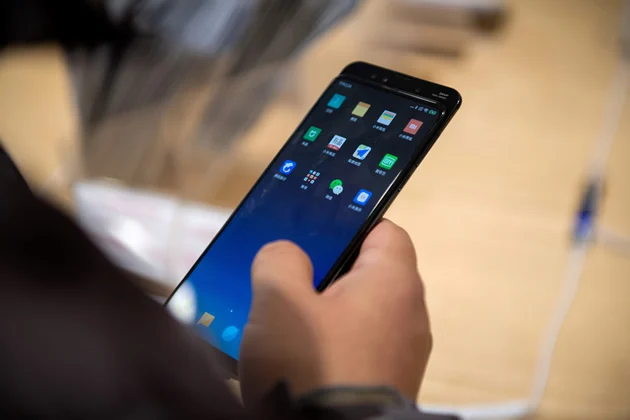
Rising memory chip costs driven by AI data centre demand are set to push up Android smartphone prices in 2026, while low- and mid-range brands face the greatest margin pressure, and global shipments are expected to decline.
Smartphone prices are expected to rise in 2026 as device manufacturers, especially Android brands, face sharply higher costs for critical components, industry analysts warn. The surge is being driven by a tightening of memory chip supplies, a key ingredient in smartphones, as production shifts to support high-demand AI data centres.
According to research from the International Data Corporation, demand for memory used in enterprise AI servers, such as high-bandwidth and advanced DDR5 modules, is consuming a growing share of global production capacity. As a result, fewer chips are available for consumer devices, forcing manufacturers to adjust their pricing and product strategies.
“The memory market is at an unprecedented inflection point, with demand materially outpacing supply. For an industry that has long been characterised by boom-and-bust cycles, this time is different,” IDC said in its December research.
“The rapid expansion of AI infrastructure and workloads is exerting significant pressure on the memory ecosystem. These AI workloads require large amounts of memory, and the shortage, in part, is driven by a reallocation of manufacturing capacity away from consumer electronics toward high-margin memory solutions to support AI.”
IDC said that for decades, the production of DRAM and NAND Flash for smartphones and PCs had been the primary driver of memory production, but that the dynamic had now inverted. The research firm added that the strong demand for high-bandwidth memory by hyperscalers such as Microsoft, Google, Meta, and Amazon had forced the three largest memory manufacturers, Samsung Electronics, SK Hynix, and Micron Technology, to redirect their limited cleanroom space and capital expenditure toward higher-margin, enterprise-grade components.
According to Intel Market Research, leading players like Samsung, SK Hynix, and Micron are investing heavily in advanced node technologies to meet the growing demand for high-performance memory in next-generation data centres.
Memory module costs currently account for approximately 15-20 per cent of total server expenses, making budget forecasting difficult for large-scale deployments.
“Hyperscale operators now account for over 37 per cent of total Dynamic Random-Access Memory consumption, a figure projected to grow further as enterprises increasingly migrate workloads to the cloud. With cloud service providers expanding their infrastructure footprints globally, the need for server-grade memory solutions like RDIMM and LRDIMM has intensified,” it said in its Semiconductor and Electronics report.
Intel Market Research said that modern data centres now allocate nearly 40 per cent of their hardware budgets to memory subsystems, reflecting the critical role of DRAM in performance optimisation. The firm added that leading cloud providers had begun deploying servers with memory capacities exceeding 2TB per node to support complex computational tasks. It noted that this trend showed no signs of slowing as emerging technologies, such as generative AI, continue to redefine infrastructure requirements.
Memory now accounts for a significant portion of a smartphone’s bill of materials. IDC estimates it represents 15–20 per cent of the cost of mid-range devices and 10–15 per cent for high-end models. With component costs rising, manufacturers may have no choice but to raise retail prices, reduce specifications, or both.
The impact is expected to vary across the market. Low- and mid-range Android brands, including Xiaomi, Oppo, Vivo, Realme, TCL and Transsion, operate on tight margins and are likely to pass a substantial portion of the higher costs onto consumers. Meanwhile, companies such as Apple and Samsung are better insulated due to long-term supply agreements and financial reserves, though they may limit hardware upgrades in upcoming models to manage costs.
“In the high end of the market, Apple and Samsung face pressure but are structurally hedged. Their cash reserves and long-term supply agreements allow them to secure memory supply 12-24 months in advance. On the other hand, new flagship models in 2026 will likely have no RAM upgrades, sticking to 12GB for Pro models rather than increasing to 16GB. It is also unlikely that current models will see the same price erosion seen after the introduction of the latest model,” the report stated.
IDC projects that average selling prices for smartphones could increase between three per cent and five per cent in a moderate scenario and between six per cent and eight per cent in a more severe scenario. Rising prices are also expected to lengthen replacement cycles, particularly in markets where consumers have limited purchasing power, while in more mature markets, financing and instalment options may help absorb the increases.
Despite the expected pressures on prices and volumes in 2026, IDC notes that shipments in the final quarter of 2025 may temporarily outperform earlier projections, as vendors stocked inventory ahead of anticipated cost increases.
The research firm cautioned that the combination of higher component costs and shifting production priorities could reshape the smartphone market over the coming year, making devices more expensive and slowing the pace of hardware upgrades that consumers have grown accustomed to.
Meanwhile, Counterpoint Research has projected that global smartphone shipments will fall by 2.1 per cent in 2026, as rising component costs are expected to weigh on consumer demand.
The firm said this represents a 2.6 percentage point downward adjustment to its earlier 2026 forecast, with Chinese manufacturers such as HONOUR, OPPO, and Vivo experiencing the largest deviations from prior estimates.
“What we are seeing now is the low end of the market (below $200) being impacted most severely, with BoM (bill of materials) costs increasing by 20 per cent to 30 per cent since the beginning of the year,” said Research Director MS Hwang. “The market’s mid- and high-end segments have seen 10 per cent to 15 per cent price increases.”
According to Counterpoint Research’s latest ‘Memory Solutions for GenAI’, memory prices could rise another 40 per cent through Q2 2026, resulting in BoM costs increasing anywhere between 8 per cent and over 15 per cent above current elevated levels.
“In the lower price bands, steep price increases on smartphones are not sustainable,” said Senior Analyst Yang Wang. “And if cost pass-through isn’t possible, OEMs will start pruning parts of their portfolios; that’s actually what we are starting to see with significantly reduced volumes of low-end SKUs.”