
They call it famine in textbooks; they call it a blockade in official communiqués. But for those who lived through Biafra, words collapse.
Picture a mother boiling weeds, peeling cassava bark, or roasting lizards to trick her children’s bodies into feeling fed. Picture a father digging shallow graves for children who never learned to write their names. Picture a boy clutching a tin of milk dropped from a relief plane, so rare that he hides it in his pocket, unsure whether to drink it or save it for a dying sibling. These were the daily privations of a war that turned hunger into a weapon and childhood into an open wound.
The Nigerian blockade created one of the worst humanitarian disasters of the 20th century. At its peak, as many as 3,000 to 5,000 people died daily of starvation. Children’s bodies swelled with kwashiorkor, their hair turned brittle and rust-colored. Relief planes came in the night, brave and desperate, but their cargoes were too little, too late, and too politicized. The world was shocked by photographs; the children were left with memories that psychiatry today would call textbook post-traumatic stress.
When the guns fell silent, Nigeria proclaimed the “Three Rs” — Reconstruction, Rehabilitation, and Reconciliation. But only fragments were pursued, the rest were swallowed by the usual cankerworm of corrupt bureaucracy, tribalism and the near absence of empathy.
Some properties may have been returned. Some bank accounts may also have been restored. But how do you rehabilitate the dignity of those who buried siblings with their bare hands? How do you restore a childhood stolen by hunger? Survivors were told to fold horror into silence, to resume “normal life,” as if three years of nightmare could be reset by decree.
It is not enough to speak of material restitution. Property and bank balances cannot mend the interior architecture of trauma. The children who saw their friends and family starve, who learned famine before they learned play, are now adults. They are our teachers, traders, doctors, and parents. They know that demanding every property back may be unrealistic in today’s political climate.
But what they ask for is not impossible: inclusion, a level playing field, and empathy from compatriots willing to understand where these “children of war” have come from.
This is not sentimentality.
Research on post-conflict societies shows that untreated trauma becomes a kind of inheritance — shaping how people raise children, build trust, and engage in community life. Left unaddressed, it corrodes the social fabric, breeding suspicion, alienation, and fragility. To deny empathy to survivors and their descendants is not just cruel; it undermines nation-building itself.
So what does justice look like, half a century later?
Perhaps not in endless restitution battles. Justice begins with recognition. With education that teaches the war as lived experience, not sterile chronology. With memorials that say plainly: this happened here, to our people. With health systems that treat trauma as seriously as malaria. With compatriots who do not dismiss the war as a closed chapter, but accept it as the living texture of our national story.
Compassion is not weakness. It is infrastructure. It is the foundation of a durable nation.
Nigeria cannot build a stable future while refusing to see the scars of its past.
The war ended decades ago, but its children walk among us. They are not asking us to undo the past. They are asking us to see it — and to see them.
The children of war and the new generation, who most urgently demand
Inclusion Now or Exclusion Forever,
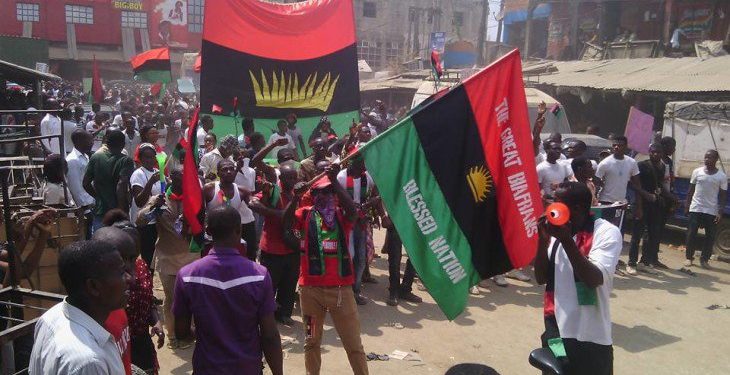
they constitute movements like the Obidient movement which have sprung up: a vast tent of the marginalized, the betrayed, and especially Gen Z — a generation told for too long they are “leaders of tomorrow,” while their tomorrow is systematically being mortgaged today.
The call for empathy is no longer just about the past. It is about Nigeria’s future. It is about political Inclusion today!
by: Chidiejikeme@yahoo.com