
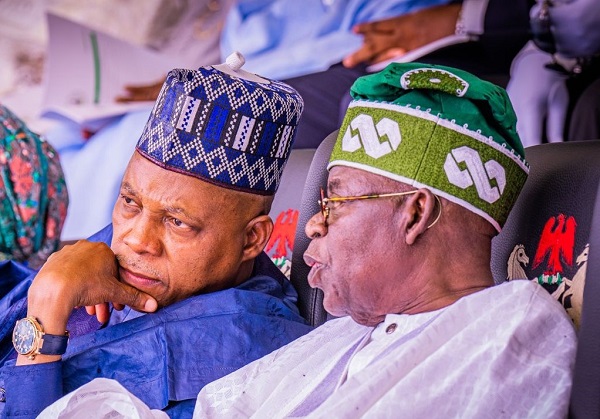
As Nigeria gears up for the 2027 elections, President Bola Tinubu is under mounting pressure both at home and abroad to abandon the 2023 “same-faith” ticket and instead choose a Muslim-Christian pairing for his re-election bid.
Media reports say that high-level interests – especially in Washington – are urging the All Progressives Congress (APC) to field a balanced ticket. Advocates of this change argue it would allay concerns about national inclusion and counter allegations of Christian persecution.
International Influence and Security Context:
U.S. officials have signaled that ticket composition is now a strategic concern. President Donald Trump recently reaffirmed Nigeria’s status as a “Country of Particular Concern” on religious freedom and warned that “Christianity is facing an existential threat” in Nigeria. This rhetoric was accompanied by U.S. military strikes on ISWAP insurgent camps in Sokoto on Christmas Day 2025 – actions that many see as part of a harder U.S. line on Nigeria. Analysts say these moves add pressure on Tinubu’s team to address Christian disenchantment by considering a Christian vice-presidential nominee.
Potential Christian Running Mates
In response, a number of prominent Northern Christians are now being floated as running-mate candidates. Reports indicate the short list includes Catholic Bishop Matthew Hassan Kukah of Sokoto, who is widely respected for his moral authority and forthright views.
Kukah tops the list of names mentioned, though questions linger about whether the Vatican would permit a bishop to enter partisan politics. Also under consideration are Lt. Gen. Christopher Musa (Kaduna State), the current Defence Minister and former Chief of Defence Staff, prized for his security credentials and northern Christian background; and Hon. Yakubu Dogara of Bauchi, the former Speaker of the House of Representatives with deep legislative experience.
Beyond those three, media and social chatter have even speculated on other Northern Christian figures. These include former Kaduna senator Shehu Sani (a noted human-rights activist) and Dr. Hakeem Baba-Ahmed (a former Tinubu political adviser and NEF spokesperson), whose names have surfaced informally, though none have been confirmed by officials. [Note: Senator Ibrahim Mantu, a former Senate deputy president, has also been mentioned in some discussions – though he is deceased (August 2021) and could not in practice be a candidate.]
Kashim Shettima’s Future and Incentives
With these new names emerging, Vice President Kashim Shettima’s position is uncertain. Sources say the government is exploring an “exit package” to ease a transition if Shettima is replaced. Reported options include appointing him as Nigeria’s Permanent Representative to the United Nations or giving him the party’s backing for a 2031 presidential bid. However, U.S. diplomats have hinted they want the 2031 presidency to rotate to the South-East as part of national reconciliation. That would conflict with any promise of a future northern Muslim ticket, making any deal to prop up Shettima politically complicated.
APC Internal Debate and Northern Stakes
Within the APC, the ticket question has become a contentious issue. Most APC governors and conservative party factions are said to favor the status quo, warning that dropping Shettima could alienate core supporters. An APC North-Central forum even cautioned that ditching the Muslim-Muslim ticket could cost Tinubu as much as 80% of the northern Muslim vote. Party insiders say some had earlier proposed replacing Shettima with other prominent Muslims (such as ex-Zamfara Governor Abdulaziz Yari or ex-NSA Nuhu Ribadu) before U.S. pressure emerged.
Regional and religious considerations are at the forefront. The Northern Ethnic Nationality Forum has pointed out that the APC’s all-Muslim ticket cost it votes in the Middle Belt in 2023 (in Plateau, Nasarawa and even Abuja) and warned that repeating the approach could further erode support. On the other side, APC loyalists note that key Northern Christians already hold high offices (for example, the Secretary to the Government and the APC National Chairman are from the Middle Belt) and insist Tinubu can still win there. A party statement even boasted that with such Christian leaders in his administration, Tinubu should command “90% of the votes from the North-Central” and urged him to keep Shettima on the ticket.
For Tinubu’s campaign team, the decision thus remains a delicate balancing act: preserve the coalition that delivered victory in 2023, while responding to mounting calls (domestic and international) for religious and regional inclusiveness. How the APC resolves this debate – whether by moving ahead with a Christian running mate or standing by its current ticket – will be a major storyline in the run-up to 2027.