
Fresh diplomatic tensions may be brewing between Washington and Abuja following the introduction of the Nigeria Religious Freedom and Accountability Act of 2026, a sweeping U.S. congressional bill that not only documents alleged religious persecution in Nigeria but also names specific Nigerian individuals and organizations for sanctions review.
Njenje Media News can authoritatively report that the United States House of Representatives has introduced a far-reaching bill that directly names prominent Nigerian political figures, organizations, and religious case subjects in what could become a major diplomatic flashpoint between Washington and Abuja.
Titled the Nigeria Religious Freedom and Accountability Act of 2026, the legislation was introduced during the 119th U.S. Congress and calls for a comprehensive federal report on religious persecution and mass atrocities in Nigeria. Beyond general findings, the bill specifically identifies certain Nigerians and organizations for sanctions review and policy scrutiny.
Kwankwaso, Miyetti Allah Listed for Sanctions Review
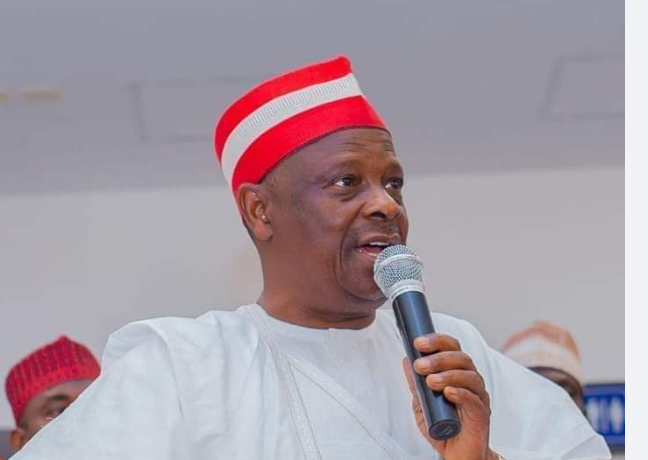
Among those explicitly named is Rabiu Musa Kwankwaso, former Governor of Kano State. The bill recommends that the U.S. Departments of State and Treasury evaluate him for possible sanctions under the Global Magnitsky Human Rights Accountability Act, which allows visa bans and asset freezes for individuals linked to severe human rights violations.
Also listed for sanctions consideration are:
• Miyetti Allah Cattle Breeders Association of Nigeria (MACBAN)
• Miyetti Allah Kautal Hore
The legislation urges U.S. authorities to investigate whether these organizations, or affiliated networks, have supported or enabled Fulani-ethnic militias allegedly responsible for mass violence. Lawmakers further recommend assessing whether certain militias meet the statutory threshold for designation as Foreign Terrorist Organizations (FTOs) under U.S. law.
While inclusion in the bill does not automatically trigger sanctions, it formally places the named entities under congressional scrutiny.
High-Profile Nigerian Cases Cited
The bill also references several Nigerians as case examples to support its broader findings on religious persecution and blasphemy law enforcement:
• Sunday Jackson, a Christian farmer sentenced to death in 2021 after killing an armed attacker in what supporters described as self-defense. The document notes he was pardoned in December 2025.
• Rhoda Jatau, cited as having faced imprisonment over alleged blasphemy.
• Yahaya Sharif-Aminu, a Sufi musician detained for years in Kano State and appealing a death sentence tied to blasphemy allegations.
• Deborah Yakubu, referenced as a victim of mob violence connected to blasphemy accusations.
Religious leaders named include:
• Father Sylvester Okechukwu, reportedly killed in 2025.
• Father Remigius Iyhula, who testified before the U.S. Congress in March 2025.
• Bishop Wilfred Anagbe, who testified in November 2025.
The bill states that clergy who testified internationally allegedly faced intimidation or harassment afterward.
According to legislative documents reviewed by Njenje Media News, the Act estimates that between 50,000 and 125,000 Christians were killed between 2009 and 2025, with more than 19,000 churches attacked or destroyed and millions internally displaced. It also criticizes the continued enforcement of blasphemy laws in 12 northern Nigerian states that carry capital punishment.
Diplomatic Implications
The proposed law reaffirms Nigeria’s designation as a Country of Particular Concern (CPC) under U.S. religious freedom statutes and mandates that the U.S. Secretary of State submit a detailed compliance report within 90 days of enactment. It further recommends conditioning security cooperation and foreign assistance on measurable improvements in the protection of religious minorities and prosecution of perpetrators.
Policy analysts say the direct naming of political actors and civic organizations signals a significant escalation in congressional engagement with Nigeria’s internal security and human rights record.
Debate on the bill is expected to continue at committee level in the coming weeks. Responses from Nigerian officials and named entities are also anticipated.
This remains a developing diplomatic story, and Njenje Media News will continue to provide authoritative updates as reactions unfold in Abuja and Washington.