
Africa’s richest man, Alhaji Aliko Dangote, has broken the code of silence among Nigeria’s elite class. Dangote’s activism contrasts with the silent code of Nigerian elites, known only to mount measured opposition during political seasons. The latest move by Dangote has now placed a far higher demand on Nigeria’s elites, whose duty it is to provide direction for the country through activism clothed in elites’ consensus. Traditionally, the pattern of Nigerian elites’ behavior is one of camaraderie or “we-we,” in which the elites themselves, who should challenge abnormalities because they have the means and personal recognition to make these demands, are cold and silent in the face of troubling developments. This has further escalated the leadership crisis across all levels of government and security challenges in all parts of the country. The culture of silence has made the country increasingly more chaotic, corrupt, and hopeless. Nigerian elites have not lived up to any expectation. They are simply there, as if totally insulated from the ills of society, but they are not. Worst still, their attitude paints a picture of a group unconcerned about the future of the empires they have spent their lives building. Perhaps, ours are elites who are still operating at the level of mere survival and patronage. Otherwise, they ought to be worried about what Nigeria would become in the near future and must be all out to arrest the situation and address it fully.
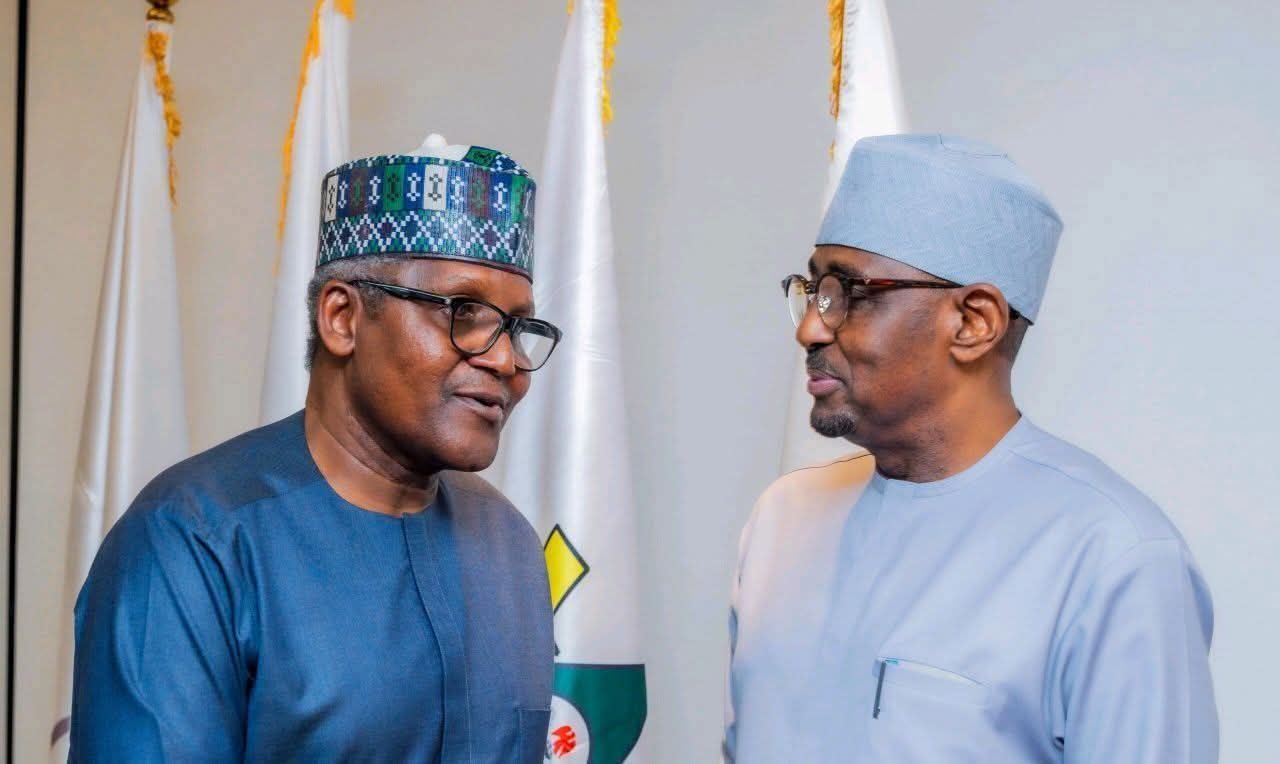
The recent public accusation of corruption against Engr. Farouk Ahmed, the CEO of NMDPRA, by Dangote, followed up with a formal petition to the authorities to probe Engr. Farouk is something Nigerian elites must learn from and decide if they want Nigeria to succeed or fall apart. Countries are not built on immaculate intentions. They are built with personal interests that align more with the common good. The significance of Dangote’s accusation in person against Farouk resulted in his resignation within two days. To distill the import of Dangote’s action, we must observe that Africa’s richest man was not sentimental about calling out Farouk, both of whom are from the same part of the country. Dangote’s bold accusation has not only caused a leadership change, but it has also caused a stir within the organization, which must put the incoming head of the agency on his toes. No matter how it turns out, there is a higher probability that the new CEO of NMDPRA would likely be more transparent and accountable in all his dealings because he is already aware that eyes are on him.
On the other hand, let us be very clear that Dangote’s action was not born out of charity or altruistic virtues towards Nigeria. Farouk’s dispositions were also not particularly in Nigeria’s interest, more than they were for his own interests. Dangote’s activism was borne out of a sense of personal loss and a direct threat to his private business, which he had tried to manage for a long time but could not. The fact is that when the system is not working, or has no regard for due process and public interest at all, it is elites who have business that collapse under the weight of the rascality of public officials. The elites are the ones who pay the higher price. They struggle to leave a legacy that outlive them and struggle to conduct their businesses as expected of a responsible organization in a country with specific economic challenges. When a government is not governing with the people at the center of public policies and government actions, it is the elites who are most affected because not only that their investments are targeted as collateral damage, they are equally targeted by the masses and they have to go the extra mile to ensure they are safe with their families amidst the chaos birthed by poor governance and consequences of poor choices by the government. Some of the elites are even left to shield part of the government’s responsibilities as a natural precursor of the huge gap left unattended. It must also be noted that through some of these charities and aid support from these business owners and captains of industry, they are trying to protect their investments and business interests, not necessarily interested in the public good. The import is that Nigerian elites can go to any length to protect their investments and interests, except face the root cause of the problem, which is corrupt government officials who are known to them.
Nigeria’s problems at the federal, state, and local government levels are not abstract. They are not unknown. However, Nigerian elites, for some strange reasons that may not be unrelated to patronage, choose to remain silent, thereby exacerbating the decay. It is statesmen who build a country, and this might not be out of altruism, but of a desire to protect their own legacy and investments. Public interest is not an abstract thing, but a combination of private interests. Dangote’s conglomerate, employing thousands of people, is a private business that is of Nigeria’s public interest. This puts Dangote’s personal interest higher and above that of Farouk. Stakeholders must rise and hold the system accountable, and this is a present challenge. The problem of Nigeria is within and can best be addressed from within.
At a certain point, what matters is what one is leaving behind or what they will be remembered for. Nigerian elites, stakeholders, and statesmen who remain silent in the face of daunting challenges plaguing the country or their states must realize that, at some point, they have nothing to lose and must act for the greater common good, in their own interests.