
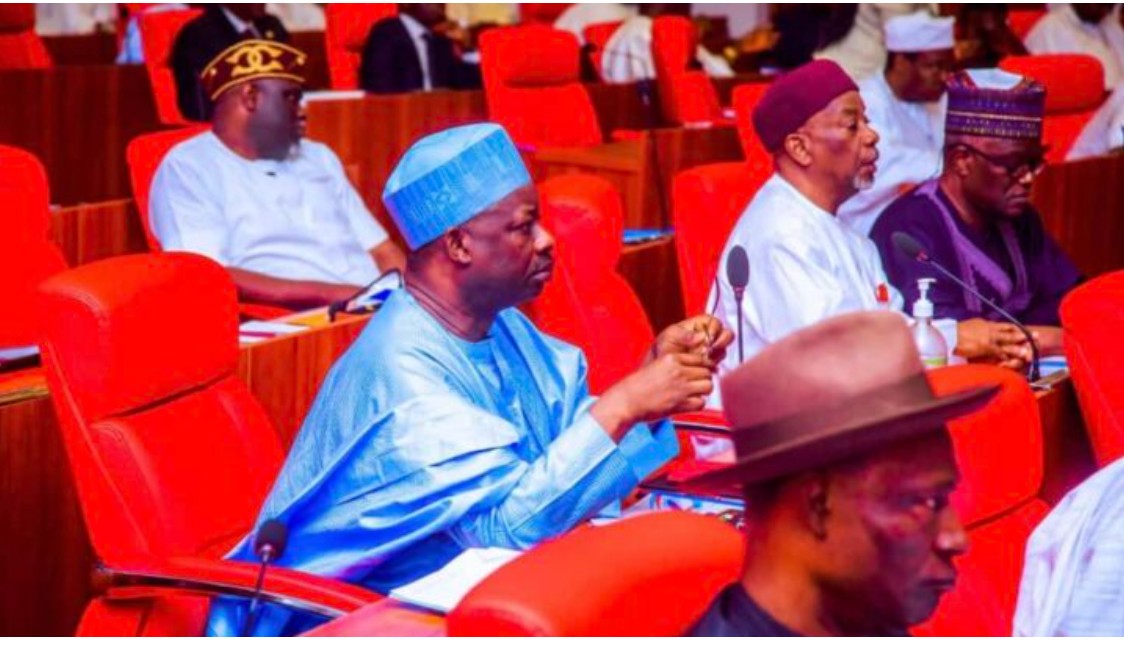
The Nigerian Bulk Electricity Trading (NBET) Plc informed the Senate that just N60 million of the N858 billion allocated in the 2025 capital budget to cover electricity tariff shortfalls was actually released. Johnson Akinnawo, NBET’s acting managing director, made the disclosure on Thursday during the agency’s 2025 budget performance review and defence of its 2026 budget proposal before the Senate Committee on Finance, chaired by Senator Sani Musa of Niger East.
Akinnawo highlighted that persistent underfunding and tariffs that do not reflect actual costs continue to undermine Nigeria’s electricity market. He explained that while N858 billion was appropriated to address the gap between generation costs and allowed tariffs, as well as outstanding obligations to generation companies (GenCos), only a tiny fraction—N60 million—was released. Procurement constraints further limited the utilisation of these funds.
“The gap between generation costs and allowed tariffs is substantial, and without government intervention, the market cannot remain stable,” Akinnawo said, warning that the non-release of the bulk of the funds has worsened NBET’s debt exposure to GenCos. NBET was established to buy electricity from GenCos and sell to distribution companies (DisCos), guaranteeing payments to power producers.
Lawmakers noted that the agency’s inadequate capitalisation has restricted its ability to stabilise the electricity sector effectively. Senator Musa expressed concern over the growing financial strain in the power sector and suggested that the committee might consider reviewing the tariff regime or exploring alternative funding solutions.
In response, Akinnawo confirmed that insufficient capital remains a major challenge and said NBET has engaged the Budget Office and Ministry of Finance over the non-release of appropriated funds. He stressed that without adequate support, NBET’s ability to stabilise the electricity market would remain limited, affecting power supply nationwide.
Senator Musa advised NBET to submit a detailed proposal outlining its funding needs and strategic plan to tackle structural issues in the sector. The committee is expected to review the submission as part of its assessment of the 2026 budget proposal.