
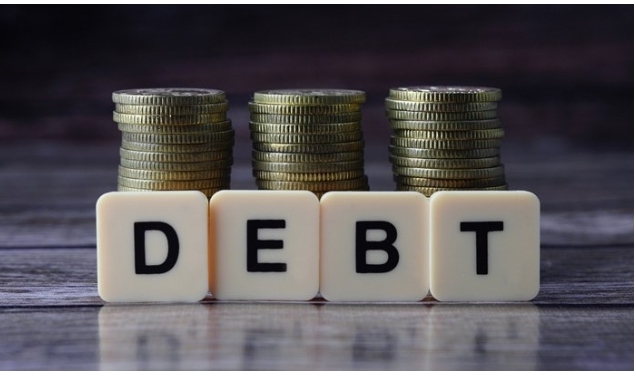
States across Nigeria are ramping up borrowing despite a dramatic surge in allocations from the Federation Account Allocation Committee (FAAC), which has risen by 161 percent over the past three years. The trend has raised concerns about fiscal sustainability and the slow pace of internally generated revenue (IGR) growth.
New data from the National Bureau of Statistics (NBS) indicate a reversal of last year’s fiscal consolidation, which had seen total state domestic debt fall from N5.8 trillion in December 2023 to N3.8 trillion in March 2025. By September 2025, aggregate domestic debt for Nigeria’s 36 states and the FCT had climbed back to N4 trillion.
States with the highest domestic debt include Lagos (N1.04 trillion), Rivers (N381 billion), Delta (N247 billion), Enugu (N194.7 billion), and Ogun (N168 billion). On the external front, states’ debt increased from $4.35 billion to $4.81 billion as of June 2025, with Lagos again leading at $1.049 billion, followed by Kaduna ($658 million), Edo ($337 million), Ogun ($214 million), and Cross River ($201 million).
The borrowing surge comes amid steadily rising federal allocations. FAAC disbursements to states grew from N2.80 trillion in 2022 to N3.53 trillion in 2023, N5.27 trillion in 2024, and N7.315 trillion in 2025—a 161 percent increase over three years.
Economist Ishaq Ibrahim noted that despite these windfalls, states remain heavily dependent on borrowing. “The N200 billion increase in debt between March and September 2025 suggests that the ‘easy gains’ from fiscal reforms have been exhausted,” he said. “The rise in debt highlights a growing mismatch between record revenues and escalating state expenditures, driven in part by the new minimum wage and expensive infrastructure projects.”
Uzor Joseph, Executive Director at Frontline Investments, emphasised the importance of expanding IGR to achieve long-term fiscal sustainability. “States must mobilise internal resources through technology, public-private partnerships, human capital, and effective management. This is crucial for financing infrastructure, paying wages, and repairing the social contract,” he said.
BusinessDay’s analysis of the first half of 2025 shows that 30 out of 36 states generated N6.05 trillion, or 87 percent of their N6.95 trillion target. Of this, FAAC allocations accounted for N4.46 trillion (73.8 percent), while IGR contributed N1.59 trillion (26.2 percent). Lagos remains the only state where IGR exceeds FAAC contributions, generating N1.28 trillion in total revenue, 70.1 percent of which came internally.
Other top revenue-generating states included Akwa Ibom (N579 billion, 90 percent from FAAC), Bayelsa (N291 billion), and Edo (N264 billion). Conversely, Osun, Zamfara, and Kaduna recorded the largest shortfalls against FAAC projections, while 19 states fell below IGR targets.
The report underscores the persistent reliance of most states on federal allocations, even as debt rises, highlighting an urgent need for fiscal discipline and stronger internal revenue mobilisation.