

Abuja, Nigeria – June 3, 2025 – A scathing critique of Nigeria’s 2025 Federal Budget has sparked widespread concern among citizens and governance watchdogs, as financial analyst Kalu Aja exposed what he describes as a “complete mess” riddled with duplicated projects, misaligned spending, and potential avenues for corruption.
The revelations, posted on X today, Tuesday, June 3, 2025, have reignited debates over the country’s budgeting process and the accountability of its leaders.
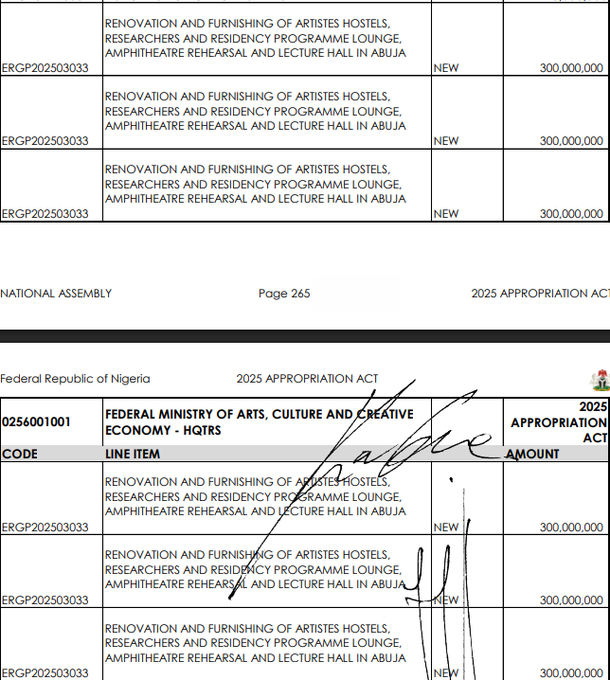
Aja’s analysis of the approved 2025 Federal Budget revealed glaring inefficiencies, including the repeated allocation of N300 million for the “renovation and furnishing of artist hostels in Abuja” under the Ministry of Arts and Culture. The project, identified by the budget code ERGP20250033, was listed six times with the same amount, raising questions about whether this was an oversight or a deliberate attempt to inflate costs for personal gain. “There is no coordination, no strategy, it’s just individual earmark insertions to spend,” Aja wrote, pointing to a lack of oversight in the budgeting process.
The budget also drew criticism for misaligned priorities. Aja highlighted a N300 million allocation by the Ministry of Foreign Affairs for “provision of relief items and capacity development for IDPs in the North East,” a responsibility typically under the purview of the Ministry of Humanitarian Affairs. This anomaly, Aja argued, exemplifies the broader issue of ministries overstepping their mandates, potentially to create less accountable spending avenues. “Why is the Foreign Ministry spending money to take care of IDPs inside Nigeria?” he questioned.
Perhaps most alarming was Aja’s focus on the proliferation of “cash grants to constituents” within the budget, particularly in the Secretary of the Government of the Federation’s allocations. These grants, some amounting to N300 million, lack the transparency of infrastructure projects like roads, making them susceptible to abuse. Aja suggested that such grants allow legislators to siphon funds with minimal accountability, stating, “A Senator can give out N10m, pocket N290m, and call it a day.” He further alleged that some of these funds are used to silence critics, with N1 million reportedly allocated to “Ndi Twitter to abuse anyone that asks questions.”
The critique aligns with ongoing concerns about Nigeria’s budgeting process. In September 2024, BudgIT Nigeria, a civic organisation focused on budget transparency, labelled the national budget a “mess,” accusing the National Assembly of meddling through numerous insertions despite a N100 billion allocation for Zonal Intervention Projects. Seun Onigbinde, BudgIT’s Global Director, noted that both the Executive and Ministries, Departments, and Agencies (MDAs) fail to push back against these insertions, as they also benefit from the system. “Things cannot continue like this,” Onigbinde urged, calling for public advocacy to demand a budget that reflects the people’s interests.
Responses to Aja’s post on X were swift and varied. Olumide Adesina, a user on the platform, called the budget “totally unfortunate,” noting that such inefficiencies hinder Nigeria’s potential for double-digit economic growth. Another user, Kanayo Onye Nkuzi, shared a personal anecdote from their time as a corper, revealing how budgets were casually copied and pasted by inexperienced staff in a ministry, underscoring systemic negligence. Concerned Citizen, another X user, echoed Aja’s sentiments, stating, “Nigeria doesn’t really have a revenue problem at all,” but rather a leadership failure that allows such budgetary indiscipline to persist.
The controversy comes at a time when Nigeria’s economic outlook is cautiously optimistic but fragile. A recent PwC report on Nigeria’s 2025 Budget and Economic Outlook projected tapered inflation, a stable exchange rate, and moderate growth, but emphasised that these outcomes depend on sustained reforms and disciplined policy execution. However, Aja’s findings suggest that fiscal mismanagement could undermine these projections, perpetuating economic hardship for ordinary Nigerians. “Your suffering is locally manufactured, not imported,” Aja concluded, placing the blame squarely on governance failures.
Historical context adds weight to these concerns. According to a 2025 Wikipedia entry on corruption in Nigeria, the country has lost over $400 billion to corruption since its independence in 1960. High-profile scandals, from the KBR and Siemens bribery cases under President Olusegun Obasanjo to the Central Bank cash-tripping scandal in the final days of Goodluck Jonathan’s administration, highlight an entrenched culture of corruption that continues to plague Nigeria’s governance.
As calls for reform grow louder, the question remains whether Nigeria’s leadership will muster the political will to address these systemic issues. Aja’s revelations have added urgency to the debate, with many citizens and activists demanding greater transparency and accountability in the budgeting process. For now, the 2025 Federal Budget stands as a stark reminder of the challenges Nigeria faces in translating its vast potential into tangible progress for its people.
For further updates, follow the conversation on X using the hashtag #TheBudgetIsAMess #NjenjeMedia.