
OP-ED: Nigeria’s Unspoken Political Order and the Igbo Question
Peter Omonua writes from the US
I had intended to write this essay a while ago, but for reasons I cannot fully explain, I kept pushing it aside. When Nnamdi Kanu was sentenced, I felt the moment had finally come. Before anything else, I must state plainly that I am not Igbo, nor do I claim an insider’s understanding of the intricate political and cultural nuances within Igboland. I am also neither Yoruba nor Hausa. What follows is based on observation and publicly available information.
A Vanishing Leadership Class
Ndi Igbo, at this historical moment, appear to have no clear leadership. Those who once served as stabilizing voices have been systematically removed between Buhari’s second term and the current Tinubu administration. The pattern of their deaths is, at best, uncanny.
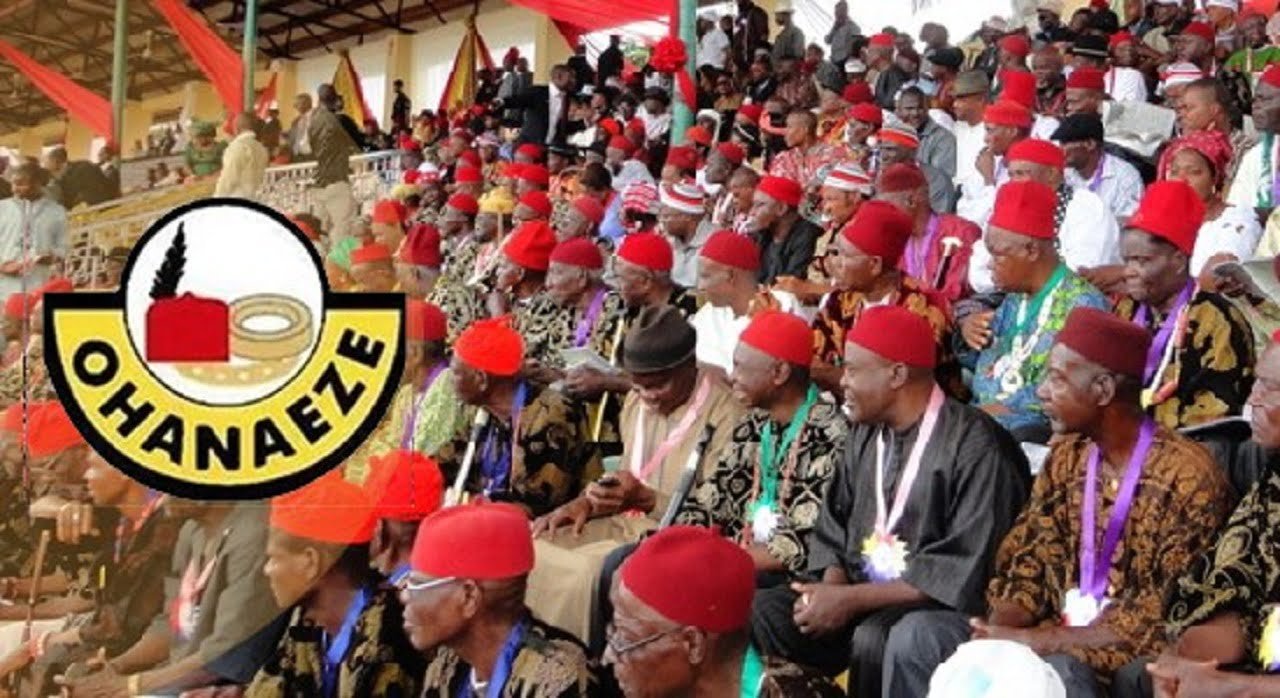
George Obiozor, former Ohaneze Ndigbo President-General, died in December 2022.
Prof. Ben Nwabueze, elder statesman of Igbo emancipation, died in October 2023.
Dr Chukwuemeka Ezeife followed in December 2023.
Onyeka Onwenu in July 2024.
Chief Emmanuel Iwuanyanwu, also former Ohaneze President-General, died in December 2024.
One cannot ignore how neatly this sequence aligns. When I first noticed the pattern, I dismissed my instinct as paranoia—until I encountered a video by Dr. Kemi Omololu-Olunloyo, who echoed the same concerns: that Igbo leaders were being eliminated, one after another. “Strike the shepherd, and the sheep will scatter,” appears to be the underlying philosophy.
Their exit has left a vacuum. Igboland is today politically fractured, lacking a unified voice on national matters. This vacuum may explain the brazenness with which successive administrations have treated Ndi Igbo—with disdain, exclusion, and at times humiliating disregard.
The Nnamdi Kanu Conundrum
The conviction and sentencing of Nnamdi Kanu further reinforce this perception. When placed beside the treatment of others accused of similar or worse offences—Boko Haram detainees, Fulani militia, even Yoruba agitators like Sunday Igboho—the disparity is too stark to ignore. This selective justice reads like a deliberate attempt to break a people’s spirit.
Yoruba Consolidation vs. Igbo Marginalisation
Though President Tinubu grapples with severe national crises, one thing is clear: he is unapologetically empowering the Yoruba. Wealth, political influence, and strategic appointments flow generously to the Southwest. Some Igbo elites, meanwhile, seem content to feed from the edges of power—donning APC caps and chanting “On your mandate we shall stand,” despite the evident ostracisation of their people.
Individuals like Orji Uzor Kalu, Benjamin Kalu, Arthur Eze, and a handful of nouveau-riche celebrities appear eager to affiliate with Tinubu or his son, Seyi. Yet their proximity does little to change the minuscule presence of Ndi Igbo in the corridors of power or the insignificance of the portfolios assigned to them.
If the total exclusion of Igbos from Buhari’s government did not send a message, what will? If Tinubu’s government—barely accommodating—does not clarify the point, what will? And if the handling of Nnamdi Kanu relative to others still doesn’t make it clear, what level of humiliation will?
A Possible Exit Strategy
Rumors once circulated about an offer for the Southeast’s five states to form an independent nation. Whether true or not, if such an option exists, it deserves renewed consideration. Senator Ned Nwoko recently declared that the Ika region of Delta State is fundamentally Igbo and even requested the creation of an Ika State—a move that could strengthen the viability of an independent Igbo nation.
The Yoruba–Igbo Rift: Old Wounds, New Tensions
Tensions between Yorubas and Igbos are not new, but recent political events have turned them into a chasm. The pre- and post-2023 election hostility in Lagos exposed a deep-seated animosity. I witnessed, with shock, the targeted intimidation of Igbo voters during the Lagos gubernatorial election. That moment compelled me to write an earlier piece: “The Vindication of Mazi Nnamdi Kanu and the Biafra Question” (Sahara Reporters, April 4, 2023).
I argued then—and still do—that Igbos should reconsider future investments in Lagos and begin redirecting development back to Ala Igbo.
The Presidency: An Illusion Dangling on a String
The 2023 election was the closest the Igbo nation has come to the presidency in modern times. Yet INEC’s performance under Mahmood Yakubu—now rewarded with an ambassadorial posting—left many Nigerians disillusioned. Peter Obi wept, not for himself, but for a nation descending into uncertainty.
There exists, whether formally acknowledged or not, an arrangement between the Fulani and Yoruba political establishments: the presidency rotates between them. Igbos are included only as participants, not beneficiaries. Their role is to legitimize the electoral process by showing up—not to claim victory.
The idea of an Igbo president in 2027 or 2031 is, under the current architecture, virtually impossible. The script is already written: Tinubu for two terms, then a northern/Fulani successor.
Even If an Igbo Became President—To What End?
Even in a hypothetical scenario where an Igbo becomes president, what can they realistically build that will not be dismantled by the next administration? What progress from the Obasanjo–Yar’Adua–Jonathan era survived Buhari?
An Igbo presidency, unsupported by the power blocs that define Nigeria, would face unprecedented sabotage—politically, institutionally, and economically.
Who Should Lead Igboland Forward?
If Ndi Igbo must negotiate their future, they need a new Council of Elders—not made up of:
Orji Uzor Kalu
Hope Uzodinma
Rochas Okorocha
Chukwuma Soludo
Okezie Ikpeazu
Joe Igbokwe
…but rather individuals whose record reflects integrity and selfless advocacy:
Alex Otti
Enyinnaya Abaribe
Bob-Manuel Udokwu
Peter Obi
Osita Chidoka, though intelligent, equivocates too often on core Igbo issues.
The Case for an Igbo Nation
Nigeria’s political architecture will not change—not now, not soon. The Yoruba-Fulani alliance has too much to lose from an assertive and prosperous Igbo nation. Tinubu himself is sympathetic to Yoruba self-determination; he may quietly welcome Igbo exit as it could pave the way for Oduduwa Republic.
The hostility in Lagos is worsening. From electoral violence to destruction of Igbo businesses to targeted demolitions, the warning signs are everywhere.
How long can a people remain endangered in both the North and the Southwest?
Conclusion: Time to Wake Up
The glory of the Igbo nation does not lie within Nigeria. The future of the Southeast—its dignity, its safety, its economic potential—may only bloom outside the current structure. The time has come for serious, strategic dialogue about what the next chapter should look like.
Time to wake up and smell the coffee.
Peter Omonua
pomonua@yahoo.com