
Press statement by the Big Tent on the state of affairs in Nigeria as at July 27 2025
THE STATE OF OUR NATION
The state of our nation is marked by several existential threats. These threats demand that citizens rally to save a failing country whose elite are obligated by history, in the Franz Fanon vision, to come out of relative obscurity, find its mission and either fulfill it or betray it.
We as the Big Tent have purposed that Nigeria’s mission to be a beacon for African peoples and to lead flying Geese of nations escaping misery and flocking towards prosperity in the way South East Asia has done.
In committing to a mission of emancipation that will bring personal, economic and political freedoms to all Nigerians we have organized ourselves to effectively monitor and evaluate the human condition in Nigeria, evaluate policy response and civil society initiatives regarding those needs of society and draw from experience around the world, as well as research outcomes to propose other approaches to lift up the dignity of the human person in Nigeria.
At this state of our nation review we begin with the current poverty condition of the citizen, report on the troubles and possibilities of the Agricultural sector, Security for lives and property, job creation through manufacturing and trade and Infrastructure development. The critical social sectors of Education and Health are burrowed into as well as Gender and Youth matters.
In addition we offer insight into fundamental courses of the troubles of Nigeria and how to build consensus for their elimination. These include corruption, assaults on freedom and human rights of citizens, politics of division that elevate emotion on identity above rational public conversation.which is the essence of Democracy and modernity.
POVERTY
Even though the statistics abound you need no statistics to show the hunger is savaging the land.
The most troubling of these new statistics is that 75% of people who live in rural Nigeria live in chronic poverty. This is a far departure from 1960 when the rural cash crop farmer was a source of savings which Banks pooled and moved to urban areas for lending. There could be no better defense for AfDB President Dr Akinwunmi Adeshina’s remark that the Nigerian condition is worse today than at Independence.
The severity of the conditions of insecurity in Nigeria has prevented these peasant farmers from farming and driven down their quality of life to the point of Tawney’s metaphor drawn on in Scott’s moral economy of the peasant that the peasant is literally so deep in water that even a ripple can drown him. Hunger, basic hunger, and absent basic medicaments and health care, in general, is drowning a majority of our compatriots.
That governments can continue running in profligacy in the face of this human misery and this subject is not the central issue for every politician in the land is the tragedy of the Nigerian condition. It reflects the deep chasm between state and society and a worsening crisis of legitimacy of the Nigerian state.
Walk the streets of Ibadan and you see why the people chant ebimpawa or the streets of Maiduguri and witness the new destitution. More painfully there is no evident strategy at the federal and most state government levels to deal with poverty’s traumatic assault on the dignity of man in Nigeria.
We watched India overcome similar conditions from a generation before so why is the political elite in Nigeria unable to learn but instead process to buy ‘befitting’ presidential jets and strange looking limousines and state capitals are bazaars of siren blasting motorcades of black SUV’s conveying VIPs whose relatives are dying of hunger. This new Nigeria has damaged the traditional cultural African way of no one left behind and put the Ubuntu dictum of I am because we are to shame.
AGRICULTURE
The hunger in the land is more palpable because the current June to August lean season. When tne Big Tent Shadow team met in May the Agriculture shadow member of the team warned of an acute food crisis during these months. We had hoped our alarm would trigger policy responses. Sadly, not enough was done and the pain in the land persists such that International Food Aide organizations are planning to come to our aid. What humiliation for a country blessed with arable lands and talented people. But the governments of Nigeria are distracted and disorganized and more focused on power and propaganda than on purpose.
Agriculture is critical for food security and for economic growth as domain of numerous factor endowments whose value chains developed with limited Industrial policy based on the latent comparative advantage of those endowments will lead to a thrust of job creation and economic growth spurt. Today it contributes
approximately 22% to the Gross Domestic Product (GDP) and serves as the primary source of employment for over 36% of the labor force. However, the sector faces significant challenges that threaten food security and the livelihoods of millions. A concerning statistic reveals that more than 30 million people across 26 states and the Federal Capital Territory are projected to experience acute food and nutrition insecurity during the upcoming June–August 2025 lean season, marking a critical phase of food crisis. The agricultural landscape is predominantly characterized by smallholder farmers, who account for over 80% of the farming population and contribute to 90% of the nation’s agricultural output. Yet, 47.2% of Nigeria’s population lives in poverty, with a staggering 75% of those in rural areas existing below the poverty line. This dire situation is exacerbated by an estimated agricultural trade deficit of N1.037 trillion, coupled with the fact that Nigerians expended N61.08 trillion on food and other related expenditures in 2023, alongside a staggering $10 billion in food imports, of which $3 billion was earmarked for grains.
Several systemic issues plague the agricultural sector, including a weak land tenure system, inadequate extension services, low agricultural productivity, and poor financial status among farmers. Many farmers struggle to access financing due to insufficient collateral, alongside a lack of production and processing infrastructure. These challenges are compounded by inconsistent agricultural policies and security concerns stemming from farmer-herder conflicts and climate change impacts.
Besides short term solutions we propose we look at several long term impact prediction that would not only ensure food security and production that drives growth but also cracks the mystery of capital challenge and massively grows entrepreneurship.
The Universities need to be brought into the agricultural extension services the way land grant universities drove America’s agriculture revolution.
The National Assembly can get to work on the land tenure system incorporating into that effort the setting up systems like land registries that give value to all land and make them easy to sell and buy and to ascribe value.
In our view the assigning of a new role to universities in agricultural extension which will include developing curriculum for primary schools in endowment geographies that incline the pupils to capacity for value adding on the factor endowments will not only have outstanding impact but boost the relevance and sustainability of the university system. We would be killing several birds with one stone following this strategy.
I am willing to spend time on this point because it is fundamental to Nigeria’s recovery from the scourge of Dutch disease and the many dysfunctions afflicting development in Nigeria.
Beside the work to be done by University faculty and students in Agric Extension services Farm services management firms offering consulting intervention should play organization intervention roles to accelerate value adding and output accelerating input roles with targets and incentives for superior performance.
We speak to these matters not from theory but also from active commercial engagement experience. I can give you examples of what happened with the World Bank ADPs in the 1980s and the aftermath of the end of that programme.
We are pleased to suggest policy support for private sector driven produce aggregation, distribution and processing clustrers a classic example of which is the Integrated Produce and Mineral City. As an entrepreneur I have personally been developing one such IPC and have committed hundreds of millions of saved and borrowed money while struggling to overcome the mystery of capital issues in raising debt and equity for a rural based greenfield initiative.
Had I committed those investment monies to trading or contracting I would be a stupendously rich man today. Derisking investments into suck growth boosting initiatives is a major imperative for policy.
SECURITY
The security situation has consequences not just for declining agricultural output but for the psychology of humanity of many Nigerians who live in fear, and for the Nigeria risk perception of investors, foreign and indigenous, as well as the cost of travel for many Nigerians who have given up on road travel. The urgency for dealing with this matter cannot be overemphasized.
At the root of the insecurity matter are economic and identity politics issues.
Poverty make deprived and vulnerable people easy recruits for those minded to politically or criminally upset the status quo. Fighting poverty with passion will therefore reduce insecurity.
Political engagement with the sponsors of terrorism and insurgency will also be required to supplement police and military action.
Key to the enforcement of Law and Order is the decentralization of policing such that communities or LGAs can have their own armed police forces as should states, in addition to the Federal police forces.
A Forest Rangers scheme already proposed from the Federal ministry of Agriculture on the watch of Chief Audu Ogbeh as minister of agriculture can be justified if we do a cost-benefit analysis of the growth that can be derived from such security.
MANUFACTURING AND TRADE
In spite of White House declared Tarrif wars the trends suggest that the coming growth for manufacturing should be Africa. We need strategy that is both national and regional. Based on our factor endowments as I have suggested already, an industrial policy that piggy backs on our latent comparative advantage and AfCFTA supported aggregation across borders by large trading companies, partnerships with entrepreneurs from latter industrialized countries like China and South East Asian manufacturers will rapidly open up manufacturing and export of value added products on the value chain of the factor endowments of the geopolitical economic zones of the country. We can quickly have an ‘economic miracle’ on our hands. Nigeria can be and deserves to be the new India. Sequencing from light manufacturing to heavy Industries abandoned from yesterday’s national development plans can get every section of the country bubbling with manufacturing.
In our current plan, the Big Tent will focus in the North West, on Chemical industries based on Gum Arabic and Date Palm, in addition to leather goods in the Northwest, Sesame Seed processing in the North Central, and Lithium batteries production in that region, just as we revive Cacao processing in the South West and Hydrocarbon value chains in the South South and Food processing and packaging in the North East.
The initiatives will be majorly private sector with government focused on better managing of Bespoke industrial policy and Trade policy. Even much of the infrastructure will be financed by private capital from abroad as multilateral agencies focus on de risking investment flows.
An industrial park in every geopolitical zone, linked by rail and interstate motorways already mapped in the infrastructure plan of the Big Tent Infrastructure team will assure logistics bottlenecks do not get in the way of rapid growth.
INFRASTRUCTURE
Power infrastructure failure continues to cripple development after guzzling billions of dollars just as the roads are hardly motorable causing farmers harvest losses far exceeding what they earn for their toil.
In choosing both a ‘tax or borrow and spend’ over more innovative ways funding infrastructure the current administration is locked into a slow path of bridging our huge infrastructure deficit.
The choice of projects also skew priorities in ways that handicap growth. Why, for example is the Lagos-Calabar Highway which seems destined for the same fate as the East-West Highway, the top infrastructure priority in the country?
Commentary suggest the Lagos Calabar road project fails the Due Process established under President Olusegun Obasanjo, and may be a classic state capture example.
Enterprise-Driven Infrastructure & Urbanization: A Strategic Review
Title: X-Ray of Current Government Infrastructure Policies, Programs & Projects: Impacts and Enterprise-Driven Alternatives
1. Overview of Current Government Posture (2023–2025)
Policies & Programs:
• Renewed Hope Infrastructure Agenda (highways, rail, housing, ports)
• National Integrated Infrastructure Master Plan (2020–2043)
• Public-Private Partnerships (PPPs) and Nigeria Sovereign Investment Authority (NSIA)
• Coastal Superhighway Project: 700km awarded to a single contractor
• Urban renewal projects under Federal Ministry of Housing & Works
Current Characteristics:
• Centralized project planning and execution
• Mega-contract orientation (single-firm awards)
• Weak sub-national integration
• Low local manpower inclusion
• Minimal coordination across urban planning, housing, and transport
2. Observed Impacts
On National Development:
• Resource leakages through monopoly-style contract awards
• Delayed timelines, abandoned projects, and inflated costs
• Regional imbalance in project distribution
• Non-alignment with sub-national priorities
On Citizens:
• Infrastructure fails to catalyze local enterprise or job creation
• Displacement without compensation or stakeholder engagement
• Public disillusionment and lack of ownership
• Limited access to economic and social infrastructure
3. Key Gaps in Current Approach
• Absence of decentralized execution strategies
• Disregard for local technical capacity
• Poor infrastructure lifecycle management
• Limited integration of informal and rural economies
• Infrastructure as physical asset, not economic platform
4. Our Alternative Approach: Enterprise-Driven Infrastructure & Urbanization
The LabourDirect.com Model / DDA (Direct Development Approach):
• Inventory-driven infrastructure planning using state-by-state data on local engineers, architects, QS, construction workers, and equipment
• Participatory execution: Each state handles infrastructure within its corridor using its professionals and workforce
• Local mechanics and engineers repair idle construction vehicles and tools, adding value across the chain
• Project funding and supervision are centralized but implementation is local and inclusive
Global Precedents:
• Indian Railway Network: Decentralized execution across zones
• U.S. Interstate Highway Project: State-led segments under federal vision
Core Tenets of Enterprise-Driven Infrastructure:
• Infrastructure must serve as a catalyst for job creation, MSME activation, and value chain expansion
• States and LGAs must be empowered as execution hubs
• Planning must map and activate dormant resources
• Urbanization must align with spatial productivity zones
5. Strategic Action Points for the Shadow Ministry
• Present LabourDirect.com model as a viable execution strategy for future national projects
• Propose geo-spatial infrastructure distribution to the Central Working Organ
• Recommend state-based Infrastructure Implementation Units (IIUs)
• Design and pilot one Enterprise-Driven Infrastructure Corridor
• Mobilize national inventory of infrastructure professionals and equipment (state-by-state)
Conclusion: The current model is capital-intensive but outcome-deficient. Our approach centers people, productivity, and place. Enterprise-Driven Infrastructure & Urbanization is not only possible, it is imperative.
EDUCATION AND HEALTH CARE
We cannot repeat enough that education and health care are the fountains of human capital which is key to growth and development.
The reports on China, India and Vietnam confirm this. Yet education and health care management in Nigeria are in crises of both funding and strategy.
Recent reports that Nigeria and Zimbabwe are among the ten worst places to live in on earth makes this point.
Besides the well known fact of our having the highest number of out of school children in the world the work of British Professor James Tooley shows that a majority of those children in school attend low cost private schools in blighted areas.
Primary health care statistics are troubling and our leaders are dying in foreign hospitals even when 70 percent of black doctors in the US are Nigerian.
From the 1960s when UCH Ibadan was a destination for medical tourism, the exodus of Nigerian doctors, poor infrastructure, low budgetary allocation, and a culture of medical tourism among the political elite have all conspired to erode the sector’s integrity. At the heart of this crisis lies a federal government that has historically abdicated its responsibility to build a resilient health system.
At independence in 1960, Nigeria inherited a modest but functional health system from the British colonial administration. Teaching hospitals like the University College Hospital (UCH), Ibadan, were among the best in West Africa. However, successive military and civilian governments failed to prioritize health. The oil boom of the 1970s, rather than catalyzing health sector development, led to complacency. From the 1980s, political instability, corruption, and economic mismanagement devastated public health infrastructure.
As of 2025, over 60% of Nigerian-trained doctors practice outside Nigeria. The “Japa Syndrome” is not merely about economic migration but a survival strategy for many health professionals suffocated by poor remuneration, deplorable working conditions, and zero professional growth.
In the late 80s the drift of health care professionals was to Saudi Arabia and other points in the Middle East but today it is to Europe and North America.
Why do our public officials not ponder the fact that Mexican Doctors just across the border are not flocking to better pay in the US like their Nigerian counterparts.
The Nigerian Medical Association (NMA) recently issued a damning ultimatum, threatening industrial action if the government does not address critical issues like brain drain, underfunding, and infrastructure decay. Sadly, the response from the government has been lukewarm, with cosmetic policies that fail to address the root causes of doctor migration. It would seem that what monies are available in Nigeria are dedicated to politicians who take away far more than they contribute and distort the countries scheme of incentives. But Economics remains a science of incentives. The consequence of these distortions invariably have grave consequences for progress.
Health Budget and Corruption
The Twin Evils Nigeria’s health budget has remained perennially low, hovering below 5% of the national budget, far from the 15% commitment made in the 2001 Abuja Declaration.
Even the meager allocations are often embezzled through inflated contracts, ghost projects, and kickbacks. The rot in the Aso Rock Clinic, despite public outcry and audits, symbolizes the depth of corruption in the sector. We all remember the lamentation of Mrs Aisha Buhari about the humongous budget allocation to the State House clinic and how it is still unable to provide the most basic care.
If we cannot pay attention to education and healthcare where is the signal of intention to make progress?
So is Nigeria doomed to mediocrity and underperformance? No amount of propaganda can cover this naked sore. This is the urgency of now.
Central to these failings is wicked corruption. Mixed into that is nepotism that has choked merit and enthroned incompetence and sycophancy as the order of the day in public life and the flight of patriotism from ranks of those who make decisions.
Nowhere is this more evident than in the Oxygen of the economy, the Oil and Gas sector superintended mainly from the NNPC.
Recent revelation by the new leadership at the NNPC that the billions of dollars ostensibly spent to revive the refineries was a grand theft sums it up.
Recall that we pleaded, cajoled, and warned that the plan would come to naught and rip off Nigerian taxpayers. How did we deserve this?
CORRUPTION
It was long said that if we do not kill corruption the cancer corruption has become, will kill Nigeria. Clearly it seems corruption is on the rampage and we wonder how long before Nigeria’s deteriorating pulse rate vanishes completely.
The cynicism on the streets suggests that the agencies for fighting corruption are more corrupt than those they are watching.
There is therefore need for new thinking on how to combat the scourge. The threat to Nigeria from corruption is a truly existential threat.
We are convinced that the solution lies in recruitment of people of character into public life and the civil service which now seems more like the bastion of corruption, and the use of technology like blockchain.
Of all corruption one of the most challenging is electoral fraud which affects the legitimacy of the state.
We in the Big Tent are committed to a campaign for consensus on the elimination of electoral fraud and total reliance on electronic transmission of election results.
BORROWING IS NOT A SOLUTION
The National Assembly has again approved a borrowing plan of more than USD 29bn. This is a dangerous trend. We may just be mortgaging off the future.
This raises the need for a constitutional amendment requiring a balanced budget except where returns on investment of the borrowed money exceeds amortization costs.
What is immediately required is a slashing of the cost of government, a dramatic scaling down of corruption and a clear plan to dramatically boost production.
We must move away from where we stand currently.
The current borrowing binge reminds of the deferred consequences of poorly thought though policy. In the mid 1970s Western Banks anxious to recycle petrodollars in their vaults suggested Nigeria was under borrowed. The Federal Commissioner for Finance General James Oluleye went in search of jumbo loans. A few years later Nigeria found itself in a Debt Trap. The outcome was SAP which pulled back gains in Education, Healthcare and Infrastructure made in the 1960s.
In the same way we are pay dearly today for power because wise counsel on how to revitalize the Power sector in 1999 was sacrificed at the Altar of corruption by those counseled refurbishing old plants after a proper plan had been approved by the FEC just in the way NNPC chose to refurbish refineries all knew were dead, denying Nigerians the growth the billions of dollars could diverted to the corrupt effort could have been used to power up.
The world mocks us and the propagandists say to point out the leaking roof is to demarket Nigeria.So what did the state capture people in government do to it, ‘remarket’ I guess.
May our children have a heart of forgiveness toward this heartless generation that squandered their future.
The state of our nation is terrifying and citizens have a duty to approach the public square and engage in the public sphere. This is the purpose of democracy. We in the Big Tent are determined to so do
The Big Tent
28/7/25
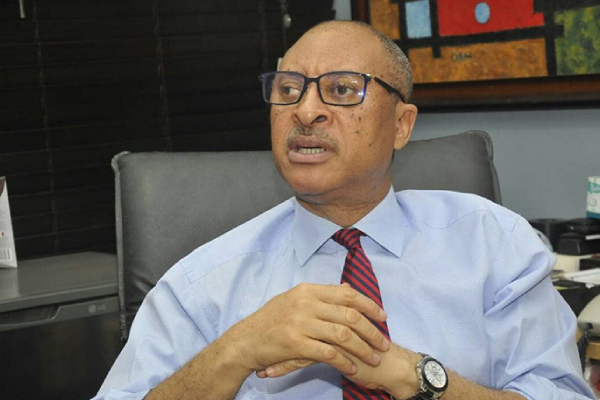
For The Big Tent
Pat Utomi
Convener