
Peter Obi and the ADC’s 2027 Moment: Why Nigeria Cannot Afford to Miss This Chance – By Maazi Tochukwu Ezeoke, Abuja
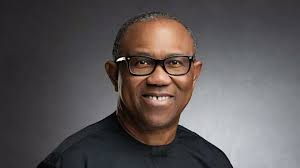
Peter Obi remains the most credible, prepared and unifying option for the African Democratic Congress (ADC) presidential ticket in 2027 and, by every serious governance metric available in contemporary Nigerian politics, the best prospect for an effective Nigerian president.
A Record Rooted in Governance, Not Myth
In a political culture saturated with self-advertised “performers,” Obi’s appeal rests on something stubbornly unfashionable in Nigeria: verifiable performance. As governor of Anambra State, he inherited a fiscally troubled, poorly governed state and left behind a radically different balance sheet and service profile.
Rather than adding to the pile of debts and arrears, Obi cleared large inherited obligations, stabilised state finances and reportedly left tens of billions of naira in savings and investments for his successors. In a federation where many governors exit power with swollen debts and unpaid salaries as their signature, that alone would make him an outlier.
Education became the defining proof of this governance philosophy. Under his watch, Anambra moved from the lower tiers to the very top of national WAEC performance tables, powered by deliberate investments in school infrastructure, teachers and learning tools. The message was clear: when leadership is serious, results follow.
Obi’s administration rolled out massive support for schools and health facilities, including thousands of computers, generators and targeted grants, often in partnership with faith-based providers who already had reach and credibility at the grassroots. Crucially, this was done without turning the state into a borrowing addict, signalling a philosophy that treats public funds as trust anchored in prudence.
The ADC has long projected itself as a values-driven, reformist alternative to the patronage machinery of the major parties, but it has struggled to find a presidential standard-bearer whose life and legacy match its rhetoric. Obi’s defection to the party at the end of 2025 changed that equation overnight.
Party stakeholders have framed his entry not as a mere tactical escape from the frictions of his previous platform, but as the culmination of a deeper convergence around internal democracy, people-centred governance and a productivity-driven economic vision. In many ways, Obi gives flesh to the ADC’s previously abstract commitments.
The ADC’s declared priorities—security, productive economy, job creation, youth and women inclusion—mirror the pillars upon which Obi built his 2023 message of moving Nigeria from consumption to production and reclaiming the state for citizens rather than cartels. Instead of bending to accommodate him, the party appears to be aligning around a programme it had long articulated but never fully embodied.
His arrival has already “reshaped” the opposition space, fracturing old assumptions and forcing conversations away from mere zoning and towards competence, integrity and measurable results. For the ADC, there is no other aspirant with Obi’s combination of national recognition, cross-generational appeal and proven reformist record; for Obi, there is no other mid-sized platform that currently offers such an ideologically coherent space to mount a disciplined 2027 challenge.
Electoral Strength and Moral Authority
Obi’s 2023 run dismantled the convenient myth that presidential elections in Nigeria must be a sterile two-horse race between the same decaying patronage blocs. With a relatively small party structure, open institutional resistance and a modest war chest, he still secured about 6.1 million votes, came third nationally and won symbolic territories like Lagos and the Federal Capital Territory.
In Abuja, he took roughly 59 per cent of the vote, comfortably exceeding the constitutional 25 per cent threshold and sending a powerful signal about the mood of the urban middle class and youth electorate. That a “third force” candidate could do this against entrenched structures was less an accident and more a referendum on elite failure.
The courts ultimately upheld Bola Tinubu’s victory, but the legal process itself was telling. Tribunal and Supreme Court proceedings acknowledged the breadth of Obi’s allegations of irregularities, even as they concluded that his legal team did not meet the strict evidentiary burden required to overturn the declared results.
Obi’s reaction was equally instructive. Rather than fuel a descent into violence, he framed the judgment as a blow to substantive justice, re-committed himself to a “new Nigeria that is possible” and insisted that the struggle was about institutional credibility, not personal office. In a country where losers often walk away bitter or silently cut deals, this insistence on testing institutions while restraining supporters has endowed him with a moral mandate that extends beyond the arithmetic of the 2023 result.
The Governance Contrast Nigeria Must Confront
Nigeria can no longer afford to choose presidents by the noise of their media machines or the size of their patronage networks. If the 2027 debate is serious, it must be framed around comparative governance records, not recycled slogans.
On fiscal responsibility, Obi’s Anambra legacy of clearing large arrears, building savings and avoiding reckless borrowing stands in stark contrast to the habits of many ex-governors who exit with growing debts and unpaid obligations. On human capital, his turnaround of education outcomes—moving the state to the top of national rankings, backed by tangible investments in schools and teachers—is measurable and documented, not a figment of propaganda.
Where many in the old guard showcase flyovers and glittering government houses, Obi’s emphasis was on classrooms, clinics and the nuts and bolts of a functioning social infrastructure. And where too many ex-governors now negotiate with anti-corruption agencies or battle asset forfeiture, he has left office without major corruption scandals or convictions trailing his name.
His 2023 national campaign also broke the mould. It mobilised youths, professionals and diaspora communities around issues—production, export-led growth, institutional reform—rather than ethnic war cries or cash-for-votes as usual. That is the kind of political education Nigeria needs if it is serious about escaping permanent underdevelopment.
Why Obi Would Be Nigeria’s Best President Now
By 2027, Nigeria will be staring at a perfect storm: mounting debt pressures, a fragile currency, deepening insecurity, worsening poverty and a dangerously disillusioned youth population. The next occupant of Aso Rock must therefore bring four non-negotiable traits: fiscal discipline, human capital obsession, respect for institutions and moral restraint in the use of power.
Obi’s record in Anambra demonstrates a capacity for disciplined public finance and a clear bias for investing in people rather than prestige projects, exactly the combination a debt-strapped, crisis-ridden Nigeria needs. His choice to contest flawed processes in court rather than on the streets, and his openness to being audited by the public, offer a decisive break from the politics of impunity that has hollowed out trust in the state.
Perhaps most importantly, his movement has already shown that Nigerians can vote beyond old fault lines. Winning in both Lagos, the commercial nerve centre, and the Federal Capital Territory was not simply an electoral curiosity; it was evidence that, when presented with a credible option, citizens are willing to punish failure and reward competence, regardless of region or religion.
An ADC presidential candidacy for Peter Obi in 2027 would not be a vanity project. It would represent the maturation of a national reform coalition that has known defeat, confronted institutional resistance and yet refuses to abandon the idea that competence, frugality and empathy, not entitlement, waste and propaganda, must sit at the heart of the Nigerian presidency.
The choice before Nigeria is stark. We can continue to recycle men whose primary skills are political survival and narrative manipulation, or we can finally test what happens when a leader with a documented record of prudence, human-capital investment and cross-regional appeal is given the tools of the federal presidency. The ADC, by offering its ticket to Peter Obi, would not merely be fielding a candidate; it would be inviting the country to answer that question honestly.