
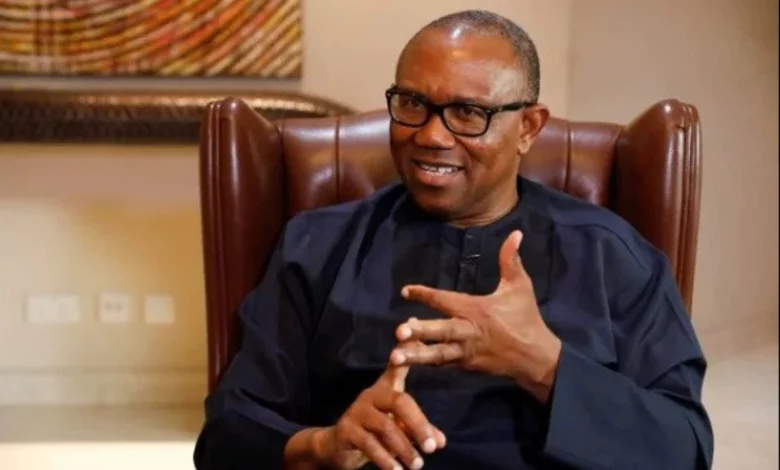
Peter Obi, the 2023 Labour Party presidential candidate, has called for urgent reforms to Nigeria’s electoral system, emphasizing the need to restore public trust in the democratic process.
Speaking about his recent visit to Indonesia, Obi highlighted the critical lessons learned from the Southeast Asian nation’s robust electoral, healthcare, education, and economic systems.
On Electoral Transparency
Obi outlined the disparities between Indonesia and Nigeria’s electoral systems. “One of the greatest obstacles to credible democracy in Nigeria is the lack of credible elections, brought about by the glaring weakness of our electoral institutions and the persistent disregard for the rule of law,” he stated.
In discussions with Indonesia’s General Elections Commission (KPU) Chairman Bernard Dermawan Sutrisno, Obi learned that Indonesia’s elections boast over 70% voter participation, with 81% turnout in 2024. By contrast, Nigeria saw voter turnout of less than 25% in the last election, despite having 94 million registered voters.
To improve transparency, Obi noted, Indonesia mandates verifiable educational qualifications for presidential candidates and requires candidates to secure endorsements from at least 25% of National Assembly members or 20% of votes in the prior election. Vote counting occurs publicly at polling stations to prevent disputes, and election winners must secure at least 50%+1 of the total votes, with runoffs held if necessary.
Insights on Governance and Leadership
Obi met with President Joko Widodo (Jokowi), whom he praised as a transformational leader. Jokowi’s leadership emphasized social welfare, education, and poverty alleviation. “His presidency brought significant and visible transformation across all key sectors of development—health, education, poverty alleviation, rural development, and infrastructure,” Obi said.
When asked about his political purpose, Jokowi responded: “The people, especially the poor and vulnerable.” Obi commended Jokowi’s direct engagement with citizens, zero tolerance for corruption, and transparent governance, which helped Indonesia’s GDP grow from $890 billion in 2014 to $1.4 trillion by 2024.
Healthcare and Education Lessons
In his meeting with Indonesia’s Health Minister, Budi Gunadi Sadikin, Obi was impressed by Indonesia’s National Health Insurance Program (JKN), which covers 98% of the population. The government subsidizes premiums for low-income individuals and emphasizes preventive care.
Similarly, Obi praised Indonesia’s education system, which serves 50 million students with over 3 million teachers. “All teachers must have a degree and professional certification, and Indonesia allocates 20% of its budget to education,” Obi noted. This policy has achieved a 99% school enrollment rate.
MSME Support Framework
At Indonesia’s Ministry of MSMEs, Obi learned that MSMEs contribute 61% to the country’s GDP and employ 97% of the workforce. The government supports MSMEs through mentorship, training, equipment, and financial assistance, with $20 billion in loans available at interest rates of 3% to 6%.
Conclusion
Obi concluded by advocating for Nigeria to adopt similar reforms. “Democracy is only as strong as the institutions that uphold it,” he emphasized. “A new Nigeria is possible if we reform our electoral system, strengthen our institutions, and restore public trust.”
Reflecting on his trip, Obi expressed hope for closer collaboration between Nigeria and Indonesia and underscored his belief in transformative leadership for national development.