
The Presidency spent at least N34.39bn on foreign currency purchases for international travel and related commitments over a two year period, according to data compiled from GovSpend, a public finance tracking platform managed by BudgIT. The transactions cover the State House, Presidential Air Fleet, the Office of the Chief of Staff and operations linked to the President, Vice President, First Lady and their aides.
A breakdown of the figures shows that 2024 accounted for N29.35bn, while 2025 recorded N5.04bn, reflecting a sharp year on year drop of about 82 percent. The decline aligns with broader foreign exchange trends as the naira stabilised following policy reforms and improved dollar inflows.
The expenditures relate to foreign currency purchases for official trips, aviation operations, estacodes, training programmes and logistics for international engagements. Although the Presidency maintains that these trips support diplomacy and investment promotion, the scale of the spending has attracted criticism due to ongoing fiscal constraints and recurring shortages in Nigeria’s forex market.
In 2024, spending peaked in the first half of the year when exchange rate volatility was at its highest. The Presidential Air Fleet, managed by the Nigerian Air Force, accounted for several multi billion naira transactions. Between March and May 2024, the fleet recorded repeated purchases of about N1.27bn on several dates and larger amounts including N5.08bn on April 23 and N2.43bn on May 8. Additional transfers ranging from tens of millions to over a billion naira were recorded in July and August.
Spending by the State House Headquarters was also significant. In February 2024 alone, more than N2.5bn went into forex purchases tied to trips by the President, Vice President and First Lady. These included N1.04bn for a trip to Ethiopia, N750m for Dubai, N426.88m for Switzerland, N176.77m for Côte d’Ivoire, N149.79m for France and N86.76m for Liberia. March featured further spending for travel by the Vice President and First Lady, including trips to Mozambique, Addis Ababa and London.
From July 2024, forex demand increased further, with multiple transactions recorded on July 17 and others spread across August, October and November. December added another N736.20m. By the end of the year, total forex-linked spending had reached N29.35bn, making 2024 one of the costliest years for official travel in recent memory.
In 2025, spending dropped sharply. Total forex purchases fell to N5.04bn, with transactions smaller in scale and more sporadic. April 2025 saw a cluster of purchases mostly in the tens of millions, such as N57.94m, N32.51m, N57.81m and N23.67m. Larger aviation-related amounts showed up midyear, including N1.29bn, N1.28bn and N626m, but these were fewer and spread across several months. By the second half of the year, purchases were modest, with August, November and December featuring only small payments.
Analysts attribute the decline partly to tighter control measures and better planning as the naira strengthened. Official records show the currency closed 2025 at N1,429 to the dollar, a 7.4 percent appreciation compared with the final day of 2024. The gain marked the naira’s first annual appreciation since 2012 after more than a decade of continual decline.
The GovSpend data highlights the Presidential Air Fleet as a major driver of forex demand due to maintenance, fuel, leasing and operational costs that are denominated in dollars. This has renewed debate over the size and cost of the fleet at a time when several countries are reassessing the sustainability of large official aircraft inventories.
The State House and Office of the Chief of Staff also recorded substantial but smaller forex purchases for travel logistics, estacodes, accommodation and protocol activities involving the President, Vice President and First Lady. Accountability advocates argue that the scale of these expenditures raises concerns about transparency and prudent use of public funds.
Odeh Friday, the Country Director of Accountability Lab Nigeria, said the trend underscores the need for stronger institutional checks and a shift toward responsible management of public finances. He questioned whether the outcomes justify the cost, noting that many of the expenses appear avoidable.
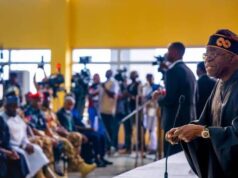
The spending patterns have also intensified political criticism. Former Labour Party presidential candidate Peter Obi recently faulted President Bola Tinubu for prioritising foreign trips at the start of the year instead of focusing on domestic governance. Obi noted that the President spent 23 days outside Nigeria in January across two separate trips and questioned what urgent matters justify such frequent travel.