
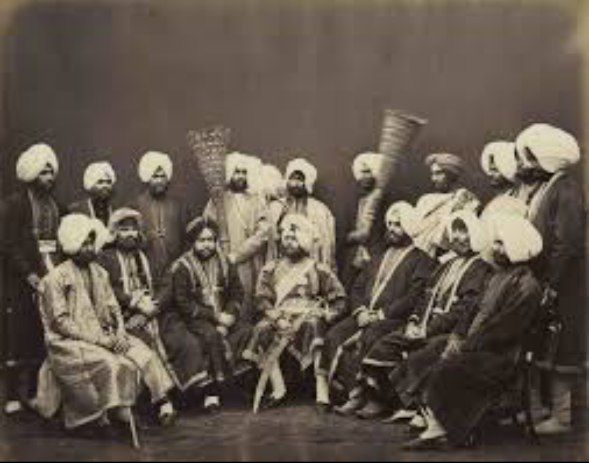
For most of recorded history, two giants dominated the global economy: India and China. In 1700, on the eve of the Industrial Revolution, Mughal India stood alone at the top — the single largest economy on Earth, producing roughly one-quarter of humanity’s entire output. Its textiles clothed the world, its jewels filled royal vaults from Isfahan to Versailles, and its prosperity was the envy of every European monarch.
Then Britain arrived — not as a trader, but as a conqueror.
Within decades of the Battle of Plassey in 1757, Britain had turned the world’s wealthiest civilisation into its private treasury. Indian handloom weavers were crushed by deliberate tariff manipulation. Bengal’s tax surplus was siphoned to London. Peasants were forced to grow opium instead of food, then watched the profits finance Britain’s tea imports from China. Indian taxpayers paid the pensions of British officials and the full cost of an Indian Army that went on to seize Singapore, Aden, Burma, and half of Africa.
By 1947, when the Union Jack was finally lowered, India’s share of the world economy had collapsed from 25% to barely 3%. Independent India inherited a country with 12% literacy, recurring famines, and an industrial base smaller than Belgium’s.
The numbers are staggering: economic historians now estimate that Britain extracted the equivalent of $45 trillion (in today’s money) from India between 1765 and 1938 — more wealth than the entire European Union produces in a year. That river of gold and grain did not merely enrich Britain; it built Britain. It funded the mills of Manchester, the docks of Liverpool, the railways of Canada and Argentina, and the very global financial system that still operates from the City of London.
India did not decline because it suddenly became “backward.” It declined because it was systematically looted on an industrial scale at the precise moment the world entered the industrial age.
History has many villains, but few thefts match this one in size or consequence. The British Empire did not rise because it was more inventive or virtuous than others. It rose because it annexed the richest prize in the pre-modern world — and spent two centuries emptying its coffers.
As India strides forward today, reclaiming its place among the world’s largest economies, it is worth remembering a simple truth: the Britain that once preached free trade and civilisation to the world owes its own centuries of wealth, power, and global pre-eminence to the deliberate impoverishment of the subcontinent it ruled.
The sun never set on the British Empire because it was powered, year after year, by the extinguished lights of India.