
VICTORY THROUGH ALIGNMENT: AN EASTER MESSAGE BY VALENTINE OZIGBO
Good morning, and Happy Easter.
In my new month message for April, I reflected on alignment, the discipline of bringing one’s life into proper order and into harmony with what truly matters.
The holy season takes that reflection further. It does not merely speak about alignment; it reveals what alignment produces.
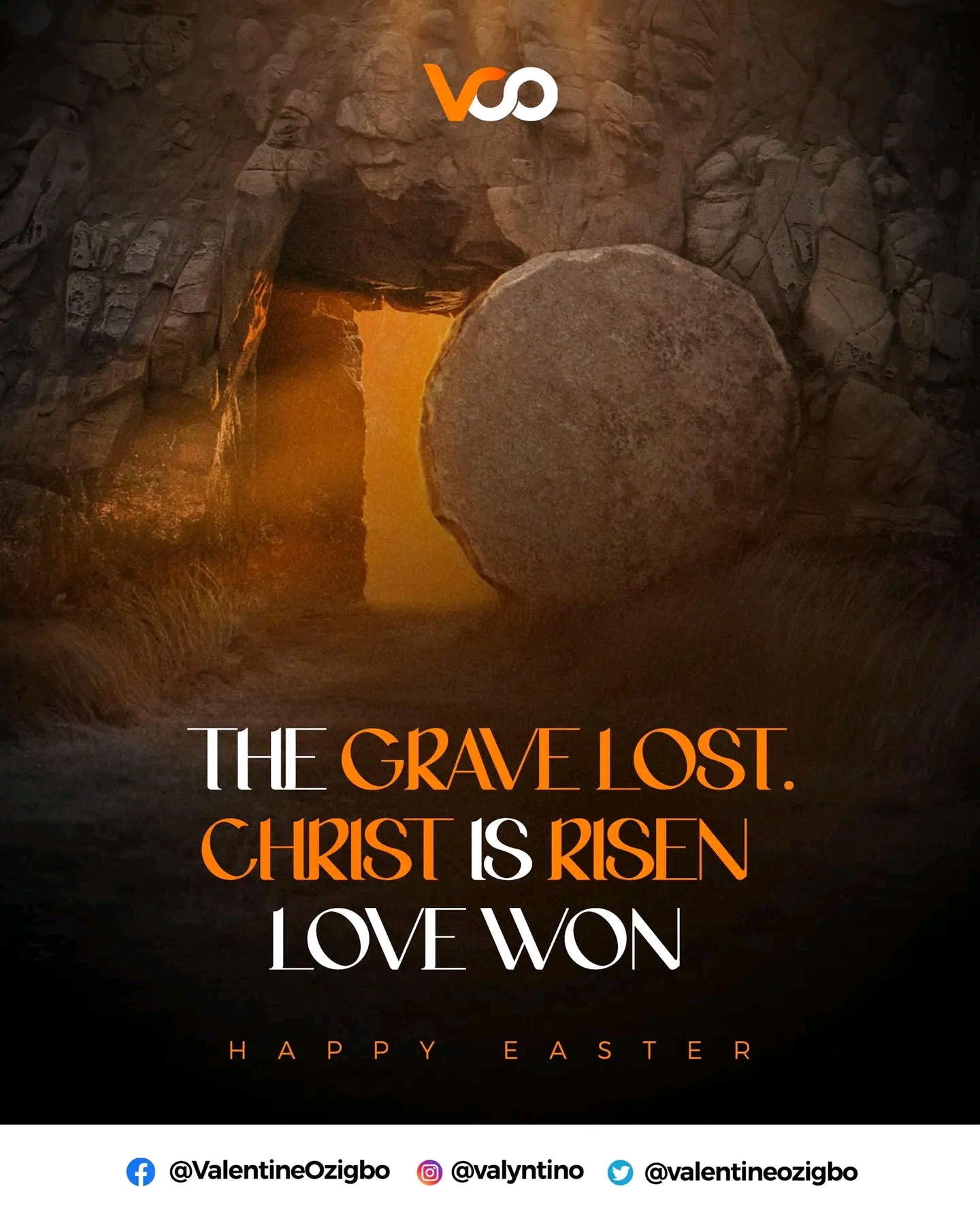
At its heart, Easter is a story of victory. Not the kind of victory the world immediately recognises, but one that is deeper, quieter, and more enduring. It is a victory born out of surrender.
The Holy Bible gives us the defining prayer of our Lord and Saviour in solitude, in a garden, He prayed, “Not my will, but Yours be done” (Luke 22:42). That moment was the turning point. It’s the moment that concretised Christ’s journey to the Cross, to the tomb, and to His resurrection. It was the moment of decision.
The ultimate lesson of the Garden of Gaetsemene is that every victory is first secured in a quiet place. It starts with a decision to surrender to the divine will.
1. The Hidden Struggle Within
There is a tension many of us live with, though we rarely name it. A life can appear ordered on the outside while feeling unsettled within. You can say the right things, believe the right ideas, and even carry the right intentions, but still sense that something is not fully aligned.
This inner misalignment often explains the quiet struggles we face. It shows up as hesitation when conviction is required, compromise when clarity is needed, and restlessness even in seasons of apparent success.
As St. Augustine observed, “Our hearts are restless until they rest in You.” That restlessness is not always a sign of a lack of progress. More often, it is a lack of alignment.
2. The Four Dimensions of Alignment
At the core of every life are four forces that must come into agreement: the heart that desires, the mind that understands, the will that decides, and the spirit that connects us to God.
When these four move in different directions, life becomes fragmented. The heart pulls one way, the mind reasons another, the will hesitates, and the spirit grows distant.
But when they come into alignment, something changes. You become anchored. Your heart holds, and grace unfolds, and life becomes easier. From then on, an unexplainable strength begins to define your responses, your decisions, and your direction.
3. The Common States of Misalignment
If we are honest, most people often operate in partial alignment. There are moments when the heart is right, but the will is weak. You know what is right and feel it deeply, yet when the moment of decision comes, you falter. Christ diagnosed this clearly when he said, “The spirit is willing, but the flesh is weak” (Matthew 26:41).
There are also moments when the mind understands truth, but the spirit is not deeply rooted. Knowledge alone cannot sustain a person under pressure. When circumstances shift, clarity without depth gives way to instability.
Perhaps most subtle is the state in which the heart, mind, and will are aligned, yet without God. In such moments, you can achieve, build, and even lead effectively. Yet something remains unsettled. Achievement without alignment does not produce peace.
4. The Easter Revelation: Alignment in Its Purest Form
Easter speaks directly into this reality. It shows us what happens when alignment is complete.
In Christ, we see no division between desire and obedience, no conflict between purpose and surrender. He did not go to the Cross because it was easy. He went because He was aligned.
Hebrews 12:2 teaches us that “For the joy set before Him, He endured the cross.” That is the power of alignment. It gives you the ability to see beyond present pain into future purpose, and to remain steady when everything around you suggests retreat.
5. The Path to Victory
This is where the lesson becomes deeply personal. Victory is not the absence of struggle. It is the result of alignment sustained through struggle. Many desire the resurrection, but few are willing to walk through the discipline of alignment that makes it possible.
Alignment demands something of us. It calls for the surrender of certain desires, the discipline to choose what is right over what is convenient, and the patience to remain steady even when results are not immediate.
Easter gives us a quiet assurance: alignment always leads somewhere. Not instantly, not easily, but inevitably.
6. Living From Alignment
When a life is aligned, decisions become clearer, strength becomes available, and grace becomes sufficient for the journey. You begin to live from a deeper centre.
As the Apostle Paul wrote, “It is no longer I who live, but Christ lives in me” (Galatians 2:20). This is not abstract language. It is the expression of a life that has found its alignment in God.
7. The Easter Call
So the question this Easter is not simply whether we believe in the sacrificial work of Christ. It is whether we are aligned. Aligned in heart, aligned in thought, aligned in decision, and aligned in spirit.
At its core, life is not as complicated as we often make it. You are either aligned or you are not. Everything else flows from that foundation.
In Conclusion
As we reflect this Easter, I invite you to pause and examine your life with honesty. Where is there tension within you? Where has there been drift? What must be surrendered for alignment to be restored?
Easter is not only about what Christ has done. It is about what becomes possible when we align ourselves with that finished work.
May this season bring you clarity, steadiness, and a renewed sense of purpose. And may your life reflect the quiet strength and enduring victory that comes from true alignment. In Jesus’ name. Amen.
Happy Easter.