
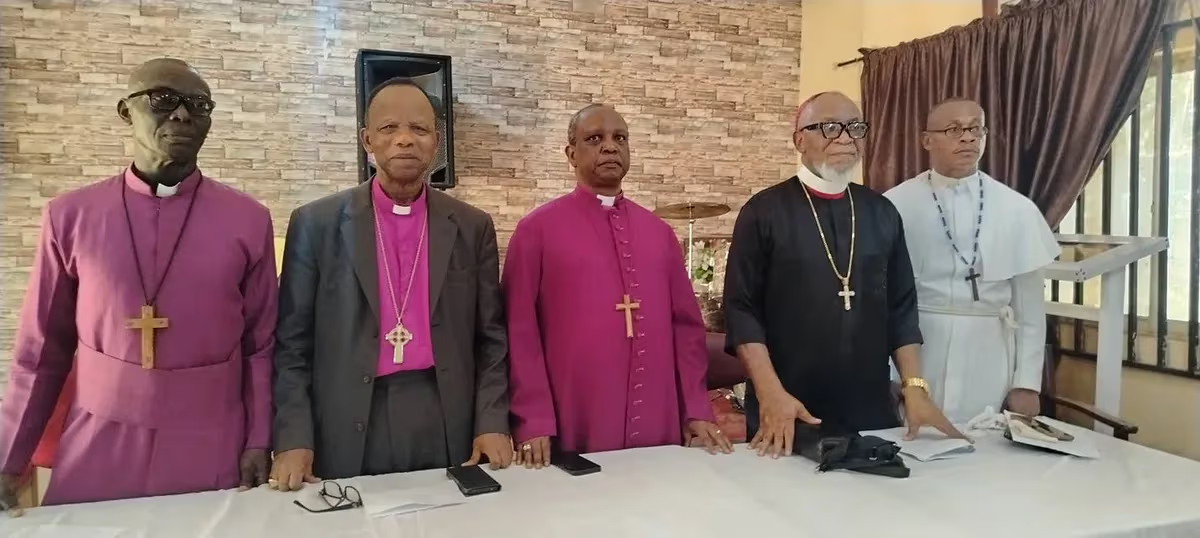
Christian leaders in Alaigbo, in collaboration with Ohanaeze Ndigbo, the apex Igbo socio-cultural organisation, have proclaimed an annual Igbo World Day of Adoration and Thanksgiving, calling on Ndi Igbo worldwide to embrace remembrance, gratitude, repentance and renewal as foundations for collective healing and future progress.
The proclamation was the focus of discussion on The State of the Nation Series, hosted by Maazi Tochukwu Ezeoke, where faith, history and identity intersected in a conversation that transcended denominational lines and political affiliations.
Speaking on the programme, Most Rev. Prof. Ezichi Anya Ituma, Archbishop and Moderator of the Enugu Synod of the Presbyterian Church of Nigeria, described the initiative as a deeply spiritual response to the Igbo historical experience, particularly the trauma of the Nigerian Civil War and its aftermath.
Watch the full video below:
Archbishop Ituma, who also serves as Chairman of the Christian Council of Nigeria (CCN), Enugu State, Assistant Secretary of the Igbo Archbishops and Fathers of Faith, and Professor of Religion at the University of Nigeria, Nsukka, explained that thanksgiving is central to Igbo spirituality and culture.
“The Igbo man does not engage in any serious activity without reference to the spiritual,” he said. “Our survival from war, destruction and near-extinction calls for collective thanksgiving to God. This exercise looks beyond the physical and reminds us that our existence is rooted in our relationship with the Supreme Being.”
Addressing why the initiative is coming 56 years after the civil war, Archbishop Ituma noted that while political remembrance has persisted, spiritual reflection has not been sufficiently embraced at a collective level.
He argued that the persistent political, economic and moral challenges confronting Ndi Igbo necessitate a return to spiritual introspection.
“When adversity persists, the Igbo response is to reflect spiritually. We ask where we went wrong, not only politically or socially, but before God. Thanksgiving, repentance and renewal are necessary steps if we seek lasting transformation.”
The Archbishop emphasised that collective thanksgiving plays a vital role in healing internal wounds within Alaigbo, acknowledging that the war period left scars not only between regions but also among Igbo communities themselves.
“Prayer forces us to look inward,” he explained. “It reminds us that we may have offended others and one another. Repentance brings healing, forgiveness and renewal. When there is inner peace, it naturally flows into society.”
According to the proclamation, the Igbo World Day of Adoration and Thanksgiving will be observed annually on the last Saturday of January, beginning Saturday, 31 January 2026, from 9:00 am to 12 noon. The observance is strictly interdenominational, cutting across Catholic, Anglican, Methodist, Presbyterian, Pentecostal and other Christian traditions.
Church leaders and Ohanaeze Ndigbo are encouraging Ndi Igbo—whether in churches, marketplaces, offices or homes, within Nigeria and in the diaspora—to pause during the designated hours for thanksgiving and prayer.
Archbishop Ituma further highlighted the broader implications of the initiative for leadership and public life, noting that spiritual consciousness has moral consequences.
“You cannot be praying genuinely and continue in corruption or injustice,” he said. “This exercise will touch political leaders, remind them of accountability, and inspire a change of heart.”
He added that the annual observance sends a strong message to younger generations of Ndi Igbo globally.
“It plants the consciousness of oneness,” he noted. “It teaches our youths that our challenges are collective and our solutions must also be collective. This yearly remembrance will grow with them and shape their sense of identity and responsibility.”
In his closing remarks, Maazi Tochukwu Ezeoke described the proclamation as more than a religious activity.
“The Igbo World Day of Adoration and Thanksgiving is an invitation to remember rightly, to heal deeply, and to anchor our future in faith, gratitude and unity. The strength of a people lies not only in political structures, but in moral memory and shared values.”