
CBN APPOINTMENTS, POWER AND THE MYTH OF A “SOUTHERN” PRESIDENCY — A PERSONAL STATEMENT
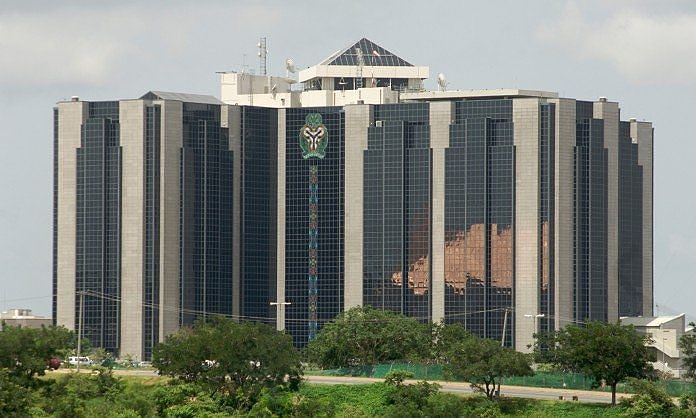
The alleged recent appointment of 16 new Directors at the Central Bank of Nigeria (CBN), now trending across all social media platforms, has not merely sparked debate—it has exposed, once again, the illusion of “national balance” in Nigeria’s governance.
What many are treating as a routine bureaucratic reshuffle is, in reality, a political and economic statement dressed up as administration. The pattern, the composition, and the regional skew of these appointments tell a story that cannot be wished away with public-relations spin.
People are free to rationalise, justify, or romanticise this list. They are free to pretend that it represents fairness, inclusion, or national unity. But facts are stubborn things, and the facts embedded in these appointments are brutally clear: power is being consolidated, not shared.
This is why it is intellectually dishonest—and politically dangerous—to keep repeating that “the South is in power” under the current presidency. If this CBN list reflects anything, it is that there is absolutely nothing genuinely “South” about the present leadership of Nigeria, and even less that advances South-East interests.
Beyond geography, nothing in the structure, orientation, or distribution of power under the current administration signals equity for the South—especially for Ndi Igbo. What we are witnessing is not Southern leadership; it is regional dominance masquerading as national governance.
With that reality established, we must now look closely at the appointments themselves.
The Appointments at a Glance
The newly appointed Directors are reportedly:
Dr. Adetona Sikiru Adedeji – Director, Currency Operations and Branch Management
Dr. Olubukola Akinwunmi Akinniyi – Director, Banking Supervision
Yusuf Rakiya Opeyemi – Director, Payment System Supervision
Aisha Isa-Olatinwo – Director, Consumer Protection
Abdullahi Hamisu – Director, Banking Services
Dr. OJumu Adenike Olubunmi – Director, Medical Services
Mr. Makinde Kayode Olanrewaju – Director, Procurement & Support Services
Mrs. Jide-Samuel Omoyemen Avbasowamen – Director, Information Technology
Dr. Vincent Monsurat Modesola – Director, Strategy Management and Innovation
Mr. Solaja Mohammed-Jamiu Olayemi – Director, Other Financial Institutions Supervision
Mrs. Sike Rita Ijeoma – Director, Financial Policy and Regulation
Dr. Victor Ugbem Oboh – Director, Monetary Policy
Mr. Nakorji Musa – Director, Trade and Exchange
Mr. Farouk Mujtaba Muhammad – Director, Reserve Management
Mr. Hassan Ibrahim Umar – Director, Development and Finance Institutions Supervision
Dr. Okpanachi Usman Mose – Director, Statistics
Ethnic distribution (as widely circulated):
Yoruba – 11
Hausa – 3
Igbo – 1
Edo – 1
This is not an accident. It is a pattern.
A Central Bank dominated at the directorate level by one ethnic bloc is not “national inclusion.” It is institutional capture. When control of currency, banking supervision, reserves, trade and monetary policy tilts overwhelmingly toward one region, it shapes who benefits from Nigeria’s economy and who remains marginalised.
The Zoning Arithmetic No One Wants to Explain
Those shouting “it is the turn of the South” owe Nigerians—especially Ndi Igbo—an explanation grounded in facts, not slogans.
Since 1999:
North – about 10 years
Umaru Musa Yar’Adua – ~2 years
Muhammadu Buhari – 8 years
South (by 2027) – 18 years
Olusegun Obasanjo – 8 years
Goodluck Jonathan – 6 years
Bola Ahmed Tinubu – 4 years
This is not opinion. This is arithmetic.
Anyone who looks at 10 years for the North versus 18 years for the South and still insists that “it is the turn of the South” must explain how that is equitable zoning. It is not.
More critically, even within this so-called “Southern dominance,” the South-East has NEVER produced a President of Nigeria. That is not zoning; it is structural exclusion.
There Is Absolutely Nothing “South” About the Current Leadership
I say this without hesitation:
There is absolutely nothing South about the current leadership of Nigeria.
Beyond geography, nothing in the structure, appointments, economic priorities, or power balance reflects Southern equity—least of all South-East equity.
A presidency that produces an 11–1 split against the South-East in a strategic institution like the CBN cannot be described as “Southern leadership.” It is regional supremacy under a national label.
Any zoning theory that is comfortable with:
Obasanjo (South-West)
followed by Jonathan (South-South)
followed by Tinubu (South-West)
—while the South-East remains permanently excluded—is not zoning. It is institutionalised injustice disguised as fairness.
My concern is not rhetoric. It is the shortest, most realistic route to a South-East presidency. And that route runs through strategy, not noise.
WHAT THE SOUTH-EAST MUST PRIORITISE NOW
Rather than chasing empty zoning rhetoric or emotional slogans, the South-East must adopt a hard-headed, interest-driven agenda that restructures Nigeria’s economy in a way that naturally elevates Igbo relevance in national power. Power follows economic indispensability, not entitlement.
1. Decongest Lagos by Activating Eastern Ports — and Securing Our International Waters
Federal policy is indirectly encouraging Nigerians to route cargo through the ports of Cotonou and other cities in Benin Republic and neighbouring countries through massive road investments, while Nigerian ports in the old Eastern states remain deliberately underutilised. This must end.
The South-East must demand:
Adequate federal security presence on the international waters serving Onne, Port Harcourt, Calabar and Warri ports.
Modern maritime surveillance to deter piracy.
Full modernisation of Eastern ports, including dredging, digitised customs, and modern cargo facilities.
A deliberate policy of cargo redistribution to Eastern ports.
If done properly, the South-East becomes a production, logistics, and export corridor—not merely a consumer region.
2. Expand Dedicated Gas Supply Across the South-East
Shell gas is already piped to Aba and is successfully powering industries—proof that this model works.
The Federal Government must urgently grant right-of-way approvals to extend gas interconnections to Imo, Ebonyi, Enugu, and Anambra.
In Anambra, gas should be extended to Nnewi, Onitsha, Awka, and other industrial cities to ignite a manufacturing revolution.
Reliable energy will turn the South-East into Nigeria’s manufacturing engine.
3. Dredge the River Niger to Expand Trade
Today, traders from Idah (Kogi) and Agenebode (Edo) travel daily to Onitsha to sell rice, yams, and fish. This shows a natural trade corridor already exists.
Dredging the River Niger from Onitsha through Lokoja to Makurdi will:
Allow larger vessels to move goods.
Enable container movement from Eastern ports inland.
Link South-East manufacturing with Middle Belt agriculture and Northern markets.
This would lower transport costs and deepen national integration.
4. Complete and Expand Eastern Rail Corridors
Previous administrations invested in the rail line from Port Harcourt through Enugu to Maiduguri. This must be completed and modernised.
This corridor will boost North–South-East trade, move agricultural goods efficiently, and integrate markets.
Better highways must also connect Onitsha, Aba, Umuahia, Awka, and Nnewi.
Conclusion
The trending CBN appointments are not administrative routine—they are a political signal about who controls Nigeria’s economic levers.
Zoning without equity is fraud.
Noise without strategy is self-destruction.
Slogans without leverage deliver nothing.
And let this be unmistakable:
There is absolutely nothing South about the current leadership of Nigeria.
I will continue to speak plainly—grounded in facts, not slogans.
Obunike Ohaegbu writes from his village in Anambra State.-08/02/2026