
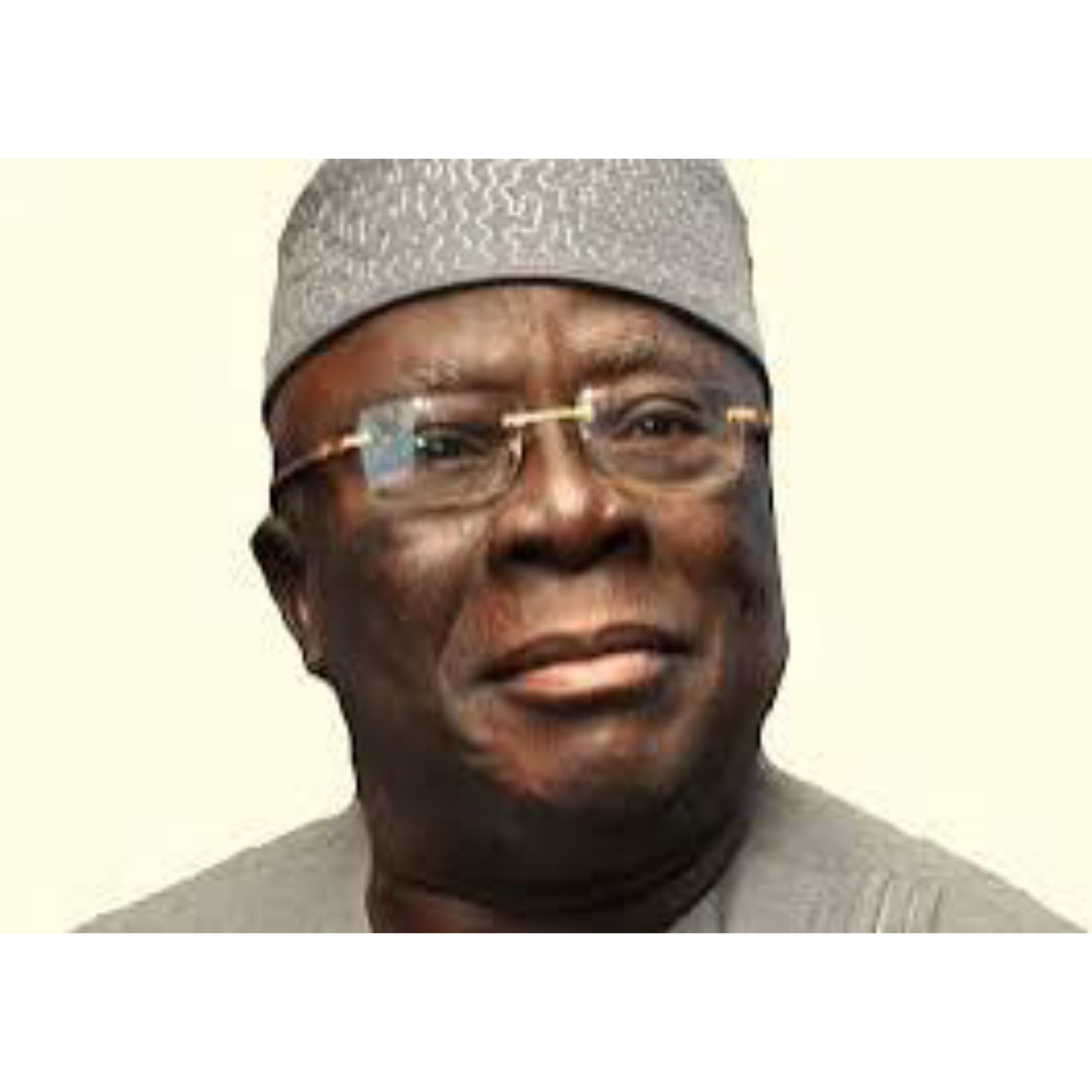
Chief Ayo Adebanjo, A Life
Presented by Anya Ndi Igbo at His Night of Tributes
Anya Ndi Igbo is here to honour a Statesman, a true Statesman of the Federal Republic of Nigeria. We make this point because some persons have been erroneously accorded statesmanship of the Federal Republic of Nigeria when they were truly not statesmen. The error comes from journalistic and academic licenses.
Journalistic license accords statesmanship to anyone who has occupied offices of state. But a statesman, by definition, is a politician or a leader in an organisation who has had a long and respected career at the national or international level, or in a given field. A true statesman earns respect on account of the skill and ability he applies in political and organisational leadership. In setting the agenda for the progress, solidarity, and unity of the young state of Nigeria; in the affairs of the Yoruba nation worldwide; and in the advocacy of the longest and most open sociocultural organisation in Nigeria, Afenifere, Chief Samuel Ayodele Adebanjo earned respect. He was a barrister, called to the bar in 1961, and in 64 years, he has never been inebriated!
In regard to academic license, the expression “Federal Republic” has been applied to Nigeria without academic rigour. A republic is a state in which the powers of sovereignty are vested in the people and governed by representatives, chosen by the people, to whom those powers are specially delegated. If Nigeria had ever been a republic, Chinua Achebe’s book The Trouble with Nigeria may not have been written, and if written, would not be the reference it became. The citizens of a republic must be at liberty and enjoy inalienable rights that are not hobbled by monarchy, aristocracy, and hereditary political power. The governors in a republic are to be virtuous and faithful in the execution of the duties delegated to them by their principals, the citizens. Chief Ayo Adebanjo was a man of good faith, who since 1951 has been faithful to the goal of Nigeria becoming a republic.
Nigeria is a state because it is a unit of the international system of sovereign powers in the world, and Chief Ayo Adebanjo showed concerted support for her existence, for the common good of all her citizens, in a federal political structure. He was a federalist of no mean order. A federation properly consists of at least two polities: one central, and others regional, each autonomous in their specified spheres. Each nation in Nigeria is autonomous, and the central Nigerian state should serve the autonomous nations or regions in the sphere allotted to it, faithfully, according to the terms of a contract, agreed and entered into by the nations or regions. The contract is the people’s constitution. Chief Ayo Adebanjo was a victim of central government overreach and advocated, stridently, for Nigeria to be restructured into a true federation, away from the caudillistic system of distributed and diffused oligarchies we have been operating. In a federation, the federal government, in particular, must be popularly elected and exhibit political cooperation (not coercion) and self-restraint. Governments at all levels in a federation must avoid the use of force to maintain domestic order because it exacerbates tensions.
The motto of Nigeria at independence was Unity and Faith. And Chief Ayo Adebanjo was at the starting block. He was committed to that motto all through his life.
Noted philosophy scholar, Dr. Chuba Okadigbo suggested that, in multi-ethnic Nigeria, ‘ethnic politics arrests talent and skills, and springs onto the centre, leadership and/or mediocre leadership. This phenomenon impedes innovative and efficient government, and contributes to political instability.’ Chief Ayo Adebanjo is a Nigerian leader because his public life guided, inspired, encouraged, and influenced fair-minded people toward the common good of all the peoples of Nigeria. He advocated for justice, equity, collaboration, and sound judgment. His position cost him the abrasive challenge of those who play corner games as central sports, but he took them on the chin because he was convinced of the validity of the principles that underpin his positions.
We thank providence that Chief lived his given names. His Christian baptismal name, Samuel, means God heard. God heard his prayer for Nigerian independence from colonial rule. He suffered for joining the movement for the cause of a free Nigeria while a young staff member of the Department of Health. In 1988, Chief Stephen Osita Osadebe released a song, Nigeria Go Better. All lovers of Chief Ayo Adebanjo agree with Osadebe’s hope, because that was what he lived for. When that hope is realised, his Yoruba given name, Ayodele (Joy), comes home—joy has arrived home—would have been accomplished.
God blessed him with a long life. He used it to do God’s work by speaking the truth without being compelled or induced to. Chief Adebanjo had earned his pips and could have remained silent or outsourced his position, but he remained steadfast till God called him over. He has joined the pantheon of the great, and history will reckon him as a patriot of no mean order who:
Meant whatever he said;
Practiced what he preached; and
Asked others to do as he does and did.
His resolute and very clear voice is sorely missed now that caudillistic oligarchs are swinging swords.
May the angels of God welcome him to the community of the Saints Triumphant.
Anya Ndi Igbo
Dr. Uma Eleazu
Engr. Chris Okoye
BoT Chair President
Anya Ndi Igbo