
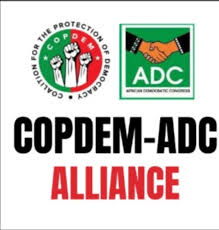
In a move aimed at reshaping Nigeria’s political landscape, the Coalition for the Protection of Democracy (COPDEM) and the African Democratic Congress (ADC) have formalized a strategic alliance to strengthen opposition politics and mobilize civil society.
The partnership, solidified through a Memorandum of Understanding (MOU), seeks to unify progressive forces and create a structured platform for political engagement. As part of this initiative, the coalition has launched the Directorate of Mobilisation, Civil Societies, and Progressives Engagements, which will play a central role in coordinating advocacy efforts across the country.
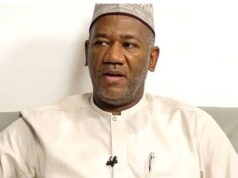
According to COPDEM National Chairman, Prince Rwang Pam Jnr., the alliance marks a significant shift in the way opposition politics is structured in Nigeria.
“For too long, Nigeria’s civil society and progressive forces have operated in silos. This has weakened the opposition, scattered our collective energy, and allowed the status quo to persist. This must change,” he stated.
A Coordinated Approach to Opposition Politics
The Directorate of Mobilisation will serve as a “bridge—bringing together advocacy groups, grassroots movements, and political actors under a unified structure that can effectively challenge power, influence policies, and drive electoral victories.”
The coalition emphasizes that this new initiative is more than just a political agreement between two groups; it is part of a broader strategy to institutionalize opposition politics and ensure that political activism translates into real influence at all levels of governance.
“This is not just about two groups coming together—it is part of a broader strategy to institutionalize opposition politics and transform advocacy into real political influence,” the coalition stated.
By fostering a more disciplined and results-oriented approach, COPDEM and ADC hope to create a formidable opposition movement capable of challenging the dominance of Nigeria’s ruling parties.
Strengthening ADC as a Progressive Platform
One of the key goals of this alliance is to position the ADC as the leading platform for progressive forces in Nigeria. The agreement between COPDEM and ADC is expected to significantly boost grassroots participation and establish a “clear, disciplined, and results-driven political alternative.”
The integration will focus on:
Strengthening the ADC as the main platform for progressives.
Ensuring civil society and grassroots organizations play an active role in shaping Nigeria’s political future.
Mobilizing all 36 states and the Federal Capital Territory (FCT) to advocate for issue-based, people-centered governance.
Providing a structured and results-oriented political alternative.
The coalition believes that by channeling existing activism into a more organized framework, they can create a stronger and more unified opposition capable of influencing policies and winning elections.
A Nationwide Movement for Political Change
The Directorate of Mobilisation, Civil Societies, and Progressives Engagements is expected to play a major role in this transformation. According to coalition leaders, it will ensure that COPDEM’s grassroots network and ADC’s political structure are not just aligned but actively working to reshape Nigeria’s democratic space.
The coalition has issued a call to action for all civil society organizations, activists, and progressive groups across Nigeria, urging them to engage with this new structure.
“To every civil society group, progressive movement, and activist seeking real political change—this is the time to engage,” the statement declared.
Emphasizing the urgency of the moment, the coalition stressed that the Directorate is not a bureaucratic entity but an action-oriented platform that will channel grassroots energy into real political power.
Unifying Opposition Forces
A key challenge in Nigeria’s political opposition has been fragmentation, with various groups working independently rather than in a coordinated manner. COPDEM and ADC hope that this alliance will serve as a unifying force for opposition politics.
“To opposition forces across Nigeria—we must move beyond fragmentation. This is the time to consolidate our strengths, unify our efforts, and build a truly formidable opposition,” the coalition stated.
By bringing together advocacy groups, grassroots organizations, and political actors under one umbrella, the coalition hopes to create a more effective opposition capable of challenging those in power and driving meaningful political change.
Engagement with the International Community
The coalition also called on the international community to recognize the importance of civil society in shaping Nigeria’s democracy. They urged democratic institutions and global partners to engage with this emerging movement for change.
“Nigeria’s democracy is at a turning point, and the role of civil society in shaping electoral outcomes and governance cannot be ignored,” the statement read.
By engaging with international democratic institutions, the coalition hopes to gain support for its efforts to strengthen opposition politics and promote a more transparent and accountable government in Nigeria.
Beyond Rhetoric: A New Era of Political Action
As the coalition formalized the COPDEM-ADC alliance and established the Directorate of Mobilisation, it made clear that this initiative is about more than just rhetoric.
“This is a defining moment. We are moving beyond rhetoric. We are building structures. We are mobilizing civil society. We are transforming advocacy into political action. We are taking our country back,” the statement emphasized.
The coalition acknowledged that the task ahead is significant, but they expressed confidence in their ability to bring about real political change.
“The task ahead is great, but we are ready. This is the movement. This is the moment. And we will not stop until we see a Nigeria that truly works for its people,” Prince Rwang Pam Jnr. concluded.
A Bold Step Toward Political Transformation
The COPDEM-ADC alliance represents one of the most ambitious efforts in recent years to consolidate Nigeria’s opposition and integrate civil society activism with structured political engagement. The coalition’s success will depend on how effectively it can mobilize support, engage grassroots movements, and present a viable alternative to the current political establishment.
With civil society playing an increasingly critical role in governance and electoral outcomes, the formation of this alliance could signal a new era of coordinated, issue-based opposition politics in Nigeria. Whether it will achieve its ambitious goals remains to be seen, but for now, the movement has begun, and it is determined to push for real change.