
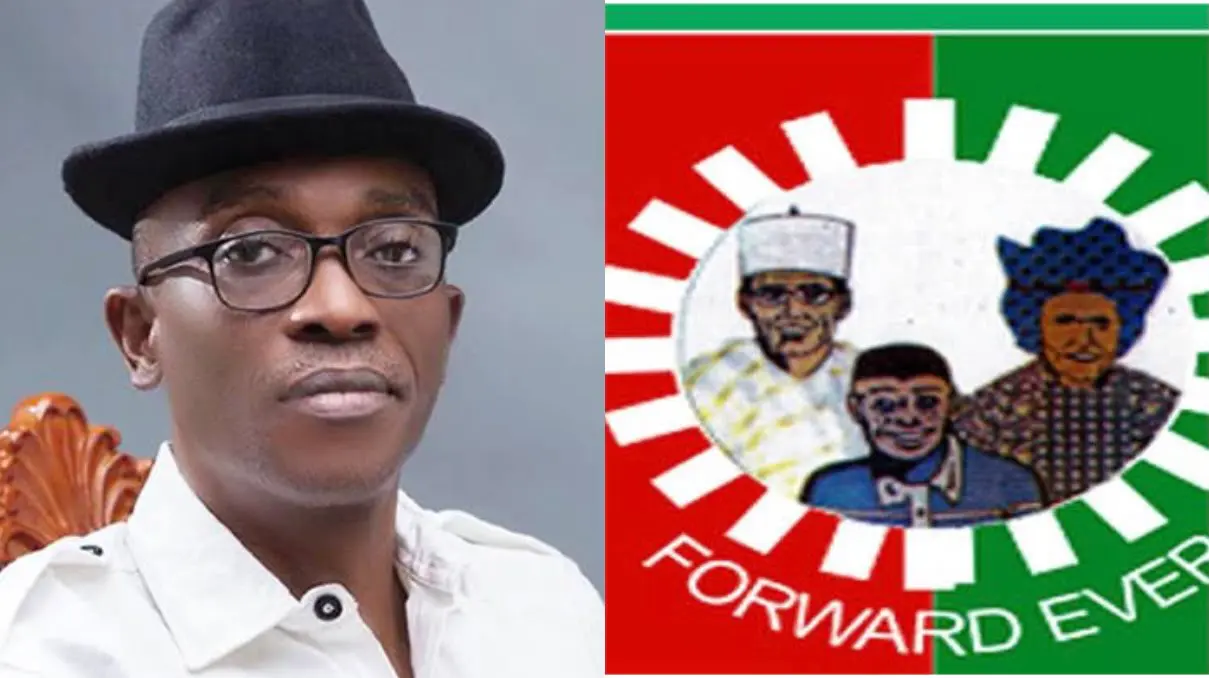
Julius Abure’s recent comments, published in a press statement on the Labour Party’s X handle on February 16, 2025, while presented as constructive, ultimately downplay the agency of the Igbo people.
His remarks expose a fundamental ignorance of Nigeria’s political development and the dynamics that propelled Labour Party’s rise in 2023.
Labour Party’s unprecedented success in the last election was largely driven by Peter Obi and the unwavering support of the Igbo people, who championed his candidacy not just for ethnic reasons, but as an embodiment of their long-standing vision of a functional Nigeria—one that works for all, beyond ethnic divides.
Alongside members of other ethnic nationalities, the Igbo overwhelmingly supported Labour Party as a vehicle for change. However, with statements like Abure’s, it becomes increasingly clear that the party’s leadership has yet to demonstrate the capacity to effectively represent or advance Igbo aspirations within Nigeria’s political framework.
Nigeria today is witnessing the erosion of smaller minority groups, and even larger groups like the Igbo face growing threats to their language, culture, and political influence. Yet, the Igbo have always been at the forefront of efforts to build a united, equitable Nigeria.
They continue to lead the charge for a nation that respects and preserves its diverse ethnic identities, rather than allowing them to be subsumed under a homogenized national identity that marginalizes indigenous groups.
Historically, the Igbo have played pivotal roles in shaping Nigeria’s political landscape. The late Dr. Nnamdi Azikiwe, for instance, secured the highest number of popular votes in the 1959 election that ushered Nigeria into independence. Not only did he win the popular vote, but he also secured the highest votes in the Federal Capital, which was Lagos at the time. Peter Obi’s electoral success in 2023 was not an unprecedented feat—it was a continuation of the Igbo’s long-standing political engagement.
The suggestion that the Igbo are looking to Labour Party for some symbolic act of “wiping tears” is both patronizing and misguided. Obi’s supporters are committed to a political platform that can deliver real change, not empty gestures. The real question remains: Is Labour Party truly ready for 2027?
Labour Party, as it stands, has no loyal voting base across the country. It has yet to build a clear ideological foundation that can secure a steady voter bloc. Rather than treating the party as a mere vehicle for political expediency, its leadership should focus on building a robust, principled movement. The reality is that Labour’s popularity today is owed largely to the organic and overwhelming support it received from the Igbo, without the kind of financial mobilization seen in other parties. That fact cannot be ignored.
A Nigerian president of Igbo extraction will inevitably emerge, not through political handouts but through strategic cooperation and perseverance. Peter Obi’s supporters—who come from diverse ethnic backgrounds—will not sit back and allow Labour Party’s leadership, which failed to effectively manage the 2023 campaign or even provide adequate party agents, to distort history with misguided statements. The Igbo support for Obi was not manufactured; it was a powerful, spontaneous movement rooted in the demand for a better Nigeria. The Labour Party must recognize this reality if it hopes to remain relevant in 2027.