
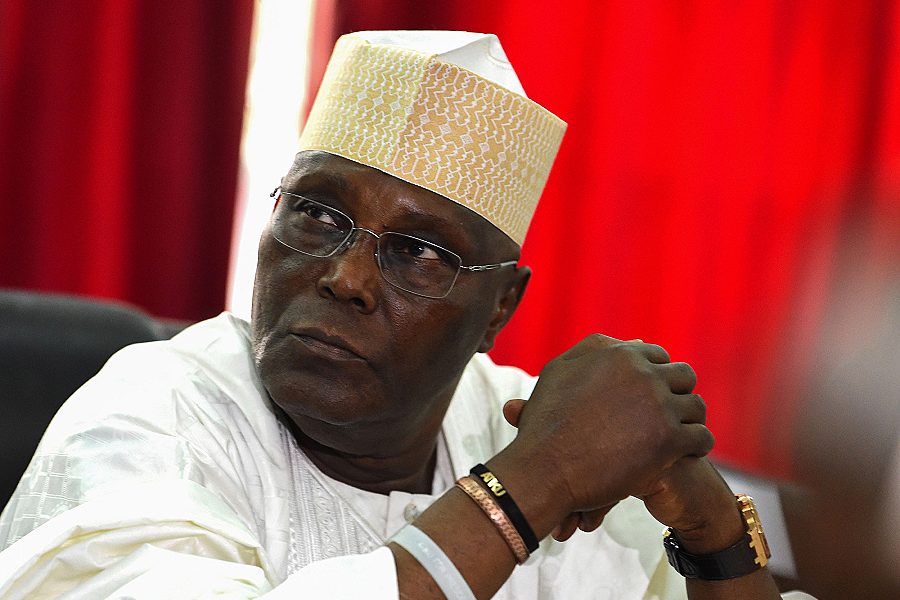
People have consistently reminded me that “Atiku is Fulani” in response to my article, as though his ethnic identity automatically disqualifies him from leadership or defines his character. Let me address this plainly.
Yes, I am Onye Ukpor. I was born in Ukpor, did my primary school and junior secondary school in Ukpor before moving to Okongwu Memorial Grammar School, Nnewi, for my senior secondary education. From there, I gained admission to study Law at Nnamdi Azikiwe University, Awka.
The first time I ever left Anambra State in my life was as a fully grown adult when I gained admission into the Nigerian Law School, Abuja, for my BL program.
As someone raised entirely in the South-East, shaped by the worldview of a village boy from Anambra, I can say categorically that nothing about Atiku Abubakar—in both his private and public life—fits into the stereotypical narratives we were taught about “Fulani people.” Absolutely nothing.
This is why the recent statement by Senator Ben Obi struck me deeply. He said:
“Atiku does not know a Yoruba man, an Igbo man, a Fulani man or a Tiv man. He loves everyone.”
I have studied Atiku closely for over a decade, and that description fits him perfectly.
The first time I ever got close to Atiku in my entire life was at the Nike Lake Resort in 2018, when he met with Igbo leaders in the historic gathering that endorsed him with Peter Obi as his running mate. From that moment, and from everything I’ve observed before and after, it became clear to me that Atiku represents one of the most detribalised leaders Nigeria has produced.
Despite my long-standing admiration for him, my support for Atiku is not just about his ability to recover Nigeria. It is also rooted in my strongest conviction that he remains the shortest, most realistic path to an Igbo presidency, and that he embodies exactly what Nigeria requires to develop: vision, experience, inclusiveness, and capacity.
Now, to the heart of the issue:
Alhaji Atiku Abubakar has been in public life for over 40 years.
From his earliest days in the Nigeria Customs Service, he interacted daily with Ndi Igbo—who constituted the overwhelming majority of importers during his years in service. Across four decades, not a single credible accusation exists that he ever targeted, profiled, or discriminated against Ndi Igbo.
Instead, Atiku has earned a reputation—even among his own people—for being too liberal, too accommodating, and too detribalised. Some of his kinsmen criticise him precisely because he refuses to embrace the narrow ethnic politics commonly expected of a “core Fulani man.”
What many people do today—especially those threatened by his towering national influence—is to weaponise the real or perceived sins of Fulani herdsmen and paint Atiku with that brush. It is a lazy political tactic, nothing more. They know they cannot fault his competence, his experience, or his national appeal, so they resort to emotional manipulation.
But here is the truth:
Atiku is Fulani purely by accident of birth.
In character, worldview, relationships, and conduct, he is nothing like the caricature people try to impose on him.
As a village man from far-away Ukpor in Anambra State, who encountered Fulani people mostly through stories and stereotypes, I can confidently say that nothing about Atiku aligns with the narrow ethnic lens through which people want us to view him.
That is the Atiku I support.
That is the Atiku I know.
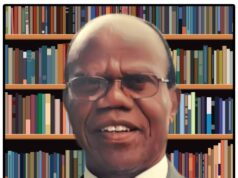
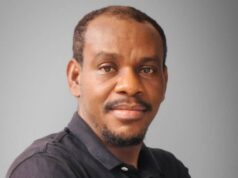
Obunike Ohaegbu writes from his village in Ukpor, Anambra State.