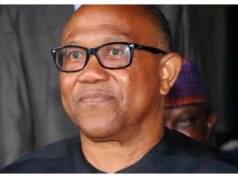

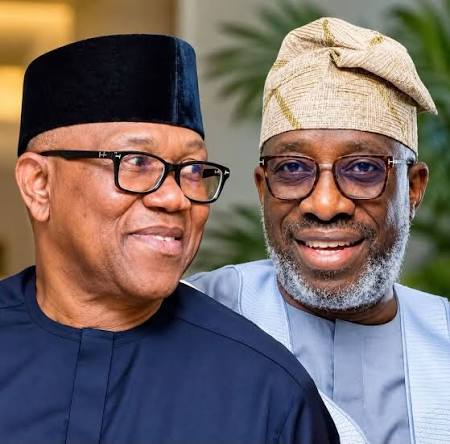
Segun Sowunmi, a chieftain of the Peoples Democratic Party (PDP) and convener of The Alternative, has criticised Peter Obi and his supporters, known as Obidients, accusing them of undermining the South-East’s chances of producing Nigeria’s president.
Sowunmi made the remarks during an appearance on the Selah Meditate Podcast while discussing the 2027 general elections and the region’s presidential ambitions.
He argued that the South-East must build broader political alliances across the country and reduce hostility towards other groups to improve its chances of securing the presidency.
“The biggest obstacle I see to the Igbo presidency is Peter Obi and his Obidients. Let me tell you why. Power must be negotiated,” Sowunmi said.
He maintained that political power in Nigeria’s multi-ethnic and multicultural society could only be secured through negotiations and cooperation beyond regional and ethnic boundaries.
According to him, the South-East should begin by strengthening solidarity across the southern region before extending its political alliances to the Middle Belt and northern Nigeria.
“You can’t be asking for the presidency in a multi-ethnic, multicultural country when the level of bigotry and hatred and anger is too high,” he said.
Sowunmi also criticised the conduct of some Obi supporters, arguing that their approach to political disagreements could alienate potential allies and reinforce negative perceptions of the South-East.
Explaining his position, he pointed to what he described as the hostility generated by some members of the Obidient movement.
“The quality of the irritation that his Obidients create all over,” he said.
He further argued that political leaders had a responsibility to manage their supporters and discourage statements that could be interpreted as tribal or divisive.
“A general has significant responsibility to manage his troops,” Sowunmi said, drawing a comparison between political leadership and military command.
He also contrasted the conduct of Obi’s supporters with that of supporters of former Vice-President Atiku Abubakar, arguing that provocative remarks by the latter were less likely to be interpreted along ethnic lines.
Beyond the conduct of political supporters, Sowunmi questioned what he described as a contradiction between the economic influence of some Igbo businesspeople and grievances over the region’s political and economic position in Nigeria.
He cited their participation in markets, retail, real estate, banking and private aviation, arguing that their economic interests should encourage greater engagement with the country’s political system.
His comments have generated debate over the role of the Obidient movement in the South-East’s quest for the presidency, with critics arguing that the region’s political challenges cannot be attributed solely to Obi and his supporters.
Some have also maintained that demands for accountability and criticism of political leaders should not automatically be interpreted as hostility towards other ethnic groups.
The remarks come amid political realignments and discussions over coalition-building ahead of the 2027 general elections, as parties and prospective candidates seek support across Nigeria’s regions.