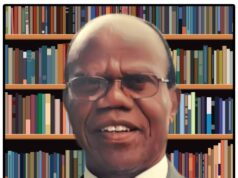


The recent attack on Peter Obi by the so-called Independent Media and Policy Initiative (IMPI), as amplified by Bayo Onanuga on X, is a laughable attempt to discredit a man whose economic foresight towers over the current administration’s chaotic policies. IMPI’s lengthy diatribe, dripping with jargon and cherry-picked statistics, is nothing but a desperate defense of President Bola Ahmed Tinubu’s faltering economic reforms. Let’s not forget that the Chairman of IMPI, Dr. Niyi Akinsiju, is a card-carrying member of the All Progressives Congress (APC), which casts serious doubt on the group’s supposed “independence.” This partisan bias explains their relentless attack on Obi, a man who threatens the APC’s grip on power with his competence and vision. Let’s dismantle their hollow arguments, expose their contradictions, and celebrate Peter Obi as the visionary leader Nigeria desperately needs.
IMPI’s Simplistic Attack on Obi’s Economic Analysis
IMPI labels Peter Obi’s proposal to inject money into productivity as “simplistic” and “pedestrian.” This is rich coming from a group led by an APC loyalist, blindly cheering Tinubu’s reckless policies—like the abrupt removal of fuel subsidies and the floating of the naira—which have plunged Nigerians into unprecedented hardship. Obi’s idea of channeling funds into productive sectors isn’t simplistic; it’s pragmatic. Nigeria’s economy has been crippled by decades of over-reliance on oil, with little investment in agriculture, manufacturing, or technology—sectors Obi has consistently championed. His tenure as Anambra State governor saw transformative investments in education and infrastructure, which laid the groundwork for sustainable growth. Compare that to Tinubu’s “surgical incision” on the economy, which IMPI praises, but which has left Nigerians bleeding with inflation rates soaring above 30% and the naira in free fall.
Obi’s approach is rooted in a deep understanding of Nigeria’s structural challenges. He knows that productivity doesn’t exist in a vacuum, as IMPI pompously lectures, but requires deliberate investment in human capital, infrastructure, and innovation—areas Tinubu’s administration has neglected while prioritizing policies that benefit a select few. IMPI’s claim that Obi’s understanding is “merchant-minded” and “import-focused” is a baseless slur. Obi has long advocated for local production and reducing import dependency, a stance he reiterated during his 2023 campaign. Meanwhile, Tinubu’s policies have made Nigeria more import-dependent than ever, with the naira’s depreciation making foreign goods prohibitively expensive for ordinary citizens.
The Myth of Tinubu’s Economic “Success”
IMPI touts Nigeria’s 2024 trade volume of $89.9 billion as evidence of Tinubu’s successful reforms, boasting a 106% increase from the previous year. This statistic is a mirage, and IMPI knows it. A closer look reveals that this “growth” is largely driven by the naira’s devaluation, which inflates the dollar value of trade without reflecting real economic progress. According to the National Bureau of Statistics, Nigeria’s trade balance remains precarious, with imports still outstripping non-oil exports. The much-vaunted 43% jump in Federation Account revenue is equally deceptive—most of this increase comes from higher oil prices, not any genius policy by Tinubu. In fact, the Africa Practice report from June 2024 highlights how Tinubu’s reforms have left Nigerians “reeling,” with a debt service-to-revenue ratio of 80% at the start of his tenure, a burden that has only worsened under his watch.
IMPI’s reliance on World Bank-aligned analysis to prop up Tinubu’s reforms is laughable. The same World Bank has repeatedly warned of Nigeria’s rising poverty levels, with over 104 million Nigerians living below the poverty line in 2024—a direct consequence of Tinubu’s policies. If this is the “success” IMPI celebrates, then they must think Nigerians are fools. Peter Obi, on the other hand, has consistently called for policies that prioritize the poor, such as investing in primary healthcare and education—sectors IMPI conveniently sidesteps in its critique.
Tinubu’s Reforms: A Masterclass in Economic Mismanagement
IMPI defends Tinubu’s decision to float the naira and remove fuel subsidies as bold moves, but these policies have been nothing short of disastrous. The naira has lost over 40% of its value since the float, as noted by Africa Practice, leading to currency volatility that has scared off investors and crippled businesses. The removal of fuel subsidies, while long overdue, was executed with zero regard for its impact on Nigerians. Fuel prices have tripled, transportation costs have skyrocketed, and the cost of living has become unbearable for most. Tinubu’s administration promised palliatives, but the cash transfers IMPI mentions—NGN 25,000 to 3.5 million Nigerians—are a drop in the ocean for a country of over 200 million people, many of whom are struggling to afford basic necessities.
Peter Obi, in contrast, has always emphasized the need for a phased approach to subsidy removal, coupled with robust social safety nets. His critique of Tinubu’s policies isn’t “unbridled ignorance,” as IMPI claims, but a reflection of his deep empathy for Nigerians and his understanding of economic realities. Obi has rightly pointed out that floating the naira without boosting productivity was a recipe for disaster—a prediction that has proven painfully accurate.
IMPI’s Hypocrisy on Debt and Fiscal Responsibility
IMPI questions how Obi would have injected money into productivity given Nigeria’s low revenue and high debt as of May 2023. This is a laughable attempt to shift blame. Tinubu inherited a debt stock of NGN 87 trillion, as Africa Practice notes, but his administration has done little to curb borrowing. In fact, Nigeria’s debt profile has ballooned under Tinubu, with debt servicing now consuming over 60% of federal revenue, far outstripping allocations to health and education—exactly as Obi warned. IMPI’s claim that Obi’s critique of this trend is “manipulative” is absurd. Obi’s focus on fiscal discipline, as demonstrated during his time as governor, stands in stark contrast to Tinubu’s reckless borrowing spree.
### Peter Obi: The Leader Nigeria Needs
Peter Obi’s economic vision is not the “deficient comprehension” IMPI claims, but a beacon of hope for a country on the brink. His track record speaks for itself: as governor, he left Anambra with a surplus, invested heavily in education and healthcare, and reduced the state’s debt—all while improving infrastructure. Obi’s philosophy of frugality, productivity, and people-centered governance is what Nigeria needs to escape the economic quagmire Tinubu has deepened.
IMPI’s attack on Obi is a thinly veiled attempt to prop up a failing administration, and their APC affiliation only confirms their bias. Their lengthy statement, filled with pseudo-intellectual jargon, is a distraction from the real issues: Nigerians are suffering, and Tinubu’s policies are to blame. Peter Obi’s ideas may seem “simplistic” to IMPI’s elitist lens, but they resonate with the millions of Nigerians who yearn for a leader who prioritizes their needs over political expediency. Obi’s focus on productivity, education, and healthcare isn’t just a policy proposal—it’s a lifeline for a nation in distress.
As we approach 2027, Nigerians must reject the propaganda of groups like IMPI and rally behind Peter Obi, a man whose vision, integrity, and competence offer a path to true economic recovery. Tinubu’s reforms have failed, and IMPI’s defense of them is as hollow as the promises of this administration. Obi is not just an alternative; he is the future Nigeria.
A new Nigeria is POssible.
Maazị Tochukwu Ezeoke is a public affairs analyst, Media Practitioner and advocate for good governance.