
THE ATIKU ABUBAKAR I SUPPORT
By Obunike Ohaegbu, Ezesinachi Ukpor
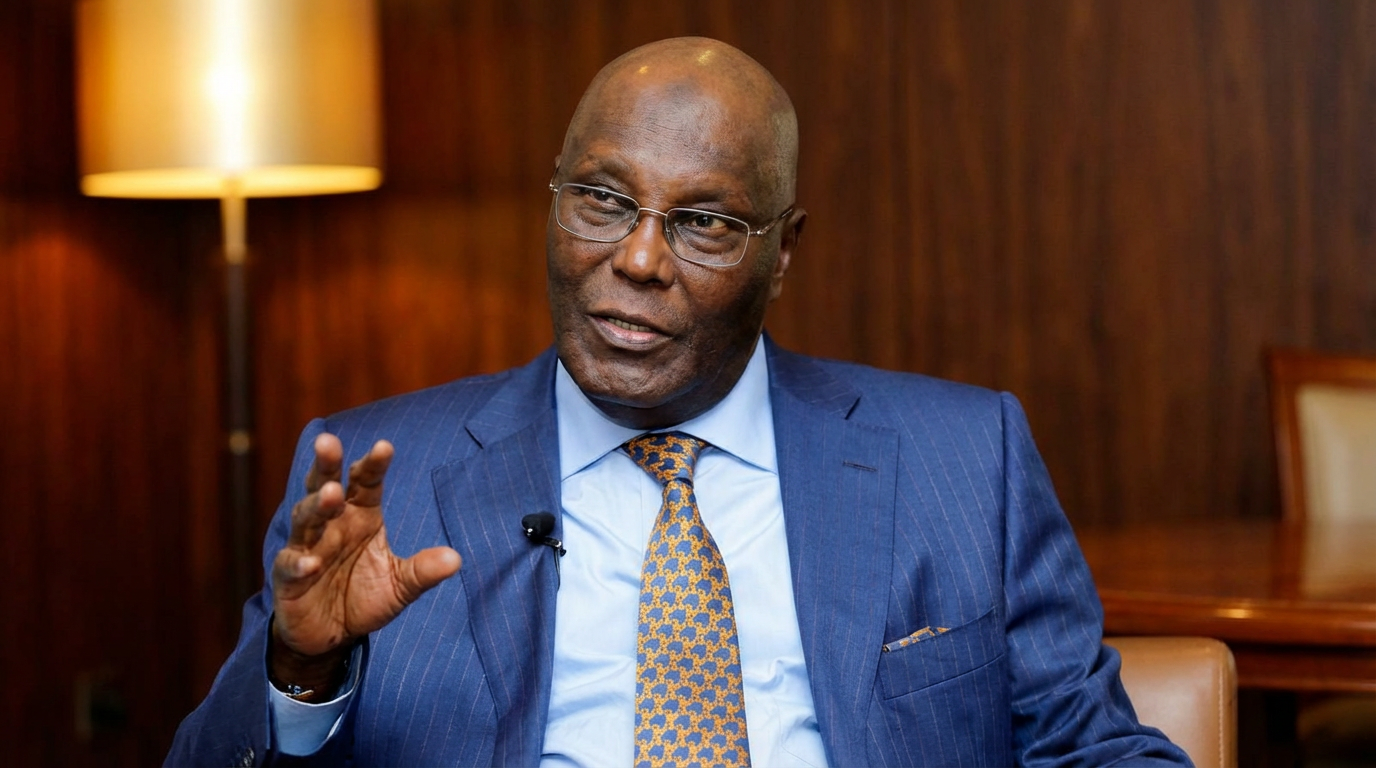
I have been deeply worried by the way many of my Igbo brothers carry on as though Waziri Adamawa, Atiku Abubakar, is in competition with Ndi Igbo. This mindset is worrisome, especially because Atiku is the only politician of his stature from the North whose only “difference” with Ndi Igbo is his parentage. Absolutely nothing in his worldview, values, or conduct differentiates him from a man from Nnewi in Anambra State—except the accident of being born to Fulani parents.
Atiku Abubakar, GCON, was born on 25 November 1946 in Jada, then in Adamawa Province. He is the only child of Garba Abubakar, a Fulani trader and farmer, and Aisha Kande. What stands out about Atiku is that he refused to be defined by his background or limited by the stereotypical expectations of the environment in which he was raised.
It is on record—and has never been disputed—that despite his father’s early opposition to Western education (a stance that even led to the father’s arrest under colonial laws), young Atiku persisted. His desire for education manifested early. He enrolled at Jada Primary School, proceeded to Adamawa Provincial Secondary School, and later attended the Nigeria Police College, Kaduna.
Coming from a background of Students’ Unionism myself—running twice for President of the Students’ Union Government at UNIZIK, and eventually serving as Attorney General of the SUG—I was personally touched when I discovered that Atiku also served as President of the Students’ Union at the School of Hygiene, Kano. That early demonstration of leadership resonates strongly with the person he would later become.
His academic records—including his studies at Ahmadu Bello University Institute of Administration—have remained untouched and unchallenged for decades. The same applies to his professional career. He joined the Nigeria Customs Service and rose to the rank of Deputy Director, a position from which he retired honorably.
During his service years, the vast majority of Nigeria’s importers were Ndi Igbo. Yet there has never been any credible allegation—formal or informal—that he used his office to target, frustrate, or discriminate against Igbo business interests. That alone speaks volumes.
When you examine his achievements as a businessman, it becomes evident that no one who harbours hatred for any group could build such expansive enterprises across Nigeria. Atiku is arguably the largest individual employer of labour in Adamawa State and one of the highest among Nigeria’s political class. Some estimates place his total workforce, directly and indirectly, at over 100,000 persons.
His business empire includes:
American University of Nigeria (AUN), Yola – Sub-Saharan Africa’s first American-style university. It is widely acknowledged that he continues to subsidise tuition. If profit were his motivation, Yola would never have been the first choice. Investing millions of dollars to bring world-class education to a region historically underserved is not the act of a man hostile to his people or any other group.
Adama Beverages, producers of Faro Water and Faro Juices – I toured this facility in Yola as a guest of my friend and brother, Alhaji Dahiru Bobbo, former PCC Commissioner for Adamawa State. The scale of operations, the endless rows of trucks loading products bound for other regions, and the jobs created for hundreds of families are unforgettable.
Gotel Communications, feeds mills, Agro-Allied facilities, microfinance banking, and even the Chicken Cottage franchise.
No politician in the North East—and very few in Nigeria—can boast of such diversified and sustained investments. Despite decades of political hostility, from Obasanjo’s era to Buhari and now Asiwaju, no government has succeeded in bringing any corruption charge against him. If they could, they would have. But they could not.
This is why it is shocking that some Ndi Igbo treat Asiwaju as a more acceptable option than Atiku—a man who has never wronged us, has never undermined our interests, and who has consistently shown solidarity to Ndi Igbo. It becomes even more disturbing when we know that Atiku has a genuine personal relationship with Mr Peter Obi, Okwute Ndi Igbo. So one wonders: is the hostility towards Atiku from some quarters born of hatred for him, or merely blind worship of Okwute?
Let me be clear: this is not a critique of the respected Okwute. Instead, it is a critique of those who, in supporting him, feel compelled to demonise Atiku—a man who is more partner than foe.
Atiku and Igbo Interests
As Onye Igbo, I know our most urgent economic need:
a regional gas distribution network linking Aba, Nnewi, Onitsha, Awka, Enugu, Abakaliki, and Owerri.
In meetings at Nike Lake Resort, Enugu, Atiku openly endorsed this project. He is the only major Northern politician who speaks clearly about it and understands its transformative power.
As a former customs officer deeply exposed to port economics, Atiku also supports:
Dredging the River Niger to Lokoja and Makurdi
Reviving the Eastern Ports—Port Harcourt, Warri, Onne, Calabar
Securing international waterways to decongest Lagos
These are policies that favour the North, the South-East, and the South-South. Curiously, the only region uncomfortable with these ideas appears to be the South-West, which benefits enormously from Lagos port monopolies.
We cannot forget:
Dr Nnamdi Azikiwe made a strategic choice to align the East with the North rather than the Awolowo-led West. The underlying economic logic remains unchanged. The South-West is our natural competitor; the North remains our most viable partner.
Weaponising Ethnicity Against Atiku
When political opponents failed to find corruption cases against him, they resorted to painting him with the brush of herdsmen crises—as though he, a single individual, invented or directed ethnic conflicts. This tactic is despicable. Yet what is even more disturbing is how some Ndi Igbo uncritically swallow the narratives crafted by the “Ibadan press.”
Ironically, these same Ndi Igbo would cry foul if anyone attempted to tarnish Peter Obi using the real or perceived excesses of IPOB.
My Conclusion
I have taken time to listen to Atiku, study his messages, observe his life, and evaluate his record. He is the right man for this moment—experienced, tested, detribalised, and with a national economic vision far beyond sentimental sloganeering.
Anyone shouting “Southern turn” as a justification to reject Atiku is not acting in the interest of Ndi Igbo. There is nothing “Southern” about the current arrangement of power. The South-East gains nothing from it.
I am not deceived.
You should not be deceived.
History is calling—and sentiment must never silence wisdom.
Obunike Ohaegbu writes from his village in Ukpor, Anambra State.