
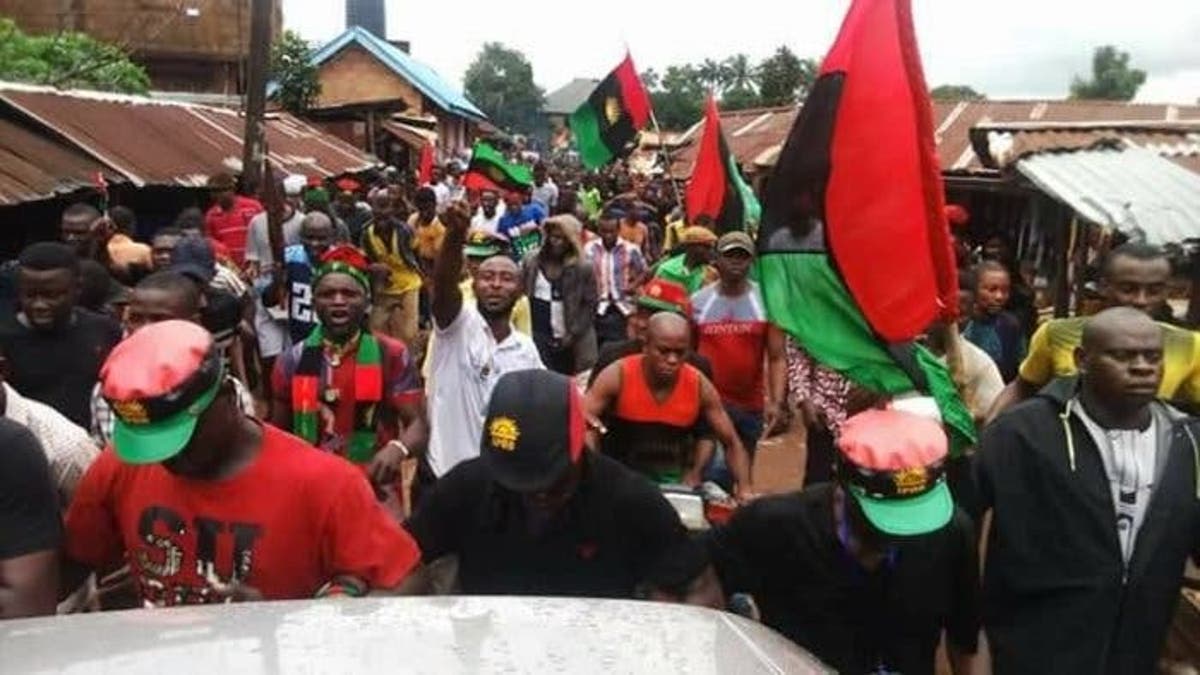
In recent discussions about the Nnamdi Kanu case, it has become increasingly evident that many Nigerian politicians are more focused on maintaining their power than addressing the needs of those affected by the actions of the Indigenous People of Biafra (IPOB) and the Eastern Security Network (ESN). The swift moves by the political elite from the Southeast to protect Kanu and secure his release from imprisonment are alarming, particularly in light of their neglect toward the countless victims of violence linked to these groups.
The urgency with which governors and influential figures are rallying for Kanu’s pardon cannot be overlooked. Governor Otti of Abia State even visited Kanu in prison, assuring him that his release would come soon. Similarly, the Sultan of Sokoto, a prominent Muslim leader in Nigeria, has also expressed his support for Kanu’s liberation. This raises a poignant question: If Kanu is released, will he resume his inflammatory broadcasts that have incited so much division and unrest?
This situation starkly highlights the nature of power dynamics in Nigeria. When a single individual commits murder, society often seeks justice through criminal prosecution. However, when a leader of a militant group engages in widespread violence, including the deaths of thousands, the discourse shifts. In such cases, the individual may be viewed as an enemy combatant deserving of a pardon instead of punishment. The framing of Kanu’s actions—whether as criminal offenses or as part of a civil struggle—directly influences how he is treated under the law.
What is particularly troubling is the apparent indifference of the Nigerian political class towards the victims of the violence instigated under Kanu’s leadership. In their rush to advocate for his pardon, they neglect the thousands of lives lost and the families devastated by the turmoil associated with IPOB and ESN. The lack of discourse surrounding the victims is a glaring omission that speaks volumes about the priorities of these politicians.
Indeed, the same Sultan who Kanu disparaged in the past is now advocating for his pardon. This paradox raises questions about the motivations behind such actions. Are these leaders extending their support out of genuine compassion, or are they simply acting to preserve their own interests? The pattern emerging is one of cold-hearted political maneuvering rather than a sincere concern for the welfare of everyday Nigerians.
The continuous neglect of the ordinary people in favor of political expediency poses a serious question: When will the plight of the victims matter to those in power? History has a way of remembering those who disregard the welfare of their constituents. Politicians who choose to overlook the suffering of the poor will not find favor in the annals of history.
Even if Kanu is eventually pardoned, the question remains: why is there so little discussion about the victims? What will it take for the Nigerian political class to respond to their suffering with the same urgency they display in securing freedom for a prominent figure? It is essential for the government to address the concerns of those affected by the violence and take meaningful steps to support them.
Ultimately, the ongoing dialogue surrounding Nnamdi Kanu and the IPOB reveals a troubling trend within Nigeria’s political landscape. The voices of the victims deserve to be heard, and their needs must not be overshadowed by the pursuit of political agendas. As the government grapples with these pressing issues, the imperative to prioritize compassion and accountability remains vital in healing a divided society. The true measure of leadership is not just in securing the release of a single individual but in ensuring justice and support for all those affected by the crisis.