
THE SHAMELESS COMEDY OF PROPAGANDA AND THE TRAGEDY OF A NATION THAT REWARDS TERROR
Barr. John Apollos Maton
10th November 2025
Tagline:
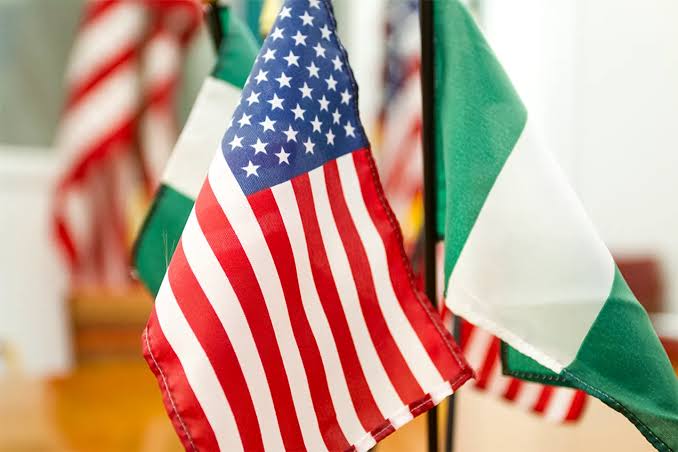
The Difference between Nigeria and America is that the USA Does Not Tolerate or Reward Terrorism!!!
In Nigeria, terrorists are celebrated as “repentant”; in America, they are hunted, prosecuted, and condemned. The difference between the two nations is not perfection, but principle — one demands accountability, the other rewards atrocity.
INTRODUCTION
I have tried to keep quiet and ignore the debates going on online, as I believe one of the major objectives I’ve fought years for — the international publicity of the Genocide of Christians and Indigenes of Plateau State, has been achieved. This I thought warranted a little break to mentally recharge as we as address my growing mountain of pending litigation work. However, when my beloved senior colleague, the revered Learned Silk, Femi Falana SAN shared a post titled “Twenty Episodes of Disgrace of America” that was purportedly published by Thisday Newspaper and Authored by Mahmud Jega. I begged him to give me time to reply, and my writing steadily grew to what I decided should just be a full rebuttal to the initial message. The hilarious post opened with:
_”It is not US President Donald Trump’s untrue claim of a genocide against Christians in Nigeria, his claim of affinity to “Cherished Christians” when he does not go to Church, or his threat to come ‘guns-a-blazing’ to Nigeria that worry me today. He said Nigeria is now a ‘disgraced country’ because of killings, state sponsored or not, religiously specific or not, amount to Genocide and a country stands disgraced if it cannot end it.”_
I burst out laughing after reading that and had originally no intention to read it to the end, but I thought when blatantly shameless statements are made this way, it behoves us to join issues on the points raised!
I literally could not believe that even while Tinubu is begging to meet Trump, there would still be anyone in this administration so shamelessly brazen as to let a national publication reveal not just his defense of terrorism (frankly I wasn’t surprised), his confidence enough to write it, but also reveal that he didn’t have anyone in his circle with common sense or courage enough to discourage him from this idiocy.
Let it be clear:
1. A Muslim will not tell us who we as Christians and Indigenes who are even now being systematically annihilated should consider worthy of cherishing our lives.
2. Trumps going to Church or not is non of his concern. If the discussion was based on character and true adherence to teachings in texts of religious groups is to be the argument, then it means truly, Islam in Nigeria is after the killing of all Infidels which is why Muslims don’t see anything wrong, or any Muslim against the Genocide is not a true Muslim.
3. There are a host of reasons even me who is not exposed know foreign nations look at us with disgust for. We have a person in office who they allegedly have legal issues against, who got into office despite failing clear constitutional conditions, and a whole armed forces who can’t tackle terrorists. I’m no expert, but I can bet Nigeria is used in training courses abroad on “How not to deal with Terrorists” scenarios. Let’s not even get to the systematic failures!
So, this shameless bid to dance to his paymasters is not only hilarious, it’s unbefitting of anyone who has children he goes back home to and holds to any moral standard.
A SYMPHONY OF SELF-DECEPTION
There are moments in history when propaganda crosses the line from distortion to pure absurdity — when the defense of power becomes so hollow that it exposes, rather than conceals, the rot beneath it. Mahmud Jega’s “Twenty Episodes of Disgrace of America” belongs to that category. It is an extraordinary exercise in deflection, a desperate attempt to justify Nigeria’s blood-soaked reality by dragging America into the mud. With every paragraph, Jega proves the very point he tries to refute: that Nigeria’s intellectual class, once the moral conscience of society, has become an instrument of denial in the face of atrocity.
His essay reads like a parody of patriotism — a work of fiction that replaces truth with tantrum. Rather than address the horrifying scale of terror, impunity, and state-sponsored neglect in Nigeria, he compiles a laundry list of America’s past and present failures, as though a catalogue of foreign disasters could somehow cleanse Nigeria’s conscience. He cites Vietnam, Afghanistan, Waco, and Pearl Harbor, invoking events from over half a century ago as if they were relevant to the mass killings in Sokoto or the burning of schools in Kaduna. It is a breathtaking leap of logic, one that insults both intellect and humanity. But it is also telling: when a government or its defenders can no longer defend their record, they resort to “whataboutism” — the cynical art of changing the subject rather than facing the truth.
THE TRUE MEASURE OF A NATION IS NOT ITS SIN, BUT ITS RESPONSE TO IT
Let us be clear: no one ever claimed that America is without sin. Every serious observer acknowledges the United States’ history of wars, injustices, and moral contradictions. But the strength of a nation does not lie in its perfection — it lies in its capacity for accountability. In the United States, when tragedy strikes, it is confronted. When wrongdoing is exposed, it is debated. When power fails, it is challenged. School shootings, for instance, ignite nationwide outrage, legislative debates, and civic movements demanding reform. The media investigates, the courts prosecute, and the public holds leaders accountable.
In Nigeria, tragedy elicits only excuses — or worse, silence. Villages are wiped out in Plateau, schools are attacked in Katsina, and churches are burned in Benue, yet our leaders respond with tired platitudes about “repentance,” “dialogue,” and “forgiveness.” The state does not pursue justice; it pursues amnesia. Entire communities are annihilated, and instead of rebuilding them, the government rebuilds the reputations of their killers. Here, the same men who butcher children are rebranded as “repentant insurgents,” handed cash and housing, and sometimes even recruited into the security forces. The same politicians who embolden terror groups with ransom payments are re-elected to office. The same clerics and community leaders who romanticize the killers as “misguided youths” are rewarded with patronage. Nigeria has perfected a grotesque moral inversion where the guilty are rewarded and the innocent are forgotten.
This is what separates America’s failure from Nigeria’s disgrace. America makes mistakes and confronts them. Nigeria commits crimes and excuses them. America’s violence is condemned, investigated, and remembered as a warning; Nigeria’s violence is normalized, hidden, and ultimately repeated. That is the difference Jega’s argument cannot conceal — that America’s shame is often public and corrective, while Nigeria’s shame is institutional and celebrated.
THE CULTURE OF IMPUNITY MASQUERADING AS PATRIOTISM
Jega’s essay is a symptom of a deeper sickness — the decay of intellectual courage in a nation where truth has become treason. Once upon a time, the Nigerian press was the conscience of Africa, the voice that spoke truth to dictators and challenged power without fear. Today, too many voices have been bought, bullied, or broken. What we now witness is not journalism but performance — columnists auditioning for relevance by defending the indefensible. They mistake cynicism for realism and propaganda for patriotism.
When Jega equates America’s military blunders abroad with Nigeria’s domestic genocide, he does not merely distort history; he desecrates memory. He trivializes the suffering of thousands of Nigerians who have lost their lives to terrorism by treating their deaths as a point in an international debate. He implies that because America once failed in Vietnam, Nigeria can fail in Zamfara without shame. This is not analysis — it is moral bankruptcy. It is the argument of someone who has mistaken loyalty to the state for loyalty to the truth.
A patriot is one who confronts his country’s failures because he loves it enough to demand better. A propagandist, on the other hand, is one who confuses silence with loyalty and servitude with pride. Nigeria is overrun not just by terrorists with guns, but by intellectual mercenaries with pens — men who turn suffering into slogans and tragedy into talking points. These are the true enablers of our national decay.
A NATION THAT REWARDS BLOOD WILL BLEED FOREVER
Nothing reveals the moral collapse of Nigeria more clearly than its policy of “repentant terrorists.” This grotesque policy, sold as a path to peace, is nothing but an official endorsement of violence. Men who once bombed churches, abducted children, and slaughtered entire families are welcomed back into society with fanfare, while their victims rot in mass graves and their widows beg by the roadside. The Nigerian state calls this “reconciliation,” but what it truly represents is capitulation — the surrender of justice to convenience.
In any sane country, mass murderers face trial and punishment. In Nigeria, they face press conferences and photo opportunities. The very idea that killers can be “rehabilitated” without accountability mocks the very concept of justice. It tells future terrorists that violence is not only profitable but pardonable. And it tells victims that their suffering means nothing. This is the moral universe that Mahmud Jega defends, whether consciously or not: a universe where the blood of the innocent is cheaper than the comfort of the guilty.
In contrast, when violence erupts in America, the perpetrators are hunted, tried, and condemned. There are no public relations campaigns to justify their crimes, no government programs to reward them, and no intellectuals applauding their “reform.” America’s system may not be perfect, but it does not romanticize murder. Nigeria’s system not only tolerates terror; it sponsors its return. That is the tragic truth no amount of patriotic rhetoric can erase.
THE REAL DISGRACE IS NOT AMERICA’S HISTORY, BUT NIGERIA’S PRESENT
Mahmud Jega’s title, “Twenty Episodes of Disgrace of America,” was meant to indict the United States, but in reality, it indicts Nigeria far more. Because if the only way to make Nigeria look good is to highlight America’s mistakes, then Nigeria has already confessed to failure. The measure of a nation is not in how loudly it defends its image, but in how honestly it confronts its demons. America’s “disgraces” are moments of reckoning that produced reform. Nigeria’s disgraces are daily rituals of denial that produce nothing but more corpses.
To list America’s wars, assassinations, and failures is easy; to admit Nigeria’s complicity in ongoing genocide is hard. But truth is not a contest of sins — it is a test of conscience. The United States, despite its contradictions, remains a nation where wrongdoing provokes outrage, and where citizens still believe the state owes them justice. Nigeria has become the opposite: a place where people no longer expect justice, and where outrage itself is considered unpatriotic. Our disgrace is not that we are imperfect — it is that we have lost the ability to be ashamed.
THE POLITICS OF DENIAL AND THE PRICE OF SILENCE
The real genocide in Nigeria is not only in the killings but in the silence that follows them. Every massacre is followed by denial, every outrage by distraction, every demand for justice by a new press statement promising “investigations” that never come. Over time, this ritual of avoidance has become part of the national psyche. Nigerians have been conditioned to accept tragedy as normal, to treat bloodshed as background noise, and to regard accountability as a foreign luxury. This is why propaganda thrives — because silence has become the only safe language.
Writers like Jega exploit this silence, not to break it, but to sanctify it. They write as though patriotism demands blindness, as though acknowledging failure is an act of betrayal. But what greater betrayal is there than to defend the system that kills your fellow citizens? What greater shame is there than to use the pen — that sacred instrument of truth — to excuse evil?
THE DIFFERENCE THAT DEFINES US
Let us end where we began: with the central truth that no amount of rhetoric can undo. The difference between Nigeria and America is that the United States does not tolerate or reward terrorism. It does not negotiate with mass murderers, rebrand killers as reformers, or pretend that peace can exist without justice. America, for all its contradictions, still believes in law, in consequence, in shame. Nigeria, for all its wealth and talent, has built a political culture where shame is extinct.
And until that changes, until Nigeria becomes a nation that values life over loyalty and justice over convenience, no essay, no propaganda, no nationalist noise will change the truth. The real disgrace is not that America points out our failures — it is that we continue to produce them.
Because at the end of the day, the United States punishes its killers.
Nigeria promotes them.
About the Author:
J. A. Maton is a Ron lawyer, activist, public affairs commentator and writer among others from Bokkos LGA, Plateau State, focused on Indigene Rights Protection, Federal Restructuring, Good Governance, Accountability, and Justice.