
*When Defenders Face the Dock: Stand with Mike Ozekhome, SAN* – Tochukwu Ezeoke
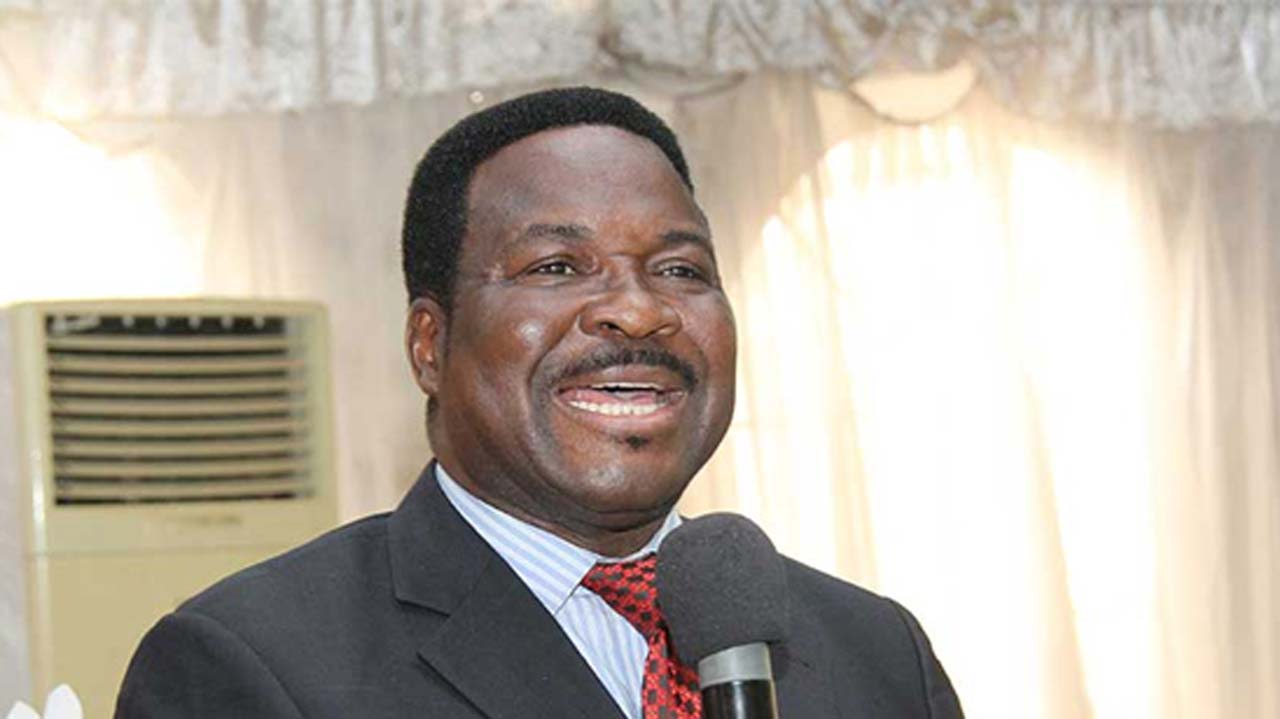
Nigeria is watching a seasoned defender of justice stand in the dock, and that should worry anyone who cares about the rule of law. The ongoing attempt to criminalise Chief Mike Ozekhome, SAN, over the London property at 79 Randall Avenue says less about his character and more about how easily institutions can drift from justice into overreach.
*A life built on rights, not rackets*
Long before “human rights” became a buzzword, Mike Ozekhome was already paying the price for defending them. He co‑founded the Civil Liberties Organization (CLO) in October 1987, the first organised human rights league in contemporary Nigeria, at a time when such work attracted detention, not decoration. He later helped birth other rights and democracy platforms such as the Joint Action Committee of Nigeria and the Universal Defenders of Democracy, all aimed at resisting military excess and deepening civic freedoms.
His activism was not academic. He was arrested and detained repeatedly under the Babangida military regime for challenging policies like the planned removal of petrol subsidy and other anti‑people measures. He has since become one of the country’s most visible constitutional lawyers, appearing in major human rights and pro‑democracy cases and serving on national reform conferences that shaped debates on Nigeria’s political future.
This is the profile now being casually framed as that of a man driven by greed and forgery. Logic alone demands caution before we applaud such a sudden rewriting of history.
What the London dispute really is
At the centre of the current storm is a house: 79 Randall Avenue, London NW2 7SX. The controversy began as a property dispute before the UK First‑Tier Tribunal (Property Chamber), where competing claims to the house were ventilated, including a claim that it had been gifted to Chief Ozekhome by one Mr. Shani (or Shani) Tali. The UK tribunal’s September 2025 judgment ultimately blocked his attempt to register the property in his name and raised questions around documents presented to support the ownership claim.
Those tribunal findings have now been imported into Nigeria as fuel for criminal charges. The ICPC alleges that in or about August 2021, Ozekhome “received” the London house by corrupt means and knowingly used a forged Nigerian passport and other documents to support his ownership claim, contrary to provisions of the Corrupt Practices and Other Related Offences Act and the Penal Code of the FCT. In essence, conduct that arose within a civil property contest abroad is being elevated into a three‑count criminal indictment at home.
Whatever one thinks of the UK tribunal’s conclusions, the starting point in any fair analysis is this: a loss or adverse finding in a civil forum is not, by itself, proof of criminal guilt. Civil tribunals work on balance of probabilities; criminal courts demand proof beyond reasonable doubt. Confusing the two standards is not justice, it is legal impatience dressed up as righteousness.
Law, logic, and proportionality
Three basic legal principles should guide public thinking on this case.
First is the presumption of innocence. Until a competent Nigerian court, after full trial, finds otherwise, Ozekhome remains an innocent man under our constitution. Media trials and social media verdicts cannot replace due process. When we cheer them on against those we dislike today, we weaken the same safeguards we may need tomorrow.
Second is the proper boundary between civil and criminal law. Disputes about who owns what, especially in complex cross‑border property arrangements involving gifts, trusts, or nominees, are naturally civil in character. It is only when there is clear, deliberate fabrication of documents or intentional deception, established by credible evidence, that the criminal law should be invoked. Where the core question is: “who is the true owner, and on what terms was the property transferred?”, courts traditionally resolve this through civil remedies, not handcuffs.
Third is prosecutorial discretion and the public interest. The Attorney‑General of the Federation has already exercised his constitutional power to take over the case from the ICPC, a move that signals the matter is of wider public concern and not merely a routine charge sheet. That power under section 174 of the Constitution is not just about filing cases; it also includes the duty to discontinue prosecutions that do not serve the interest of justice, even if they appear superficially popular.
When the state presses forward with a criminal trial rooted in a foreign civil decision whose full reasoning and context most Nigerians have not seen, the risk is clear: process can become punishment. The accused carries stigma for years, even if ultimately discharged.
*The danger of punishing defenders*
This case is not playing out in a vacuum. For decades, Ozekhome has taken on powerful interests on behalf of journalists, activists, opposition politicians, and vulnerable communities, often in politically charged matters. He has publicly criticised corruption, authoritarian tendencies, and constitutional breaches, irrespective of the party in power. It is unsurprising that such a figure would accumulate enemies, in politics, bureaucracy, and even within sections of the legal establishment.
In that context, an over‑zealous or poorly framed prosecution does not merely target one man; it sends a signal to every outspoken lawyer and activist that their past courage can be converted into future liability. If the state can stretch a civil property loss abroad into a full criminal spectacle at home against someone of his stature, what chance does a young, unknown human‑rights lawyer have?
A democracy that loudly proclaims respect for the rule of law cannot, in the same breath, appear eager to humiliate one of its most consistent legal defenders over a dispute that, by its nature and origin, sits comfortably within the realm of civil litigation. That is not how you encourage robust advocacy; it is how you breed timid lawyering and fearful citizenship.
A sober course for the state
Defending Mike Ozekhome is not asking that he be placed above the law; it is insisting that he be treated strictly according to it. If there is compelling, independent evidence, not just inference from a foreign tribunal’s narrative, that he personally fabricated or knowingly deployed forged documents, let it be rigorously tested in court. But if the evidence, on closer professional scrutiny, shows only a failed civil claim clothed in moral outrage, then continuing prosecution becomes persecution by other means.
That is where the Attorney‑General’s judgment becomes critical. The power to review, reassess, and, where necessary, withdraw charges exists precisely to prevent the criminal justice system from being used as a blunt instrument of embarrassment. Exercising that power in this case would not be an endorsement of impunity; it would be an affirmation that Nigeria knows the difference between a genuine anti‑corruption drive and an overreach that undermines its own moral authority.
A nation that repeatedly turns its best advocates into suspects eventually finds itself without credible defenders when constitutional crises erupt. Standing with Chief Mike Ozekhome, SAN, today is therefore not just about one man. It is about the kind of legal culture we want: one where courage is not criminalised, where civil disputes are not casually converted into criminal theatre, and where the state remembers that its greatest strength lies not in the number of people it can charge, but in the fairness with which it treats those who have spent their lives defending others.