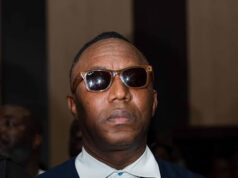


Barrister Aloy Ejimakor, formerly among the legal team of separatist leader Nnamdi Kanu, claims he secured a landmark court judgment in 2022 declaring Kanu’s arrest and detention “illegal and unconstitutional”. He now publicly demands that the government comply with the order – by freeing Kanu and halting prosecution – arguing that the continued detention constitutes a “presidential injustice”.
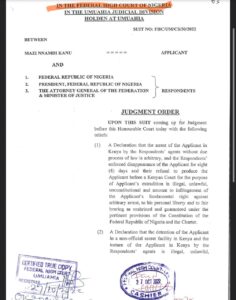
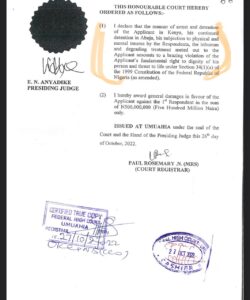
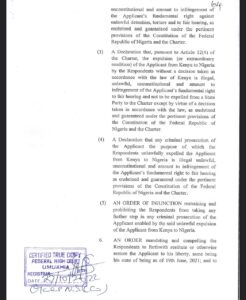
Ejimakor states that he endured imprisonment for one week after staging a public protest against the failure to implement the judgment. He says he bore “the high honour and duty” to defend Kanu’s rights through “pain, suffering and sheer determination”.
Meanwhile, Kanu is currently facing a terrorism trial before a federal court, where he has reportedly dismissed or reorganised his legal team and is representing himself. A 2024 report indicated that Kanu disbanded his legal team following a major judgement.
Ejimakor’s public activism on the matter has triggered government scrutiny. He was arrested on October 20, 2025 in Abuja during a protest demanding Kanu’s release and remanded by a magistrate’s court on charges including criminal conspiracy and inciting public disturbance.
Kanu’s supporters and rights-groups point to the 2022 federal high court decision which ordered the government to return Kanu to Kenya and awarded N500 million in damages for his rendition from Kenya as evidence of judicial oversight of his detention.
The government’s position remains that Kanu’s prosecution is valid under Nigerian law and that the extraordinary rendition argument does not nullify the court’s jurisdiction. A recent court scheduled a judgment for November 20, 2025 in Kanu’s trial.
Key facts
The 2022 judgment: In October 2022, a Federal High Court ordered the government to return Kanu to Kenya and awarded N500 million in general damages, finding his rendition unlawful.
Legal representation: Although Ejimakor was long listed as Kanu’s special counsel, in August 2023 the movement Indigenous People of Biafra (IPOB) announced his sacking, while Kanu’s family subsequently said he remained counsel.
Current trial status: Kanu’s case has changed judges several times, and he is now reported to be representing himself or with a restructured team.
Why it matters
If the 2022 judgment is binding and has not been implemented, as Ejimakor claims, it raises serious questions about executive compliance with judicial orders, rule of law, and the separation of powers in Nigeria. The case also underscores the tensions between national security law, separatist movements, and human rights standards.
While Ejimakor frames the 2022 ruling as a definitive victory, the government disputes that it obligates immediate release and cessation of prosecution.