


Nigeria Police Deny Allegations of Delivering Supplies to Bandits, Say Helicopter Video Depicts Legitimate Operation in Kogi — Njenje Media News
Abuja, Nigeria – The Nigeria Police Force (NPF) has refuted claims that a viral video showing a police helicopter landing in a bushy area with armed individuals depicts an operation to deliver food items to bandits, describing the narrative as “misleading and false”, Njenje Media News reports.
In a statement issued on Tuesday, May 13, 2025 and received by Njenje Media, the Force Public Relations Officer, ACP Olumuyiwa Adejobi, clarified that the video, which has sparked widespread controversy online, captures a legitimate security operation conducted on Saturday, May 10, 2025, in the Obajana axis of Kogi State.
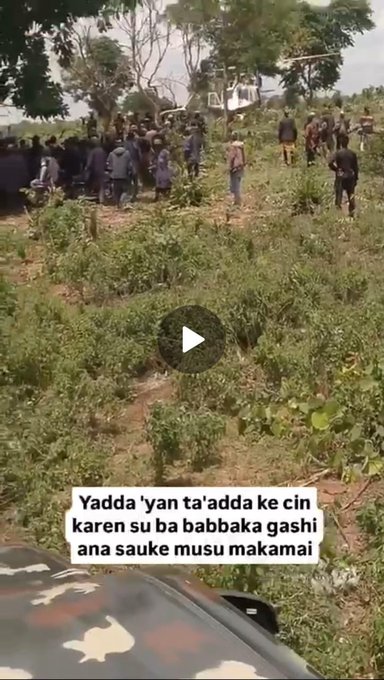
According to the statement, the operation involved joint security forces, including local vigilantes and hunters, as part of ongoing efforts to combat banditry, kidnapping, and other criminal activities in the region. The police helicopter was deployed to provide aerial support and surveillance for the ground forces engaged in the tactical mission.
“The Nigeria Police Force wishes to address a video currently circulating online, depicting a police helicopter landing and taking off in an area with armed individuals,” the statement read. “Contrary to the misleading and false narrative suggesting that the aircraft was used to deliver food items to bandits, the Force categorically states that the video captures a legitimate security operation.”
The Obajana area of Kogi State has been a hotspot for criminal activities in recent years. In May 2024, the Kogi State Police Command reported the killing of two suspected kidnappers in a gun duel with operatives and local vigilantes in a forest in the same Obajana area, according to a report by Daily Post Nigeria. The operation was part of a broader crackdown on banditry and kidnapping in the state.
However, the viral video has ignited public skepticism, with many Nigerians questioning the police’s account. A caption on the video, written in Hausa, reads: “Yadda ‘yan ta’adda ke cin karen su ba babbaka gashi ana sauke musu makamai,” which translates to “This is how terrorists eat their food, and yet weapons are being delivered to them.” This narrative has fueled allegations of complicity between security forces and criminal elements.
On X, several users expressed doubts about the operation’s authenticity.
A user on X, @revi_ofthehills , claimed, “This is not Kogi. I’m from Kogi. Our boys don’t look or dress like these. These individuals look like Fulani.” This comment reflects longstanding ethnic tensions in Kogi State, where farmer-herder conflicts, often involving Fulani herders, have escalated in recent years. A 2020 report by the International Crisis Group highlighted how such conflicts have hardened anti-Fulani sentiment in the state, with the Kogi legislature once proposing a program to capture biometric data of herders for security purposes.
Another user, @Onyeka_Marco, demanded more transparency, asking, “What was the outcome of the ‘tactical operation’? Nigerians want to know.” Others, like
@AkomaIkechukwu2 expressed distrust in official statements, noting, “I have lived long enough to realise that whatever news the authorities in this country denied is true.”
The controversy surrounding the video is not an isolated incident. In 2021, France 24 reported on a similar misinformation campaign in Nigeria and Mali, where a video of a helicopter landing was falsely claimed to show the delivery of weapons to terrorists. The helicopter in that instance belonged to African Parks, a conservation NGO, and had no connection to security operations.
The Nigeria Police Force urged the public to disregard the “unfounded and mischievous claims” and rely on official communication channels for accurate information. “The Force remains committed to safeguarding the lives and property of all Nigerians and will continue to collaborate with relevant stakeholders to enhance public safety and national security,” ACP Adejobi added.
However, public trust in security operations remains fragile, with users like
@timmosion pointing to a broader credibility issue: “Nigerians would have believed you guys, but unfortunately, your political romance has made us believe the opposite of whatever you denied.”
As the debate rages on, the incident underscores the challenges of combating misinformation in Nigeria’s volatile security landscape, where ethnic tensions, distrust in authorities, and the proliferation of unverified content on social media continue to complicate efforts to maintain public confidence in security operations.
Njenje Media News will continue to monitor developments and provide updates as more information becomes available.