
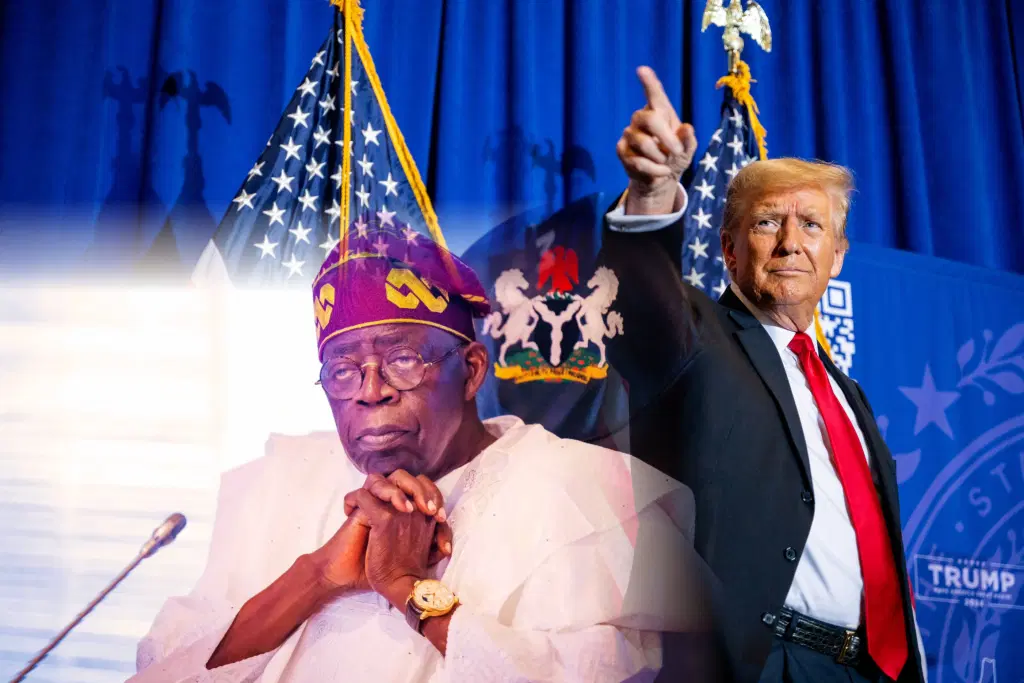
In beckoning for US military intervention, do we fully grasp the implications?
By Prof. Femi Olufunmilade
There is a Yoruba saying: when a mighty tree is being felled in the forest, the shrewd watch where it will fall; the shortsighted simply count the trunks for firewood. Those who study the tree’s fall worry about the human cost.
In conversations about inviting foreign troops into Nigeria, too many people are cheering like those who see only free firewood. I admit — on social media everyone suddenly becomes an expert. But excitement won’t spare us the consequences. I have imagined likely scenarios of a U.S. military intervention, and I am deeply troubled. Those who root for it do not fully understand what it would entail.
Yes, the United States has intervened in Africa before. It went into Somalia to restore peace and left humiliated. American troops, despite their training and equipment, were outmatched by local realities and withdrew to avoid another Vietnam. Who stepped into that gap? Nigerian soldiers. We succeeded where America struggled — a fact commemorated by the Mogadishu Barracks in Abuja.
I teach a first-year course called “Understanding Strategy.” My students learn there that Sun Tzu insisted commanders study the terrain before they ever pick a fight. Terrain — physical, social, and political — is a vital index of victory or defeat. The Somali battlefield overwhelmed American forces; Vietnam proved the same lesson. Modern militaries can rain explosives from the sky, but taking and holding the ground — commanding the terrain — is another matter entirely.
Nigeria is vast. Somalia and Vietnam are, relatively speaking, single states within our borders. The militants we fight practice asymmetrical warfare: they melt away, bury their weapons, and blend into towns and villages. Terrorists do not wear uniforms or write their intent on their faces. If foreign troops begin operations here, the fighters will disperse among civilians; the battlefield will become our towns and homes.
Would American troops stay forever? No. If foreign forces enter any part of Nigeria, our own military — the men and women who swore to defend this homeland — would have no realistic choice but to confront them. That could set us on a path to armed conflict on our soil. Imagine a war that spares no industry, no hospital, no school. Consider the practical fallout: refineries and supply chains shuttered, fuel commandeered by competing armed forces, medical services overwhelmed, schools closed indefinitely.
War brings more than infrastructure damage. Hunger will stalk the land. Sexual violence and abuse often spike where discipline collapses and soldiers roam. Ask survivors — Liberians, Sierra Leoneans, or any elder who has watched war pass through their town — if these images are hyperbole.
There is also the danger of internal fracture. An external intervention could deepen religious and regional polarities within our armed forces. If command and control fragment along such lines, we risk collapse from within. History shows what happens when national institutions splinter: warlords and militias rise, rule breaks down, and ordinary citizens pay the highest price. Would IPOB dominate the Southeast? Might OPC or other groups carve out fiefdoms in the West? If our barracks become the first battleground, then the country itself becomes the casualty.
Do not be deceived by glowing images of precision strikes and short, tidy operations on television. The American military, powerful though it is, has repeatedly struggled with unfamiliar terrain and asymmetrical opponents. Mosquitoes and malaria, unfamiliar climates, irregular supply lines and local resistance have humbled even the best-equipped forces. War is unpredictable; you can know when it begins but rarely when it will end.
So before we whisper — or shout — for foreign boots on our soil, let us pause and weigh the full cost. Consider not only the tactical victories that might be won, but the strategic wounds that could cripple a nation for generations. The tree’s direction matters.
Be careful what you call for. 🙏🏿