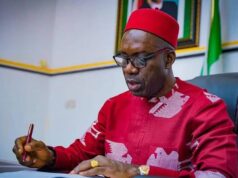

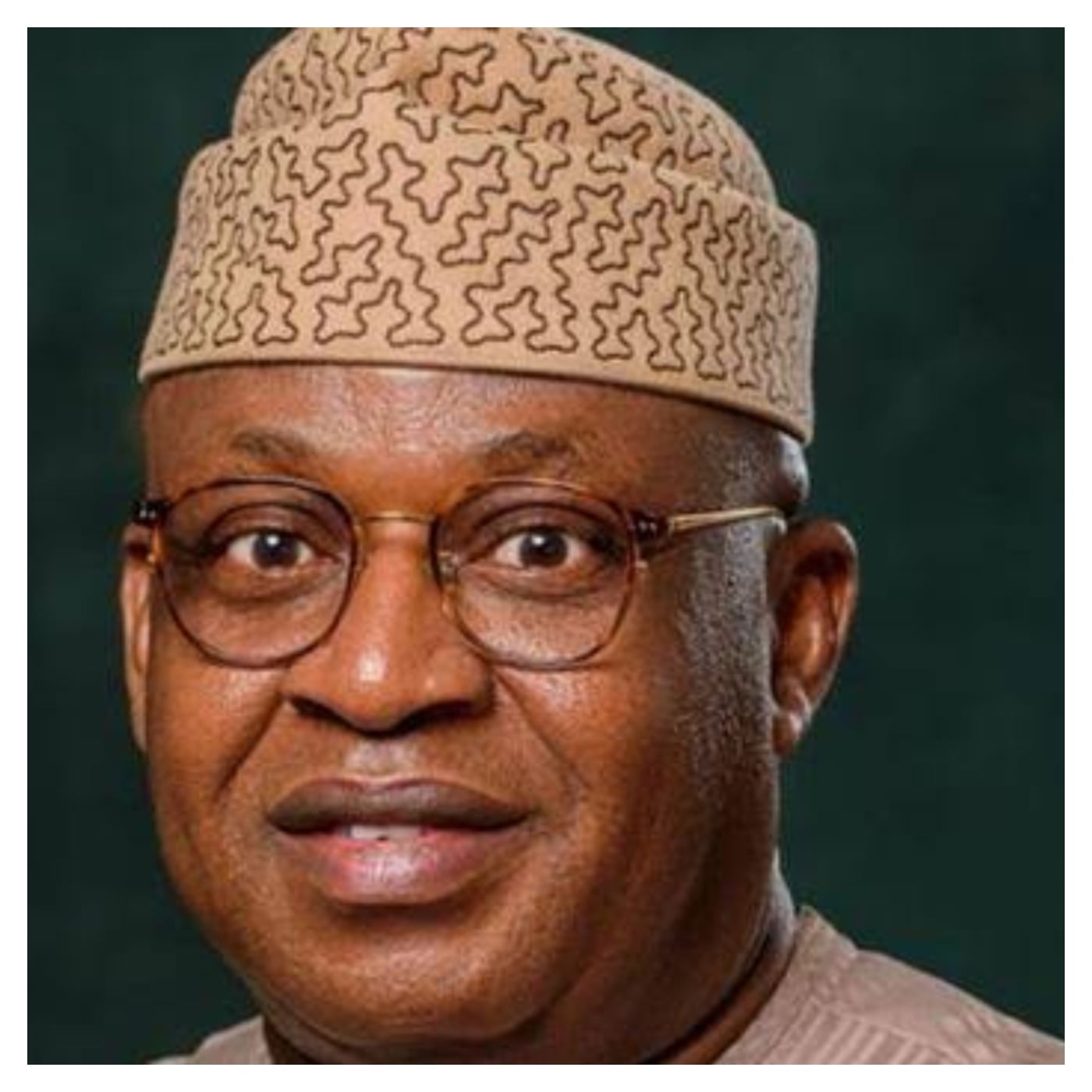
There are men whose passing does not merely end a life but it interrupts a conversation that has been running for decades. On Monday, 31st August 2026, that conversation stopped. Chief Daniel Osikheme Orbih, died at the age of sixty-four. For a man who had spent nearly three decades embedded in the machinery of Nigerian party politics, the news travelled with a peculiar speed and weight.
To speak of Dan Orbih (famously called Kuluku I) only in the vocabulary of politics would be to tell half the story and perhaps the smaller half. He was, before he was a politician, a son of Etsako soil, a student of business, and a man who built enterprises with his own hands long before he learned to build political structures.
The Ogbona boy was born on 27th October 1961 in Ogbona, in what is today the Etsako Central Local Government Area of Edo State. He came into a household already marked by public significance. His father, the late Chief M. C. K. Orbih, was a respected figure in the political life of the old Bendel State, and it is not difficult to imagine that the younger Orbih’s earliest exposure to the language of leadership, negotiation, and community responsibility came from watching his revered father move through that world. Afterall, a fruit does not fall far away from its mother tree.
His choice of discipline in Business Administration at the University of Benin would prove prophetic. Long before Orbih became known as a political strategist, he was, first, a businessman and the instincts he sharpened in commerce, an eye for structure, a patience for negotiation and a tolerance for risk, would later serve him well in the far less predictable arena of party politics.
After graduation, Orbih did not walk immediately into politics. He ventured into business, taking up the management of his father’s hotel enterprise in Auchi. From there, his commercial interests expanded beyond Edo State altogether, extending into the cement industry in Port Harcourt, Rivers State, a sector known for its scale, its capital intensity and its demand for sound judgment.
These years in business are easy to overlook in an account dominated by his later political stature, yet they matter. They gave Orbih an entrepreneurial grounding that few of his political contemporaries could claim in equal measure, and they gave him, too, an independence of means that would allow him, in later years, to weather the financial and material demands of sustained political combat.
Tender feet in Politics
Orbih’s political journey began in earnest in the closing years of the 1990s, during the transitional period that would eventually restore Nigeria to civilian rule. In 1998, under the platform of the All Peoples Party, he contested for the position of Deputy Governorship candidate in Edo State. The bid did not carry him into office but it announced him. It placed his name in circulation among the political class of the state at precisely the moment when the structure of the coming Fourth Republic was being assembled.
It was not long before Orbih found his way into the Peoples Democratic Party (PDP), the platform with which his name would become almost inseparable for the following quarter century. There, he came under the tutelage of the late Chief Anthony Anenih, a founding father of the party and, for many years, Chairman of its Board of Trustees. Anenih was a man whose influence over PDP structures in the South-South and beyond was legendary, and to be counted among his political students was, in the Nigeria of that era, to be marked out for advancement.
Under that mentorship, Orbih rose steadily rather than spectacularly. He served on committees at both state and national levels of the party. In 2006, he was named a member of the PDP Presidential Electoral Panel and in the same period, chaired the Edo State PDP Finance Committee between 2006 and 2007. The following year, he served on the party’s Edo State Campaign Committee ahead of the 2007 general elections. Each assignment was an apprenticeship for the office that would come to define his public life.
Eleven Years at the Helm of Edo PDP
In 2008, following the death of the sitting state chairman, Chief Samson Ekhabafe, the PDP in Edo State needed a steady hand. Chief Anthony Anenih and other party leaders settled, unanimously, on Dan Orbih. It was a decision whose consequences would stretch across more than a decade, for Orbih went on to chair the Edo State chapter of the PDP from 2008 until 2019, an unbroken tenure of eleven years that stands, by most accounts, as the longest any individual has held a state chairmanship of any political party in the history of Nigeria’s Fourth Republic.
Those eleven years were rarely quiet. Orbih presided over the party through victories and through painful reversals, through the loss of Edo State’s governorship to the opposition and through the long, grinding work of rebuilding thereafter. He became known in that period as one of the most active and constructive opposition chairmen in the country, a description earned through the discipline with which he held the party’s structures together even when it commanded no seat in Government House. He understood the grassroots nature of PDP in Edo State.
Orbih’s long apprenticeship in Edo State politics eventually carried him to become the National Vice Chairman of the Peoples Democratic Party for the South-South zone, a position that placed him among the elite circle of leaders who shaped the party’s fortunes across six states and, by extension, within the councils of national politics.
The Measure of the Man
What emerges from the accounts of those who knew him is a picture of a man who understood, perhaps better than most, that political structures are ultimately made of people. He knew the ward secretaries and the local government chairmen as well as he knew the governors and the ministers. He knew what it meant to lose an election and what it meant to rebuild a party from that loss. That kind of knowledge is acquired only through years of patient, often thankless, work and it is precisely that kind of knowledge that Edo State politics now finds itself without.
A Legacy in the Structures He Built
His career is also a reminder of a particular kind of political labour that rarely receives the recognition afforded to elected office. Orbih was never Governor of Edo State nor did he sit in the National Assembly. His influence was exercised instead through the less glamorous, more demanding work of party administration, the work of holding a coalition together, of settling disputes before they became ruptures, of ensuring that a party without power in Government House nonetheless retained the discipline to contest, and eventually to compete, for it again. That is a form of leadership too easily overlooked in a political culture fixated on titles, yet it is arguably the form of leadership on which every electoral victory ultimately depends.
A Life of Faith
Politics and business were not only the two dimensions of Dan Orbih’s life. Beneath them was his Catholic faith. Baptized and raised in the Church, he attended Catholic Central School, Afashio, and later Our Lady of Fatima College, Auchi. That early formation flowed into adulthood when he became a practicing Catholic and a Knight of St. Mulumba.
His faith formed part of the discipline with which he navigated a life spent in the
turbulent worlds of politics and business. Those who knew him from Ogbona
remember a man who, despite his political battles and business success, maintained
a reputation for personal principles and straightforward business ethics. His
Christianity appeared to be less a Sunday identity than an internal compass by
which he sought to conduct his affairs.
His civic life extended beyond the Church and the party as well. Orbih was active
within Rotary International, rising to Elite Donor status after a period as a Paul
Harris Fellow donor.
Farewell to a Political Icon
For all several political activities of public life, Dan Orbih remained (to those closest to him) a husband, a father, a brother, and an uncle. The outpouring of condolences that followed his death from party leaders, political rivals, and ordinary Edo indigenes alike speak of his place in their hearts.
Chief Dan Orbih’s death closes a chapter not only in his own family’s history but in the recent political history of Edo State and the South-South zone, of Nigeria.
As Edo State associates and the wider family mourn Dan, the tributes that have poured in from political allies and rivals alike, agree on a single theme that whatever verdict history renders on the battles Dan Orbih fought, it will struggle to dispute the depth of his commitment to the people he so ably served.
May his soul rest in peace.