
PETER OBI’S RETAIL POLITICS: WHY NIGERIANS MUST DEMAND MORE LEADERSHIP THAT COMES TO THE PEOPLE
By Maazi Tochukwu Ezeoke, Village Headmaster, Village Boys Movement
There is something refreshing, almost unconventional, about a politician who understands that the road to the presidency does not always begin in the corridors of power, the boardrooms of political financiers or the grand stages of expensive rallies. Sometimes, it begins in a village square, a crowded market, a neglected community or a conversation with an ordinary Nigerian whose voice has rarely travelled beyond the walls of their immediate surroundings.
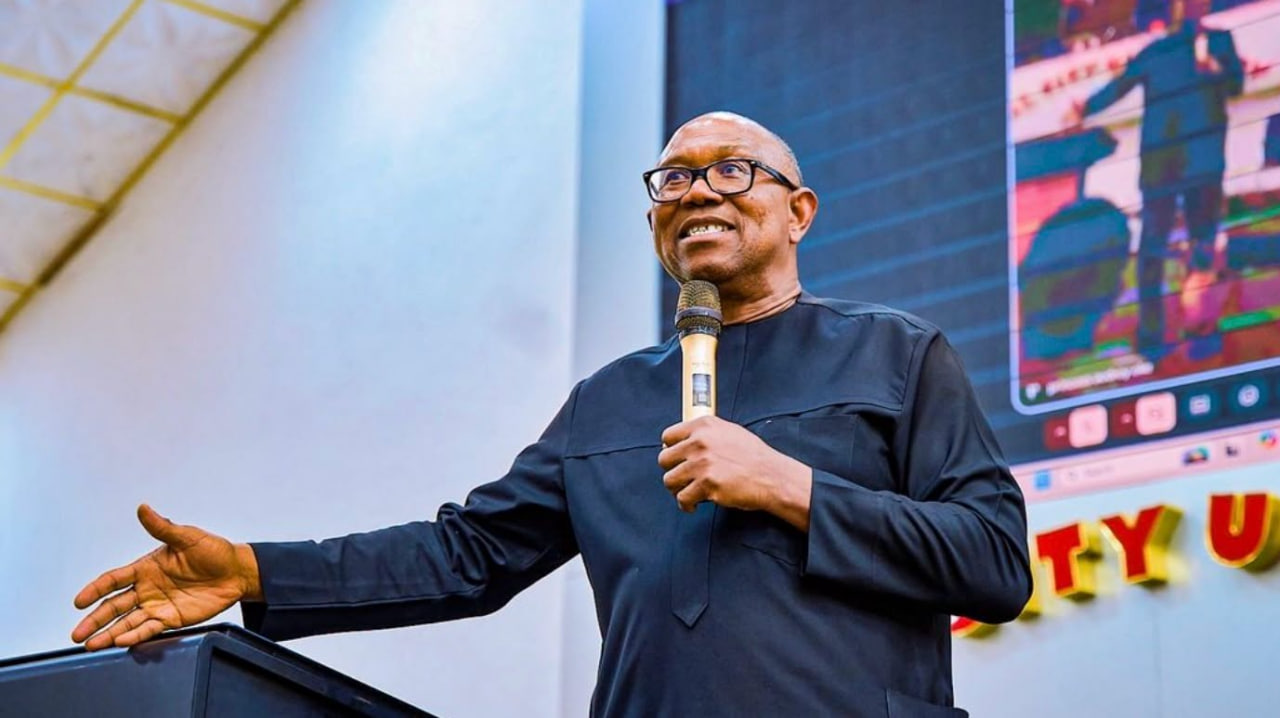
This is what makes Peter Obi’s retail politics particularly compelling. At a time when Nigerian politicians have perfected the art of governing from a distance and campaigning through intermediaries, Obi has continued to demonstrate the value of taking the political conversation directly to the people. I find this approach worthy of admiration, not merely because of its electoral implications, but because of what it says about the meaning of leadership and the philosophical foundations of democratic government.
At the heart of democracy is a deceptively simple proposition: sovereignty belongs to the people. Political authority is not the personal possession of those who occupy public office; it is a mandate entrusted to them by citizens. This principle, central to the social contract tradition of political philosophy, places an obligation on those who seek power to recognise the people not as instruments of political ambition, but as the ultimate source of their legitimacy. Yet, in Nigeria, our political culture has too often inverted this relationship. Those seeking public office frequently behave as though the people must earn their attention, rather than recognising that public office is itself a responsibility owed to the people.
For too long, Nigerian politics has been built around the idea that political importance is measured by the size of one’s convoy, the number of people waiting to receive a political leader, the prominence of those endorsing a candidate and the amount of money spent on campaign publicity. The ordinary citizen is often reduced to an audience, expected to listen, applaud and eventually cast a vote. Between elections, the relationship becomes even more distant. Political leaders retreat into the comfort of government houses, surrounded by advisers, protocol officers and political intermediaries, while the people are left to navigate the consequences of decisions in which they have had little meaningful input.
Peter Obi’s approach challenges this convention. There is a fundamental difference between a politician who invites the people to come and listen to him and one who takes the trouble to go out and listen to the people. The distinction may appear simple, but its political significance is enormous. When Obi visits communities, walks through markets, engages traders, meets victims of insecurity, speaks with displaced families and participates in town-hall conversations, he is doing something Nigerian politics has increasingly neglected. He is acknowledging that the people are not merely instruments for acquiring political power. They are the very reason political power exists.
Consider the significance of a presidential aspirant sitting with people who have lost their homes, livelihoods and loved ones to insecurity. Consider a conversation with a farmer who cannot safely access his farmland, or a market woman whose business is collapsing under the weight of inflation and declining purchasing power. These are not abstract policy discussions. They are lived experiences. A politician who encounters these realities directly is better positioned to appreciate the human consequences of government decisions. More importantly, the people themselves get an opportunity to communicate their frustrations without the filtering that often accompanies political intermediaries.
This is the beauty of retail politics. It brings the politician down from the political pedestal and places him within reach of the people whose mandate he seeks. It reminds us that leadership is not simply about possessing the authority to make decisions; it is also about developing the capacity to understand those who will live with the consequences of those decisions.
The philosophical significance of this approach can be traced to the idea of popular sovereignty associated with Jean-Jacques Rousseau, whose political thought placed the people at the centre of legitimate political authority. Although representative democracy inevitably requires elected officials to make decisions on behalf of citizens, representation should never become a licence for political detachment. A representative who loses touch with the people risks becoming an administrator of power rather than an agent of public will. In this sense, retail politics offers a practical expression of democratic accountability. It creates opportunities for the represented to confront the representative, for the citizen to question the aspiring leader, and for political authority to remain connected to the realities from which it derives its legitimacy.
Retail politics, however, should not be confused with the familiar spectacle of politicians shaking hands, distributing gifts and posing for photographs during election season. Its real value lies in engagement. It is about listening before speaking, understanding before promising and recognising that national problems cannot be fully understood through reports, briefings and political calculations alone. A conversation with a trader in a local market can reveal the impact of economic policies in ways that a thousand-page economic report may struggle to communicate. A visit to an insecure community can expose the inadequacies of security architecture more forcefully than official statistics. A discussion with unemployed graduates can provide a human perspective to the national unemployment debate.
This is why Obi’s approach matters. He appears to understand that leadership requires proximity to the people. One cannot convincingly claim to understand the condition of a country while remaining insulated from the everyday realities of its citizens. There is also considerable political intelligence in this method. A leader who listens across different communities begins to appreciate the diversity of Nigeria’s challenges. The concerns of a farmer in Benue, a trader in Lagos, a fisherman in Bayelsa, a displaced family in the North-East and a young graduate in Enugu may differ in detail, but they reveal a common demand: a country that works.
Beyond its human dimension, retail politics is an exceptionally important political strategy. Nigeria is a country of communities, not just political constituencies. Its political realities are shaped by markets, villages, neighbourhoods, professional associations, religious communities, youth groups and countless informal networks through which people exchange information and influence opinions. A politician who understands these networks understands something fundamental about how political support is built and sustained.
The traditional political establishment often relies on influential individuals, political brokers and elaborate structures to communicate with voters. While these structures have their place, they can create layers of distance between political leadership and the electorate. Retail politics offers a more direct alternative. A conversation in a community can travel far beyond the immediate gathering. Those who participate share their experiences with family members, colleagues, neighbours and friends. Videos and accounts of the encounter circulate across social media and WhatsApp groups. The conversation acquires a life of its own. The politician is no longer the only person communicating the message. Ordinary citizens become participants in the political conversation.
This is particularly significant in an age when information travels rapidly and the traditional monopoly over political narratives has weakened. But the greater opportunity lies in what happens after the visit. Conversations can become community networks. Community networks can become organised political participation. And organised participation can become a formidable democratic constituency. That is the difference between merely visiting the people and building politics around the people. Obi’s retail approach offers an important lesson to political leaders: never underestimate the political power of a citizen who feels seen, heard and respected.
There is, perhaps, an even deeper dimension to this. The German philosopher Jürgen Habermas, in his work on deliberative democracy, emphasised the importance of public communication and reasoned engagement in the formation of legitimate political decisions. Democracy cannot be reduced to the periodic act of voting. It requires an active public sphere in which citizens can express concerns, interrogate ideas and participate in shaping the direction of society. Seen through this lens, town-hall meetings, community conversations and direct political engagement are not peripheral campaign activities. They are important expressions of democratic life.
This is why Nigerians should not regard Peter Obi’s style of political engagement as a special favour from a politician. It should become an expectation. Why should citizens have to wait until election season before their leaders visit them? Why should a community have to organise an elaborate reception before attracting the attention of those seeking public office? Why should the people whose taxes sustain government have to struggle for access to those elected to serve them?
Accessibility should not be a campaign strategy that expires after elections. It should be a permanent feature of democratic leadership. Nigerians must begin to demand politicians who are willing to visit communities without elaborate ceremonies, listen without defensiveness, answer difficult questions and explain their policies in language ordinary citizens can understand. We must demand leaders who can sit with traders without treating them as campaign props, visit troubled communities without reducing their suffering to political publicity, and engage young people without assuming that they are merely looking for handouts.
The social contract is not a one-way arrangement in which citizens surrender their votes and receive occasional political attention in return. It is a continuing relationship involving responsibility, accountability and the protection of the common good. John Locke’s conception of government as a trust established to protect the interests of the governed is particularly relevant here. Political authority carries obligations. Those who exercise it must remain answerable to the people from whom that authority originates. A leader who is inaccessible, unaccountable and indifferent to the condition of citizens undermines the very basis upon which democratic authority rests.
For those of us in the Village Boys Movement, there is a particular resonance in this approach. Our political philosophy is rooted in the belief that the village must never be an afterthought in the affairs of the nation. The people in our communities are not less important because they live far from the centres of political power. Their concerns deserve the same attention as those of people who have direct access to government. We believe that leadership must be accessible, power must follow service, wealth must follow value and public office must be inseparable from accountability.
The village woman who rises before dawn to trade, the farmer who struggles to feed his family, the young person searching for employment and the community that has been abandoned by successive administrations are all stakeholders in Nigeria’s future. They deserve to be heard, not merely remembered when votes are needed. This is why the Village Boys Movement places such importance on grassroots organisation and political participation. We believe citizens must move beyond passive support for political candidates and become active participants in shaping the political process. Supporting a candidate is important. Organising communities, educating voters, strengthening democratic participation and protecting the integrity of the ballot are equally important. A politically conscious citizenry is the strongest foundation of a functioning democracy.
One of the greatest dangers of political office is the distance it can create between those who occupy it and those who confer it. Presidential power can easily become insulated by protocol, security arrangements, advisers, special assistants and layers of bureaucracy. Before long, the leader begins to hear more from those around him than from the people outside the gates. Nigeria has experienced the consequences of this disconnect. Policies are sometimes announced without adequate engagement with those who will bear their consequences. Communities complain for years without receiving meaningful attention. Citizens struggle to access public institutions that should exist to serve them.
We must therefore insist on a different standard. The presidency should never become a fortress that separates the leader from the people. Government houses and political offices should not become walls behind which public officials disappear until the next election. The same accessibility demonstrated during campaigns must continue in government. Town halls should not be abandoned after elections. Community visits should not end with the announcement of electoral victory. Listening should become part of the business of governing.
Of course, retail politics alone cannot solve Nigeria’s economic, security and institutional problems. A leader must also demonstrate competence, sound judgement, policy clarity and the ability to translate public expectations into measurable results. Admiration must never become an excuse for abandoning scrutiny. Peter Obi, like every other politician seeking public trust, must remain subject to questions about his ideas, his policies and his capacity to govern. But the willingness to engage directly with citizens is an important starting point. It provides a human foundation for the policies and decisions that follow.
As the 2027 political conversation gathers momentum, Peter Obi’s approach offers an opportunity to reconsider what Nigerians should expect from those seeking their mandate. We should look beyond political endorsements, elaborate rallies and the familiar competition for media attention. We should pay attention to who is willing to meet the people, listen to their concerns and engage with the realities of communities across the country. The Nigeria Democratic Congress (NDC) and the wider political movement around Peter Obi have an opportunity to make this culture of engagement a defining feature of their politics. But it must be sustained and translated into a credible programme of governance.
I admire Peter Obi’s retail politics because it reminds us of something Nigerian politics has repeatedly forgotten: the people are not an interruption to leadership. They are its purpose. It challenges the notion that political leaders must be inaccessible to be important, or that the distance between the governed and the governing is an unavoidable feature of political authority.
Nigerians must demand more of this. Not just from Peter Obi, but from every politician who seeks the privilege of governing them. We must make accessibility, direct engagement and accountability the standard, not the exception. We should not have to beg those seeking our votes to visit our communities. We should not have to wait for election seasons to become visible to our leaders. And we should never again confuse the grandeur of political office with the quality of leadership.
The most important political conversations do not always happen in government houses, conference halls or television studios. Sometimes, they happen in the market, on the village square, in a community hall or beside a family struggling to rebuild its life. That is where leadership must be willing to go.
A new Nigeria is possible. But building it requires more than electing a new president. It requires a fundamental change in the relationship between political authority and the people. It requires leaders who understand that power is held in trust, citizens who refuse to surrender their democratic voice, and a political culture in which those who seek to govern must first learn to listen.
“The people must never have to chase their leaders for attention. Those who seek the people’s mandate must learn to walk among them”. – _Maazi Ezeoke_
By Maazi Tochukwu Ezeoke,
Village Headmaster, Village Boys Movement | Media Director BigTent Coalition | Director of Media, NDC Directorate Of Diaspora Campaign Council.