
The Federal Executive Council (FEC) has approved ₦631.3 billion for nine road infrastructure projects across Nigeria, covering reconstruction, rehabilitation and remedial works on major transportation routes.
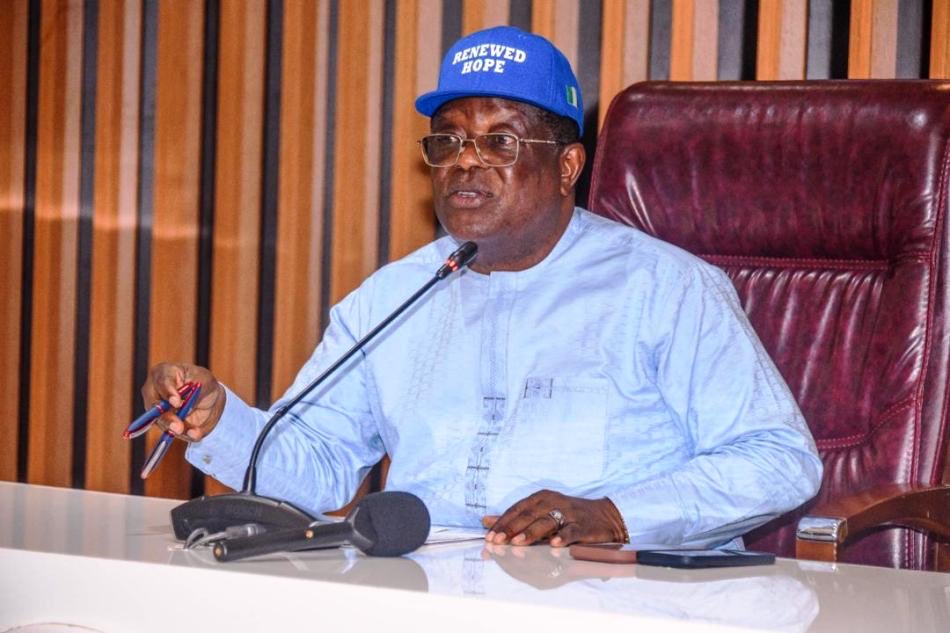
The Minister of Works, David Umahi, disclosed this on Wednesday, October 28, 2026, while briefing State House correspondents after the FEC meeting presided over by President Bola Tinubu at the Presidential Villa, Abuja.
According to Umahi, the projects are aimed at improving road connectivity, facilitating the movement of people and goods, and supporting economic activities across the country.
Among the major approvals is ₦209 billion for the reconstruction of the 81.1-kilometre Ado–Ilawe–Ilumaba–Ikole Road in Ekiti State, including a bridge.
The council also approved ₦167 billion for the reconstruction of the 95-kilometre Etuke–Okene–Ankpa–Otopa Road in Kogi State.
In Kano State, ₦89.2 billion was approved for the construction of the 47-kilometre Bichi Ring Road, which will incorporate a flyover to improve traffic flow and urban connectivity.
Another ₦62 billion was approved for the Tungo–Karamti Road linking Adamawa and Taraba states. The project will include five bridges.
Other projects include ₦30 billion for remedial works on deteriorated sections of the East–West Road and ₦28.218 billion for the rehabilitation of a 17-kilometre section of the Sokoto–Illela Road, designated Route A1.
The council further approved ₦20.257 billion for an 18-kilometre road linking Asiago to the Port Harcourt–Enugu Expressway, while ₦11.33 billion was earmarked for a road project previously handled by the Abia State Government under the Nigerian National Petroleum Company Limited’s tax-credit scheme.
The ninth project is the Dikko–Maje link road in Niger State, which will connect to the Suleja–Minna Road. It received an approval of ₦14.486 billion.
Abuja–Kaduna–Zaria Road Project Nears Completion
In a separate development, Umahi announced that the first 118-kilometre section of the Abuja–Kaduna–Zaria Road had been completed after 30 months of construction.
He said work on the second section, which spans 164 kilometres, was nearing completion, with approximately 16 kilometres remaining.
The minister added that 81 kilometres of the completed section had been constructed using reinforced concrete pavement, while the completed portions had been fitted with solar-powered streetlights to improve visibility and road safety at night.
According to Umahi, the entire 375-kilometre Abuja–Kaduna–Zaria–Kano corridor is expected to have solar-powered streetlights installed.
The federal government says its road infrastructure investments are intended to strengthen transportation networks, reduce travel difficulties, improve access to markets and essential services, and promote economic growth.
However, the benefits of the newly approved projects will depend on effective implementation, timely completion and the quality of construction.