
The Federal Government has announced new measures aimed at tightening oversight of academic records and tackling certificate fraud within Nigeria’s education system. The reforms are part of a broader effort to improve transparency, strengthen institutional compliance, and protect the credibility of qualifications issued by Nigerian institutions.
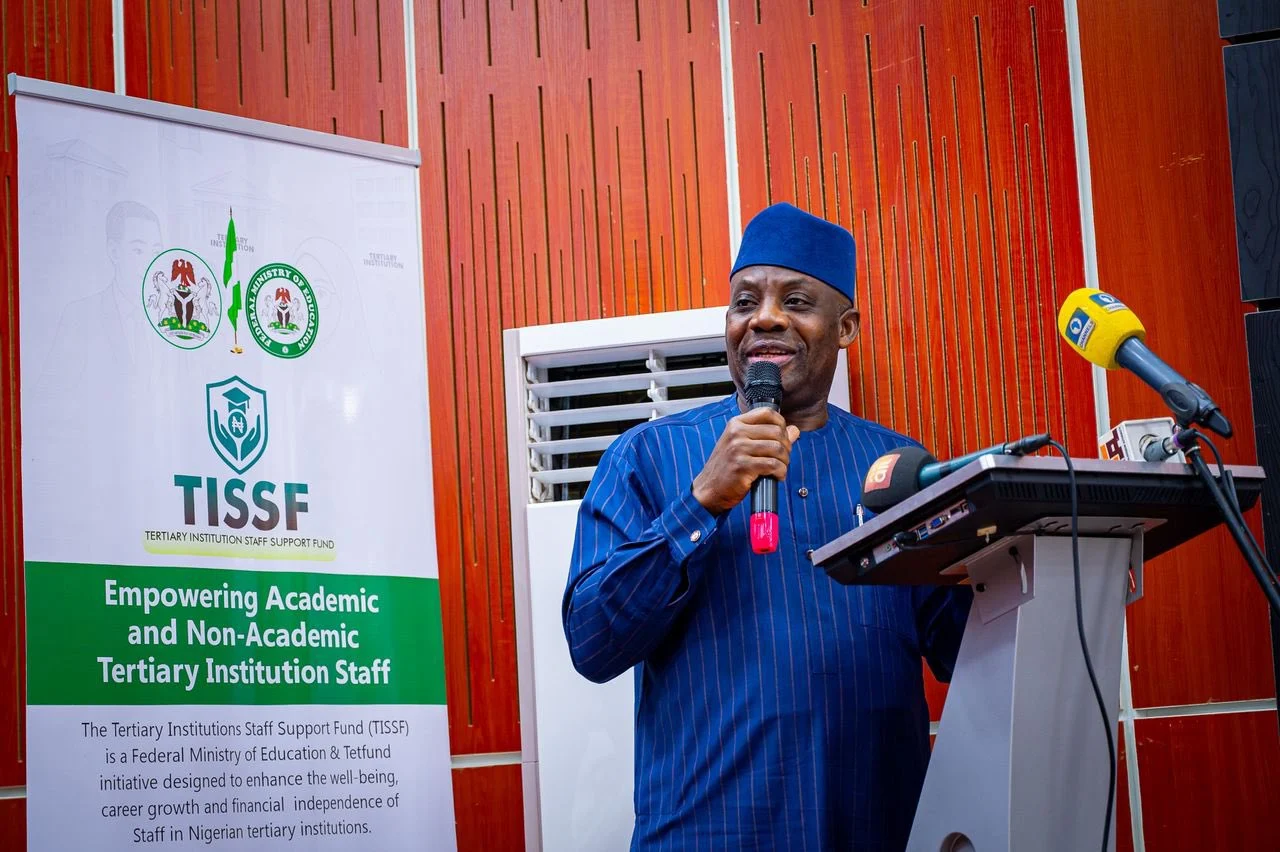
Minister of Education, Dr Maruf Alausa, made the disclosure on Thursday while delivering a keynote address at a national training programme for institutional representatives. The event focused on implementing the Nigeria Education Repository and Data Bank, a digital platform designed to store, verify, and manage academic records across tertiary institutions in the country.
The initiative seeks to ensure that academic credentials issued in Nigeria are properly documented, secure, and easily verifiable. According to the minister, reliable data remains central to effective governance, noting that policymaking and progress tracking depend heavily on accurate information.
He also commended President Bola Tinubu for pursuing what he described as difficult but necessary reforms aimed at placing the country on a sustainable development path.
The Nigeria Education Repository and Data Bank serves as a national digital infrastructure for storing and authenticating academic credentials. The system provides services such as national credential numbers, a credential revocation mechanism, a student clearinghouse, and a central database for academic theses and research publications.
Alausa revealed that within four months of implementation, nearly 100,000 student submissions had already been digitally preserved. More than 250 universities, polytechnics, monotechnics, and colleges of education have joined the platform for real time credential verification. In addition, over 133,000 students and about 6,800 lecturers are currently registered, supported by hundreds of institutional representatives nationwide.
The minister also highlighted the establishment of more than 1,000 digital service centres in partnership with Nigeria Digital Entrepreneurs. The centres have created over 3,000 jobs since the project began.
He disclosed that the government acted swiftly after reports surfaced that some Nigerians were obtaining questionable degrees from foreign institutions that lacked proper accreditation. Investigations revealed cases where individuals allegedly received doctoral certificates within months from institutions that had little or no legitimate academic structure.
According to the minister, the government has halted the practice and removed individuals who obtained such fraudulent qualifications from the public service.
To encourage academic excellence, the ministry has also introduced the Nigeria Education Repository and Data Bank Annual National Laureate Prize. The awards will recognise outstanding undergraduate, master’s, and doctoral research, with prizes ranging from five million to twenty million naira. The first edition of the programme is scheduled for November.
Alausa emphasised that compliance with the repository system will now play a key role in the National Youth Service Corps process. Participation in or exemption from the scheme will require institutions to meet the platform’s verification standards.
He added that several government agencies, including TETFund, the National Universities Commission, the National Board for Technical Education, the National Commission for Colleges of Education, and the Industrial Training Fund, will enforce the compliance requirement as a condition for accessing their services.
The minister explained that the repository would create a permanent national digital trail for academic credentials issued by accredited institutions. The goal is to eliminate disputes over qualifications and prevent falsification of records.
He also encouraged educational institutions to adopt locally developed technology platforms in line with government policies promoting local innovation.
Alausa praised the leadership of the repository project, noting that preserving academic data is essential for long term national development. He stressed that nations able to properly document and preserve knowledge are better positioned to build on previous research and drive innovation.
Chief Executive Officer of the repository, Engineer Tunji Ariyomo, described the initiative as a critical step toward safeguarding Nigeria’s academic heritage. He noted that poor documentation systems in the past had led to the loss of valuable research and scholarly work.
Ariyomo argued that countries that consistently preserve and validate their knowledge systems tend to lead global development, because new discoveries can build on previously recorded work.
He thanked the federal government for accelerating the implementation of the platform and said it would strengthen Nigeria’s participation in the global knowledge economy. He also encouraged institutions involved in the programme to familiarise themselves with the repository’s regulations, particularly those relating to copyright, intellectual property, and participation guidelines.
Nigeria’s education sector has long struggled with issues related to forged certificates and weak record keeping systems. Over the years, several cases have emerged of individuals presenting questionable academic qualifications to secure jobs, especially within the public sector.
Concerns about the authenticity of degrees intensified after investigations exposed the existence of illegal degree mills in parts of West Africa, where some Nigerians reportedly obtained academic certificates within unusually short periods.
These revelations prompted the federal government to tighten oversight of academic credentials and develop stronger verification systems to restore confidence in the country’s educational qualifications.