
The National Economic Council (NEC) has approved a 90-day economic action plan designed to ease the cost of living, improve food affordability and attract investment across Nigeria.
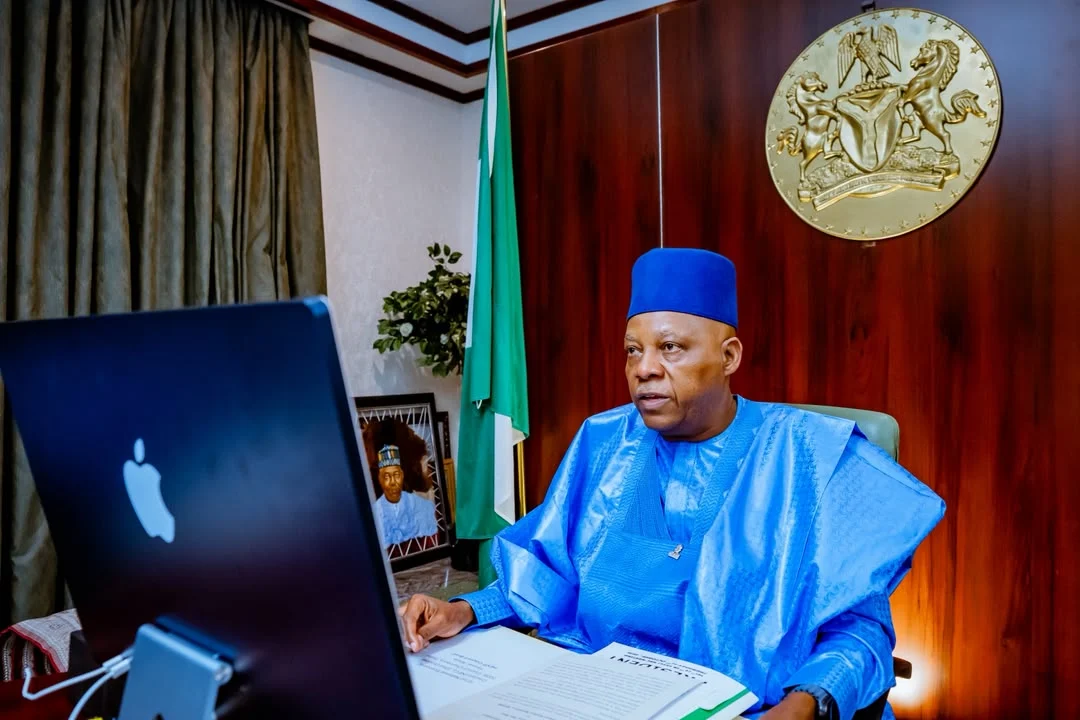
The proposal, presented by the Federal Ministry of Finance, was endorsed on Thursday during the council’s 161st meeting, which was held virtually and chaired by Vice President Kashim Shettima.
According to a statement issued by Stanley Nkwocha, the Vice President’s Senior Special Assistant on Media and Communications, the plan focuses on five priority areas: making food more affordable, harmonising taxes, completing high-impact projects, removing barriers to investment and providing regulated support to households.
The council also approved the creation of a national dashboard to monitor projects nationwide, with particular attention to transparency, accountability and the utilisation of funds generated from the removal of fuel subsidies.
Addressing the meeting, Shettima urged state governors and relevant government agencies to ensure that President Bola Tinubu’s economic reforms produce tangible improvements in the living conditions of Nigerians.
He stressed that the effectiveness of economic policies should be judged by their impact on everyday life, including access to affordable transportation, healthcare, jobs and financial stability.
“The first dividend of prosperity should be the confidence to plan a life. Our task is to make such confidence less dependent on fortune,” the vice president said.
Shettima also emphasised the need for stronger collaboration between the federal and state governments, noting that their distinct responsibilities should not become obstacles to providing essential services.
“Our separate mandates must not become competing excuses. Each governor carries knowledge that no federal document can supply,” he said.
On transportation, the vice president called for the National Compressed Natural Gas Bus Initiative to be evaluated based on its ability to reduce commuting costs rather than the number of vehicles introduced into the system.
“The cost of reaching a livelihood should never consume the livelihood itself. The passenger’s experience must guide our ambition, because the value of public transport resides in the journeys it makes possible. We should assess success through affordability and access, rather than fleet size alone,” he said.
The council further approved a joint financing arrangement between the federal and state governments to accelerate the adoption of compressed natural gas and electric vehicles.
It also directed the relevant authorities to consult transport unions and operators to ensure that the savings generated from using the vehicles are reflected in lower fares for commuters.
Meanwhile, the Minister of Health and Social Welfare, Prof. Muhammad Ali Pate, briefed the council on the reported Ebola outbreak in the Federal Capital Territory, assuring members that Nigeria had the institutional capacity to contain the situation.
Pate explained that the national response would prioritise coordination, surveillance at entry points, laboratory testing, the distribution of essential kits and personal protective equipment, as well as public awareness and communication.
He disclosed that 21 state governments had updated their preparedness and response plans, while urging the remaining 15 states to establish the necessary arrangements.
The council also called on state governments to intensify efforts to eradicate polio, particularly in communities where some children had been missed during immunisation campaigns and in areas affected by insecurity.
Additionally, NEC recognised the livestock sector’s potential to generate employment, drive economic growth and improve livelihoods. It resolved to strengthen cooperation between the federal and state governments to support the sector’s development.