
President Bola Tinubu has ordered the immediate clearance of more than 300 containers of electricity equipment held at Nigerian ports for several years, with some reportedly stranded for between 14 and 20 years.
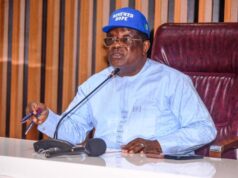
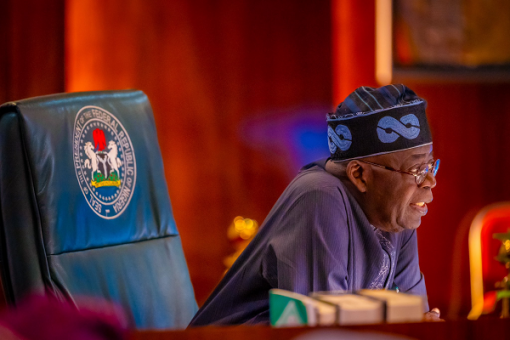
The Minister of Power, Olasunkanmi Tegbe, revealed this on Wednesday while speaking with journalists after the Federal Executive Council (FEC) meeting chaired by Tinubu at the State House in Abuja.
Tegbe explained that the President had instructed the Ministry of Power to collaborate with the Nigerian Ports Authority (NPA) and the Nigeria Customs Service (NCS) to resolve outstanding charges and customs issues preventing the release of the containers.
He described the prolonged detention of the equipment as unacceptable, pointing out that previous administrations had failed to pay the necessary charges and complete the required clearance processes.
The minister said the government would reconcile outstanding payments, where necessary, to facilitate the release of the equipment.
He added that the materials would undergo technical inspections after clearance to determine their condition and establish whether they remained suitable for use.
According to him, equipment considered serviceable would be deployed to ongoing electricity infrastructure projects, while obsolete or unusable materials would be appropriately handled.
However, Tegbe did not reveal the total value of the equipment, the amount required to settle outstanding charges or the timeline for completing the clearance exercise.
The directive is part of the Federal Government’s wider efforts to address challenges affecting Nigeria’s electricity transmission network and maximise the use of existing power infrastructure.
The minister also disclosed that the Federal Executive Council had approved the commencement of procurement for the proposed East and West Super Grids, projects expected to increase Nigeria’s electricity transmission capacity from approximately 5,000 megawatts to 19,000MW within two years.
He explained that the proposed grids would improve transmission connections across different parts of the country, allowing the national network to accommodate and distribute more electricity.
Tegbe noted that the projects would link strategic transmission routes, including corridors extending from Sokoto through Abuja to other locations.
He described the procurement approval as a significant milestone towards expanding the capacity and strengthening the resilience of Nigeria’s national electricity network.
The minister further announced three FEC approvals designed to tackle transmission challenges in Abuja, Lagos and the Lagos-Shagamu industrial corridor.
One of the approved projects involves the construction of a 33kV double-circuit underground and overhead transmission line linked to the Katampe Transmission Substation.