From Word to World
Chris Agbedo
*Vectors of Sociolinguistic Calculus*
‘WordMatters’ tells; ‘Critical Lens’ tests; ‘ConnectingDots’ connects; ‘Verses on Canvas’ visualises; ‘BrushStrokes’ unsettles.
Together, they make ‘Sociolinguistic Calculus,’ a living praxis, where words wield, images illuminate, context clarifies, inference completes, and power consecrates meaning. It is where the five-tiered vectors converge to dissect linguistic banditry, interrogate banditisation, and project ‘visual pragmatics’ as its futuristic frontiers.
A word is never merely a word. It may name. It may describe. It may persuade. It may conceal. It may provoke. It may soothe. It may legitimise an action already contemplated or make an unacceptable proposition appear ordinary. Sometimes, the most consequential thing about a word is not what it says but what it enables. This is where my intellectual journey with Sociolinguistic Calculus begins. The journey is neither a retreat into linguistic abstraction nor an excursion into verbal ornamentation. It is an attempt to follow meaning beyond the sentence, beyond the speaker, beyond the immediate communicative event to the social structures within which words acquire force and to the consequences that follow when meanings are accepted, contested, manipulated or weaponised.
Five vectors represents one intellectual continuum, around which I have organised this journey. The first vector is WordMatters. The proposition sounds almost elementary: words matter. However, the apparent simplicity conceals a difficult question: How much can a word do? Language does not merely carry information from one mind to another. It constructs realities, frames perceptions, distributes identities and establishes boundaries between the permissible and the forbidden. A political expression can dignify one actor while diminishing another. A bureaucratic phrase can disguise responsibility. A euphemism can make violence sound administrative. A rhetorical substitution can turn an accusation into an explanation and an explanation into an excuse.
Meaning, therefore, is not always stationary. Words travel. They mutate. They acquire new associations as they move across speakers, institutions, historical moments and ideological terrains. A term that begins as description may become accusation; an accusation may become justification; a justification may eventually acquire the status of conventional wisdom. WordMatters asks us to pay attention to that journey. It is concerned with how language constructs, conceals, mutates and weaponises meaning. The ‘Word’ tells but the story does not necessarily end with what the ‘Word’ says.
That takes us to the second vector: Critical Lens. If the Word tells, the mind must interrogate. The Critical Lens subjects words, claims and discourses to the discipline of evidence, context and critical reasoning. It refuses to grant language automatic credibility simply because language has been confidently uttered, repeatedly circulated or institutionally pronounced. Who said it? Under what circumstances? With what evidence? What has been omitted? Whose interests are served by the framing? What alternative reading has been crowded out? Such questions transform reading from passive reception into intellectual scrutiny. The Critical Lens is therefore less interested in the seduction of a statement than in its architecture. It examines the relationship between assertion and evidence, rhetoric and reality, appearance and implication. It asks the reader to pause before accepting the linguistic package as delivered. But interrogation alone is insufficient. A statement may appear harmless when isolated from its surroundings and become consequential when placed beside the actor who uttered it, the institution that amplified it, the historical circumstances surrounding it and the consequences that followed.
Here comes the third vector: ConnectingDots. Context connects. ConnectingDots traces the invisible lines between utterance, actor, institution, history and consequence. It is an invitation to resist the tyranny of isolated fragments. A sentence belongs somewhere. A headline belongs somewhere. A public pronouncement belongs somewhere. A policy statement belongs somewhere. Even silence belongs somewhere. The work of ConnectingDots is to reconstruct those relationships and ask what becomes visible once apparently unrelated fragments are placed on the same intellectual canvas. The exercise is not conspiracy-hunting. It is contextual reasoning: identifying relationships that remain invisible when language is examined in isolation. The Word tells. The Lens interrogates. The Dots connect. Then something happens. The linguistic text begins to meet the visual text.
This is where the fourth vector, Verses on Canvas, opens a new frontier. The canvas does not speak in sentences, yet it communicates. Colour can carry an argument. Line can suggest movement, tension or confinement. Scale can elevate one figure and diminish another. Spatial arrangement can establish hierarchy. Juxtaposition can produce irony without uttering a syllable. The image shows. Verses on Canvas therefore reads society through visual pragmatics. It treats the public sphere as a vast and constantly changing mural on which power, aspiration, contradiction, failure and hope leave their marks. The familiar can become strange under a different visual arrangement. The obvious can become questionable. The invisible can become almost embarrassingly visible.
And then comes the fifth vector: BrushStrokes. If the Canvas shows, the BrushStrokes with Krisagbedo column unsettles. Satire interrupts the comfort of familiarity. Incongruity places things together that convention keeps apart. A brushstroke can exaggerate without explaining; juxtaposition can provoke without preaching. The satirical image does not necessarily provide the reader with a conclusion. It creates an intellectual disturbance from which the conclusion must emerge. This is the productive discomfort of visual pragmatics. The joke may be brief. The inference may not be. The image may appear playful and humorous while carrying a serious social charge. Its power lies partly in refusing to announce its own lesson. It leaves enough space for the viewer to complete the meaning.
Here, the five vectors converge.
WordMatters interrogates the linguistic construction of reality.
Critical Lens subjects that construction to scrutiny.
ConnectingDots situates it within its social and institutional coordinates.
Verses on Canvas translates social meaning into visual grammar.
BrushStrokes disturbs settled perception through satire and incongruity.
Together, they form a continuum rather than five disconnected pursuits. The movement is deliberate: from word to interpretation, from interpretation to connection, and from connection to visual representation and critical intervention. This is the territory I call Visual Pragmatics. It is not an escape from language. It is language reaching its projected frontier. Meaning does not stop at the written or spoken word. Society itself is a text, sometimes written in speeches and headlines, sometimes painted in public spaces, sometimes staged through political theatre, sometimes compressed into a cartoon, a photograph, a gesture or a carefully composed image.
The interpretive task consequently expands. The word tells; the image shows; context makes sense; inference fills the gap; power gives meaning consequence. That final movement is perhaps the most important. The ultimate calculus is not simply what language means, but what meaning does. What does a word permit? What does a narrative normalise? What does a euphemism conceal? What does an institutional formulation legitimise? What does an image expose? What does satire disturb? And what happens when meaning travels from the page into public consciousness and from public consciousness into institutional action? These questions point towards a larger inquiry whose full coordinates I shall reserve for another occasion. For now, it is enough to say that the five vectors are converging on a single intellectual proposition: meaning is never merely semantic; it becomes social, institutional and consequential.
That proposition will receive a fuller airing in a setting where the Word, the Lens, the Dots, the Canvas and the BrushStrokes will finally be placed upon the same intellectual table. The date is already marked.
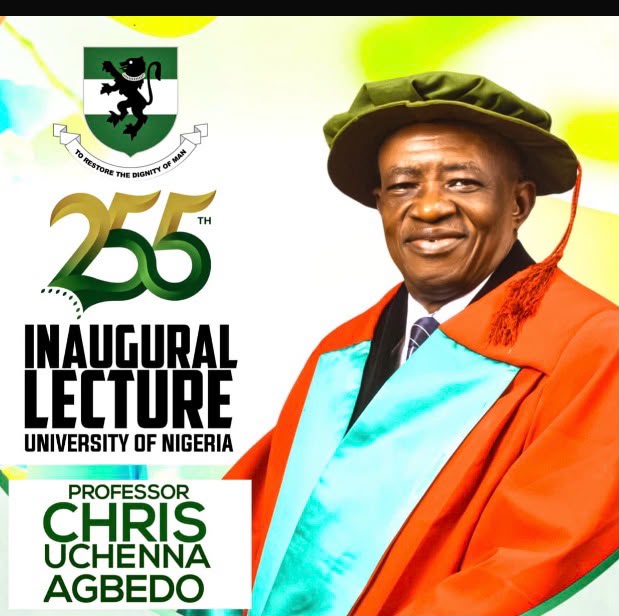
5 November 2026. Princess Alexandra Auditorium & Theatre, University of Nigeria, Nsukka. The invitation is not simply to listen to a lecture. It is to follow a trail – from Word to World. And perhaps, along the way, to discover that the most important calculation is not what we say, but what our saying makes possible.