
Intersociety Accuses New York Times of Misrepresentation, False Attributions in Report on Christian Persecution in Nigeria
Onitsha, Eastern Nigeria | January 19, 2026
The International Society for Civil Liberties and Rule of Law (Intersociety) has issued a strongly worded statement accusing the New York Times and its West Africa Bureau Chief, Ruth Maclean, of misrepresentation, false attribution, and what it described as “injurious lies” in a report published on Sunday, January 18, 2026, following an interview conducted on December 16, 2025.
In a press briefing monitored by Njenje Media, Intersociety said the controversial New York Times report misquoted its leadership, distorted its research methodology, and dangerously linked its advocacy work on religious persecution in Nigeria to unrelated United States airstrikes carried out in Sokoto State on December 25, 2025—nine days after the interview.
Details of the December 16 Interview
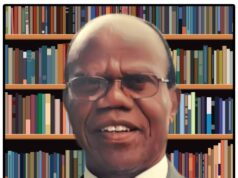
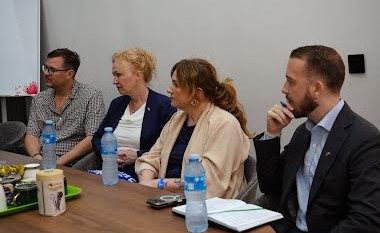
Intersociety disclosed that Ruth Maclean visited its leader, criminologist and human rights advocate Mr. Emeka Umeagbalasi, in Onitsha, accompanied by a Christian female photographer from Kwara State and Mr. Dave Eleke of ThisDay Newspaper, Awka. The organisation said the visit was privately approved by its Board and hosted during the off-office pre-Christmas period.
The interview reportedly lasted over three hours, followed by a one-hour photographic session at a local market. According to Intersociety, discussions focused exclusively on its long-standing documentation of coordinated attacks on Christians and churches in Nigeria since 2009, conducted in line with United Nations and African Union best practices.
Core Allegations Against the New York Times
Intersociety alleges that the New York Times falsely attributed several statements to its leadership, including claims that its data is largely unverified or primarily sourced from Google searches, media reports, and Christian interest groups. The organisation insists it clearly explained its data-gathering framework, which includes both primary field investigations and secondary verified sources, supported by trained volunteer researchers deployed across multiple states including Kaduna, Taraba, Enugu, the South-East, and South-South regions.
The group further denied claims that its leader likened himself to CNN’s Christiane Amanpour, describing the suggestion as “entirely fabricated.” Instead, it said its leader encouraged Maclean to uphold the highest standards of journalistic integrity, citing Amanpour as a global example.
Dispute Over Victim Statistics and Identity
Intersociety also rejected assertions credited to it regarding Boko Haram victims, arguing that available statistics from 2009 to 2017 show Christians constituted a significant proportion of victims, including thousands of Igbo Christians living in northern Nigeria. It cited reports from the Church of Brethren in Nigeria, which documented the killing of 8,600 of its members and the destruction of more than 300 church districts between 2014 and 2020.
On the abduction of Kebbi schoolgirls, Intersociety said it never claimed that “many” of the victims were Christians, but rather raised concerns—based on demographic and parliamentary records—that some Christian students were likely affected.
Cattle Ranching Policy and Fulani Allegation
The organisation described as “unpardonable” a claim that it referred to Fulanis as “animals” or advocated confining them to a single state. It clarified that it merely proposed Niger State—Nigeria’s largest and agriculturally fertile state—as a possible location for a large-scale, modern cattle ranching initiative if the federal policy lacked jihadist intent.
Churches Attacked and Security Concerns
Intersociety reaffirmed its long-standing figures that approximately 19,100 churches have been attacked, burned, or destroyed since 2009, and warned against the New York Times’ framing of the interview in connection with U.S.-Nigeria joint airstrikes. It stated that such framing exposed its leadership and offices in Onitsha, Enugu, and Aguata to potential security risks.
In a notice carried by Njenje Media, the organisation said it would hold the New York Times vicariously liable, alongside relevant Nigerian state actors, should any harm come to its personnel or facilities.
Call for Accountability
Intersociety concluded by reiterating that constructive criticism of its research is legitimate, but deliberate misrepresentation is not. As of the time of filing this report, the New York Times had not issued a response to the allegations.
This report is published by Njenje Media as part of its ongoing coverage of governance, security, and human rights developments in Nigeria.