

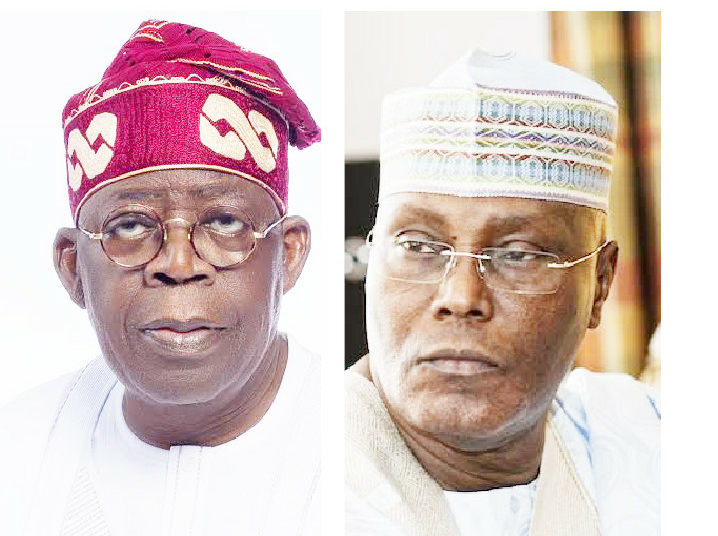
Former Vice President and African Democratic Congress (ADC) presidential candidate, Atiku Abubakar, has criticised President Bola Tinubu’s economic policies, accusing the administration of weakening Nigerians’ purchasing power, draining household finances and placing businesses under severe pressure as the cost of goods and services continues to rise.
In a statement released by his Senior Special Assistant on Public Communication, Phrank Shaibu, Atiku argued that the President could no longer rely on favourable economic statistics announced from Abuja to obscure the hardship being experienced by Nigerians as a result of government policies.
According to him, Tinubu’s removal of the fuel subsidy contributed to sharp increases in the prices of petrol, transportation and food, while the President is now opposing a proposed Production Subsidy intended to ease those pressures and put more money back into Nigerians’ hands.
Atiku also referenced the position of the Crude Oil Refinery Owners Association of Nigeria (CORAN) in favour of supporting local refining, as well as President Donald Trump’s efforts to boost oil production and refining in the United States, arguing that both developments undermine Tinubu’s opposition to targeted support for domestic production.
“Tinubu did not inherit this cost-of-living crisis from Nigerians. His policies created and deepened it. He took away relief from the people, made fuel, food, transport, and basic survival more expensive, and now wants Nigerians to applaud statistics while their pockets are empty.
“Recent reports that a significant share of the short-term assets of some of Nigeria’s biggest companies is now trapped in unpaid customer bills tell the same story: companies may record sales, but customers increasingly cannot pay because Tinubu’s economy has drained their purchasing power.
“Take a woman selling frozen food in Kubwa. She pays more to transport her goods, more to power her freezer, and more to restock. Her customers are poorer, so they buy less or ask for credit. Soon, she cannot restock, her supplier is owed, and Tinubu’s economic pain spreads through the entire chain.
“Nigerians know the prices they meet every day. Fertilizer has moved from about ₦9,000 to around ₦50,000; petrol from about ₦199 to around ₦1,400 per litre; cement from roughly ₦4,000 to around ₦13,500; and the dollar from around ₦450 to about ₦1,400.
“And after all this pain, what has the ordinary Nigerian received? No reliable electricity. No loan for a degree. No security. No N-Power. Food is expensive. Transport is expensive. Life itself has become expensive. What exactly are Tinubu’s defenders defending?
“This is why my Production Subsidy is about putting money back into people’s pockets. Support what we produce and refine here, increase supply, monitor the price, and make sure Nigerians feel the benefit at the pump.
“CORAN is saying support domestic production. America understands the importance of supporting strategic energy production. Yet Tinubu attacks relief for ordinary Nigerians while his government understands perfectly well how to grant waivers, incentives, and concessions to multinational oil companies and businesses close to his administration.
“So why does intervention suddenly become bad economics when ordinary Nigerians are meant to benefit?
“Nigerians have now seen what Tinubu’s economics means in their daily lives: higher fuel prices, higher food prices, higher transport costs, weaker businesses, and emptier pockets. They do not need another lecture on patience. They need relief.
“The choice before Nigeria is therefore clear: continue with an economy that takes more from the people, or build one that puts money back in their pockets. Support production. Refine in Nigeria. Create Nigerian jobs. Lower the cost of living.
“Nigerians must reject a government that has made life harder and embrace a plan that makes life affordable again.
“Enough of empty pockets. Enough of endless hardship. Nigeria must produce more, Nigerians must pay less, and families must have money left to live.