

The Nigerian Upstream Petroleum Regulatory Commission (NUPRC) has disclosed that domestic refiners received 53.7 million barrels of crude oil and condensate in the second quarter of 2026, representing a 97.4 per cent implementation rate under the Domestic Crude Supply Obligation (DCSO).
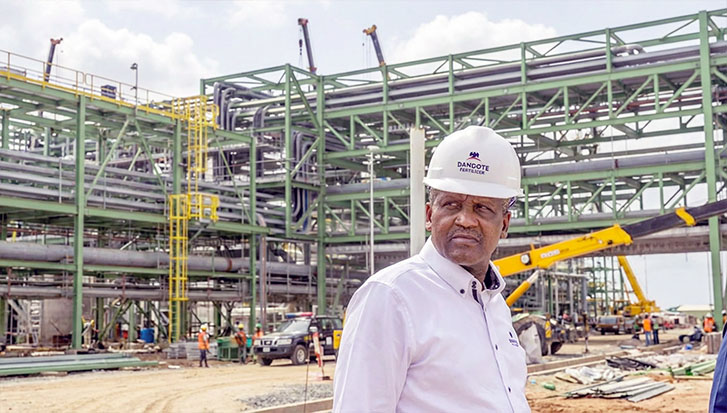
Data released by the commission showed that the Dangote Refinery received the largest share of crude supplied to local refineries during the period.
According to the NUPRC, Dangote Refinery indicated a requirement of 63 million barrels for the quarter, while producers offered the facility 68.1 million barrels. The volume accounted for approximately 98 per cent of the 69.3 million barrels offered to all domestic refiners.
However, the refinery ultimately took 52.6 million barrels, representing about 77 per cent of the crude offered to it and falling 10.4 million barrels short of its stated requirement.
The refinery’s intake also represented roughly 98 per cent of the 53.7 million barrels actually supplied to domestic refiners during the quarter.
The commission’s figures further revealed that producers received allocations totalling 55.1 million barrels between April and June but offered 69.3 million barrels, exceeding their allocation by 14.2 million barrels, or 25.8 per cent.
Despite the higher offers, only 53.7 million barrels were eventually supplied, leaving approximately 15.6 million barrels unused. Actual deliveries were also about 1.4 million barrels below the total allocation.
The DCSO is implemented by the NUPRC under Section 109 of the Petroleum Industry Act (PIA), which mandates oil producers to make crude available to domestic refineries.
The commission explained that the system involves monthly consultations between crude producers and licensed domestic refiners, after which producers receive specific allocations of crude oil and condensate to offer to local refineries.
However, the actual transactions are conducted under the PIA’s “willing buyer, willing seller” principle. This means that crude volumes offered by producers may not necessarily be purchased or taken by refiners in full.
Performance varied throughout the quarter. In April, producers were allocated 18.13 million barrels but offered 19.31 million barrels, while actual deliveries reached 20.88 million barrels, representing 114.9 per cent performance against the allocation.
In May, producers were allocated 18.78 million barrels and offered 23.19 million barrels, but only 14.23 million barrels were delivered. This represented 75.8 per cent compliance and created a shortfall of about 4.55 million barrels.
Performance improved in June, with producers allocated 18.17 million barrels and offering 26.84 million barrels. Actual deliveries stood at 18.61 million barrels, representing 102.4 per cent performance.
The figures indicate that although producers consistently offered more crude than their allocated quantities, actual deliveries depended partly on the volumes refiners were prepared or able to purchase under the commercial arrangements.
The NUPRC attributed the improvement in DCSO performance to increased domestic crude production and the conclusion of long-term crude supply agreements backed by bankable Sales and Purchase Agreements (SPAs) between producers and domestic refiners.
The commission said the second quarter performance showed that the DCSO was “actively administered and enforced”, adding that it would continue working to sustain the progress.
It said it would use the PIA framework to support higher crude production and strengthen enforcement of the DCSO as part of efforts to achieve the Federal Government’s energy sufficiency objectives.
Osifo: Refineries Were Shut Over Losses, Not Non-functionality
Meanwhile, President of the Trade Union Congress (TUC), Festus Osifo, has said Nigeria’s public refineries were shut down mainly because they were operating at a loss, rather than because they were incapable of functioning.
Osifo, who is also the outgoing President of the Petroleum and Natural Gas Senior Staff Association of Nigeria (PENGASSAN), made the disclosure during a luncheon with members of the Labour Writers Association of Nigeria (LAWAN).
He said the Port Harcourt and Warri refineries had resumed some operations after rehabilitation, but the Nigerian National Petroleum Company Limited (NNPC) later determined that the value of their refined products was insufficient to cover the cost of the crude processed.
“So, the refineries were actually shut down, not that they were not functioning. Most of the old Port Harcourt Refinery, and even the Warri Refinery, were actually shut down because they were losing money,” Osifo said.
He noted that the facilities had endured years of inadequate maintenance despite several government announcements and approvals for rehabilitation.
According to him, there was little meaningful rehabilitation of the refineries for about 15 years before 2021, despite repeated approvals from the Federal Executive Council (FEC).
He compared the situation to government road projects that are awarded but remain incomplete because adequate funding is unavailable.
“There have been some erroneous impressions over the years that every time they carry out turnaround maintenance and rehabilitation in those refineries. If you interview somebody or people that have worked in Port Harcourt, Kaduna and Warri refinery 15 years before 2021, they will all tell you that they have never seen any rehabilitation or any turnaround maintenance compared to what they’ve seen from 2021,” he stated.
Osifo said substantial rehabilitation work began in 2021, particularly at the Port Harcourt facility, while projects were also undertaken at the Warri and Kaduna refineries.
He explained that the Port Harcourt project involved extensive rehabilitation, whereas the Warri intervention was largely a quick fix because the extent of deterioration differed between the facilities.
During the Port Harcourt rehabilitation, he said between 90 and 95 per cent of PENGASSAN members employed at the facility were moved to other Strategic Business Units (SBUs) within NNPCL.
According to Osifo, the old Port Harcourt Refinery, which was established in 1965, was eventually brought back into operation while rehabilitation work continued on the new refinery.
He said the old plant could produce Automotive Gas Oil (AGO), Dual Purpose Kerosene (DPK) and aviation fuel but could not produce Premium Motor Spirit (PMS) that met modern specifications.
The old refinery was therefore initially expected to supply products to the new refinery, which was designed to meet current standards and produce the required petrol.
However, the arrangement was subsequently changed after a critical component required to complete the new refinery was projected to take approximately three and a half years to arrive.
Osifo said the new NNPC management then reviewed the economics of operating the refinery using the chemical engineering concept of material balance.
He explained that the value of products produced was insufficient to cover the cost of the crude supplied to the refinery.
The shutdown, he said, was therefore intended to prevent additional losses while the authorities reassessed how the facilities could be operated profitably.
PENGASSAN Supports Proposed Chinese Partnership
Osifo also backed the proposed partnership between NNPC and a Chinese company, saying it could establish a more sustainable structure for the ownership and management of the refineries.
He said PENGASSAN had reviewed the Memorandum of Understanding (MoU) between NNPC and the Chinese company and discussed the proposal with the Group Chief Executive Officer of NNPC.
“We think it’s actually in the right direction,” he said.
According to Osifo, PENGASSAN has long supported an ownership model similar to Nigeria LNG Limited (NLNG), under which the government maintains a minority interest while private investors control the majority stake.
“For us, we are advocating that because the company is about a three-in-one company, so let them buy up to 51 per cent. Let the government retain 49 per cent as it is in NLNG,” he said.
He argued that giving private investors majority ownership would reduce government involvement in operational and investment decisions.
According to him, issues such as maintenance and other commercial decisions would no longer need to pass through lengthy government processes, including Federal Executive Council approvals.
“Because by the time Shell, ENI, Total Energy come together and make decisions, because they have 51 per cent, the project must move forward,” he said.
He added that private investors would be more inclined to make commercially driven decisions instead of political considerations, while additional investment could generate employment and increase the value of the government’s remaining stake.
Osifo: No PENGASSAN Member Lost Job Over Divestments
Reflecting on his tenure as PENGASSAN president, Osifo said protecting members’ jobs and improving their remuneration were among the key priorities of his administration.
He said the union achieved these objectives despite major divestments by international oil companies operating in Nigeria.
“How do we protect the job of our members and how do we enhance their pay?” he said, identifying the question as one of the fundamentals of his administration.
Osifo claimed that no PENGASSAN member lost their job directly because of recent divestment transactions involving major international oil companies.
He referenced divestments involving ExxonMobil, Shell, Eni and other international companies, saying the union worked to ensure that workers retained their employment and remuneration.
“We were able not just to protect the job of our members, but we ensured that the remuneration, we ensured that the pay of our members was not only transferred, but improved upon,” he said.
PENGASSAN Resolves Dispute With Dangote
On the union’s relationship with Dangote Refinery, Osifo said disagreements between PENGASSAN and the company had been resolved following continued engagement.
He disclosed that approximately 600 workers who had been disengaged by the Dangote Group during the dispute were later recalled and returned to their positions at the refinery.
Osifo said PENGASSAN remained committed to supporting the refinery because of its importance to Nigeria’s energy security and employment.
“We do everything possible to protect every company that is in the space of the Nigerian oil and gas industry. Because Dangote Refinery will survive for us to have members there,” he said.
He also welcomed Dangote’s plan to double the refinery’s capacity, saying the expansion would strengthen energy security and generate additional employment.
According to him, relations between PENGASSAN and the Dangote Group had become “robust” compared with the situation approximately a year earlier.
Osifo Assesses Impact Of PIA
The TUC president also described the Petroleum Industry Act as a major reform that had introduced important changes into Nigeria’s oil and gas sector.
He said PENGASSAN initially welcomed the legislation after it was passed in August 2021 because of its potential to transform the industry.
Among its achievements, he identified the establishment of an upstream regulator and a midstream and downstream regulator, as well as the conversion of NNPC from a corporation into a commercially oriented company.
Osifo also pointed to NNPC’s improved profitability after the PIA as another major development.
“20, 30, 40 years before PIA, they were always making losses. But after PIA, they started making profit. So, to that extent, you could say that there is some level of success,” he said.
He also mentioned the Host Community Development Trust (HCDT) and Frontier Exploration Fund (FEF) as other areas where he believed the PIA had produced results.
However, Osifo identified policy inconsistency as a major obstacle to investment in the oil and gas sector.
He argued that the PIA should have been allowed to operate for at least five years before major amendments were introduced.
He expressed concern about the movement of some fiscal provisions from the PIA into the Nigeria Revenue Service (NRS) legislation, warning that such changes could create uncertainty for investors.
“For us, it was quite worrisome because that didn’t send the right signal to investors,” he said.
According to Osifo, investors require certainty regarding taxes, royalties and other fiscal obligations before committing substantial funds to long-term oil and gas projects.
“For an investor to know that I’m investing $10 million today, and this $10 million is the amount of money that I’m going to pay as taxes… investors need that certainty for them to invest,” he said.
He added that oil and gas projects often require several years before returns are realised, making consistency and predictability in government policies particularly important.