
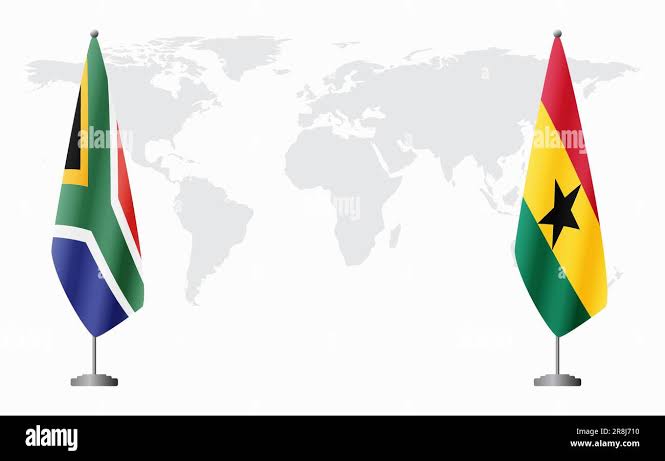
South Africa has successfully opposed Ghana’s attempt to place xenophobic violence in the country on the agenda of the African Union’s Mid-Year Coordination Meeting scheduled for October.
Ghana raised the matter on Wednesday during the AU Executive Council meeting of foreign ministers in Addis Ababa. However, South Africa’s Minister of International Relations and Cooperation, Ronald Lamola, objected, insisting the AU should address migration across the continent rather than focus solely on South Africa.
According to Lamola, the discussion should include the wider causes of migration, particularly the political and economic challenges in several African countries that force people to leave their homes for destinations such as South Africa.
Reports indicate the Executive Council rejected Ghana’s proposal, meaning South Africa will not be the focus of the mid-year meeting in Alamein, Egypt. Ghana has been among the strongest critics of anti-immigrant protests and xenophobic attacks in South Africa. It has already repatriated hundreds of its citizens and announced on 25 July that it would begin evacuating about 1,000 more.
It remains unclear when the AU will hold a broader debate on migration or what its scope will be. Last week, Ghanaian President John Dramani Mahama wrote on social media that he had “secured a commitment from AU Commission Chairperson Mahmoud Ali Youssouf to place the ongoing xenophobic attacks in South Africa on the agenda of the next AU Summit.”
That statement was widely understood to refer to the AU’s next ordinary summit in Addis Ababa in February 2027. Ghana’s move to raise the matter at Wednesday’s Executive Council meeting therefore came as a surprise, especially since only a limited number of African leaders are expected at the October gathering.
South Africa’s proposal for a wider migration discussion is likely to require a dedicated AU summit at a future date, an idea that has been under consideration for several years.
Mahama also stated, “Bringing the issue before the AU gives South Africa a fair platform to respond and gives us all a chance to find lasting solutions together.”