
How Self-Serving Southeast Power Brokers Are Undermining Peter Obi and the Region’s Political Future In The NDC
Njenje Media News Editorial
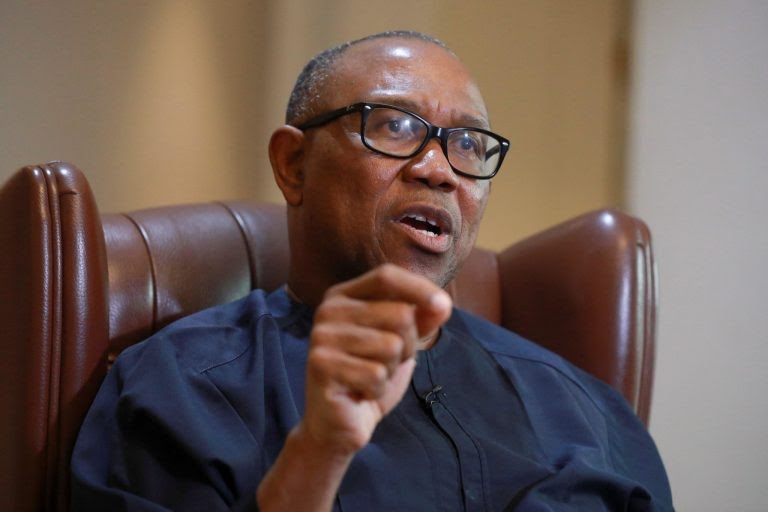
The Peter Obi political phenomenon is a rare political awakening in Nigeria, a movement built on competence, integrity, fairness, and a clear rejection of the old order of godfatherism, manipulation, and political backstabbing. For millions of Nigerians, especially young people, it represented hope that politics could be done differently. It was not just about one man. It was about a new political culture, a new ethical standard, and a new possibility for the country.
That is why the developments inside the Nigeria Democratic Congress (NDC), particularly in Anambra State and across the Southeast, have left many supporters deeply disturbed. What is emerging is not merely ordinary party disagreement. It is a painful pattern of internal betrayal, one that appears to be carried out by some of the very people who should have been Obi’s strongest defenders. The saddest part is that several Southeast political leaders, including a former governor of Enugu State, a former governor of Imo State, a professor from Enugu who was reportedly personally drafted to assist with the Anambra primaries, and a former senator from Anambra, are alleged to have worked against Peter Obi’s interests and defied his instructions. According to angry supporters, these are not outsiders attacking the project from afar. They are insiders weakening it from within.
That is the most dangerous kind of sabotage, because it wears the mask of loyalty while quietly serving another agenda.
At the centre of the outrage is the handling of the Idemili North and South Federal Constituency primary, where supporters of Uchenna Harris Okonkwo, son of the late Senator Annie Okonkwo, have cried foul over what they describe as a deeply compromised process. Senator Annie Okonkwo was one of Obi’s earliest and most reliable allies, a man who stood by him when it was not fashionable to do so. He invested time, trust, influence, and political capital in the vision long before it became a national phenomenon. For many supporters, his son, who is a serving member of the House of Representatives, should have been treated with honour, dignity, and fairness. Instead, they say the process was twisted against him in favour of other interests, who allegedly paid billions by a Northern Governor.
That alone has angered many members of the Obi support base. If loyalty to the movement can be disregarded so casually, then what message is being sent to those ordinary Nigerians who sacrificed money, time, energy, and credibility to build this project? What message is being sent to the young people who defended Obi on social media, the professionals who donated resources, the grassroots mobilizers who walked streets and villages, and the elders who gave moral legitimacy to the campaign? The message, as many now see it, is that the same old politics has found its way into the new movement.
The tragedy is not just that there are disputes over primaries. Disputes happen in politics. The tragedy is that some of the people involved appear to have chosen personal calculations over collective progress. Instead of building a strong, united Southeast political front behind Obi, they are accused of dividing the base, empowering rival interests, and undermining the very structure they publicly claim to support. A movement that was supposed to dismantle impunity now risks being weakened by the familiar habits of impunity.
This is why the conversation cannot be reduced to ordinary party politics. It goes deeper than candidate selection. It goes to the moral credibility of the movement itself. Peter Obi’s greatest strength has always been his moral authority. He does not command loyalty through intimidation or patronage. He commands it through trust. Once that trust begins to erode, especially because of the actions of those closest to the project, the damage becomes profound.
The Southeast, in particular, must confront an uncomfortable truth. Many of its political elite have consistently failed to translate ethnic solidarity into strategic political discipline. Too often, personal ambition, factional rivalry, and short-term patronage have been placed above the long-term political future of the region. Yet this was the moment when the Southeast was supposed to stand united behind a credible national platform. Obi’s rise offered the region a historic opening, not just to produce a presidential contender, but to project competence, discipline, and moral seriousness at the highest level of national politics.
Instead, what is increasingly visible is fragmentation led by those regional leaders who should lead the charge. Some leaders are accused of working against the very movement they publicly celebrate. Some are said to be silently encouraging outcomes that weaken Obi’s structure in the Southeast. Others are allegedly using their influence to impose candidates, suppress loyalists, and manipulate internal processes for personal advantage. Such conduct is not merely disappointing. It is politically reckless.
The political leadership in the Southeast owes its supporters a clear explanation. Was the Anambra primary truly free, fair, and consistent with party rules? Were loyal supporters of the Obi project treated with fairness, or were they sacrificed on the altar of internal power games? Who directed the disputed outcomes, and under what authority? Why would anyone undermine a movement that depends so heavily on trust, credibility, and grassroots goodwill?
These are not questions that can be buried under silence. They demand answers because silence in the face of injustice becomes complicity.
If the Southeast hopes to play a meaningful role in Nigeria’s future, it cannot afford to sabotage its own strongest political asset. Peter Obi remains one of the region’s most consequential political figures in modern history. Undermining him from within is not a clever strategy. It is self-inflicted damage. It weakens the region’s bargaining power, fractures its unity, and hands ammunition to those who have always doubted the Southeast’s ability to speak with one voice.
The people deserve better. The memory of Senator Annie Okonkwo deserves better. The loyal supporters who built the Obi movement from the ground up deserve better. And Peter Obi himself deserves a political environment that does not turn loyalty into a liability.
The Southeast political class must make a choice. It can stand with the values that made Obi a national symbol of hope, or it can continue down the path of petty factionalism, backroom deals, and self-destruction. History will remember either choice. What it will not forgive is betrayal disguised as strategy.
The time for accountability is now.