
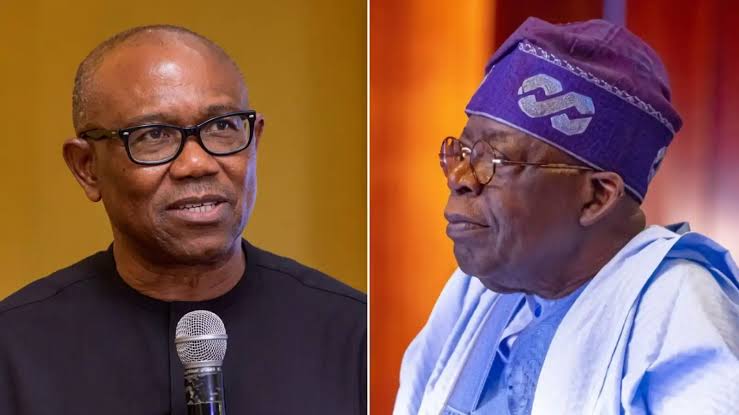
Presidential aide Bayo Onanuga has dismissed Peter Obi’s recent call for President Bola Tinubu’s resignation, describing it as “misplaced,” “simplistic,” and based on what he called a distorted interpretation of Nigeria’s political system and current realities.
In a statement issued on June 22, 2026, Onanuga said Obi’s comparison of Tinubu’s situation to the resignation of a British prime minister was fundamentally flawed, noting that Nigeria operates a presidential system with a fixed four year mandate.
“His view is also simplistic, as is often the case anytime he opens his mouth,” Onanuga said. “Obi forgets our country does not run a parliamentary system of government like the UK. We run a presidential system, with the president elected to a fixed 4 year term.”
He pointed to recent electoral outcomes as evidence of public support for the administration. “The people of Ekiti State and the senatorial constituents in Nasarawa, Enugu, Ondo, and Rivers have just delivered a resounding victory for President Tinubu and his party,” he said, adding that Obi should “wait until the presidential election to know what the people think.”
On security, Onanuga argued that the administration inherited long standing challenges but had recorded measurable progress since taking office. He cited mass rescue operations, the neutralisation of terrorist figures, and intensified military activity nationwide.
“Over 15,000 terrorists have been taken off the streets and forests,” he said, adding that the government had expanded security spending, introduced new technology, and appointed a Special Adviser on Homeland Security.
He also criticised Obi’s own record as governor, saying he was “a colossal failure” in handling security in Anambra State, a claim he attributed to statements made by Obi’s successor, Willie Obiano.
Turning to the economy, Onanuga rejected Obi’s description of Nigeria’s condition as the “worst possible,” insisting that key indicators showed improvement since 2023. He said Nigeria had recorded quarterly GDP growth above global averages, stronger foreign reserves, higher oil output, and increased government revenue.
“Foreign reserves have hit new highs over $50 billion,” he said. “Federation revenue is projected to hit over N30 trillion this year, far above the 2022 level of N7.7 trillion.”
He added that the stock market had surged significantly and claimed that investor confidence had improved under Tinubu’s reforms, particularly in the oil and gas sector.
On infrastructure, Onanuga said the administration was executing major road projects across the country, including long planned superhighways, while also investing in alternative energy solutions such as compressed natural gas.
He defended the government’s handling of electricity reforms, saying Tinubu had signed the Electricity Act to decentralise power generation and distribution, while expanding prepaid metering to address estimated billing.
“Whichever way, by all means necessary, you will have electricity, and you will not pay for estimated bills anymore,” he quoted Tinubu as saying, adding that efforts were ongoing to stabilise the power sector and attract investment.
On broader economic pressures, he acknowledged inflation but argued that global events were largely responsible for rising costs, citing geopolitical tensions affecting energy markets.
Onanuga concluded by describing Obi’s remarks as politically motivated and disconnected from national realities.
“Peter Obi’s call for President Tinubu’s resignation is childish and hollow,” he said. “It is merely a political grandstand and an unworthy distraction.”
He added that the president remained focused on reforms, economic stability, and long term development, insisting that Nigeria was “on the path to progress” under Tinubu’s leadership.