
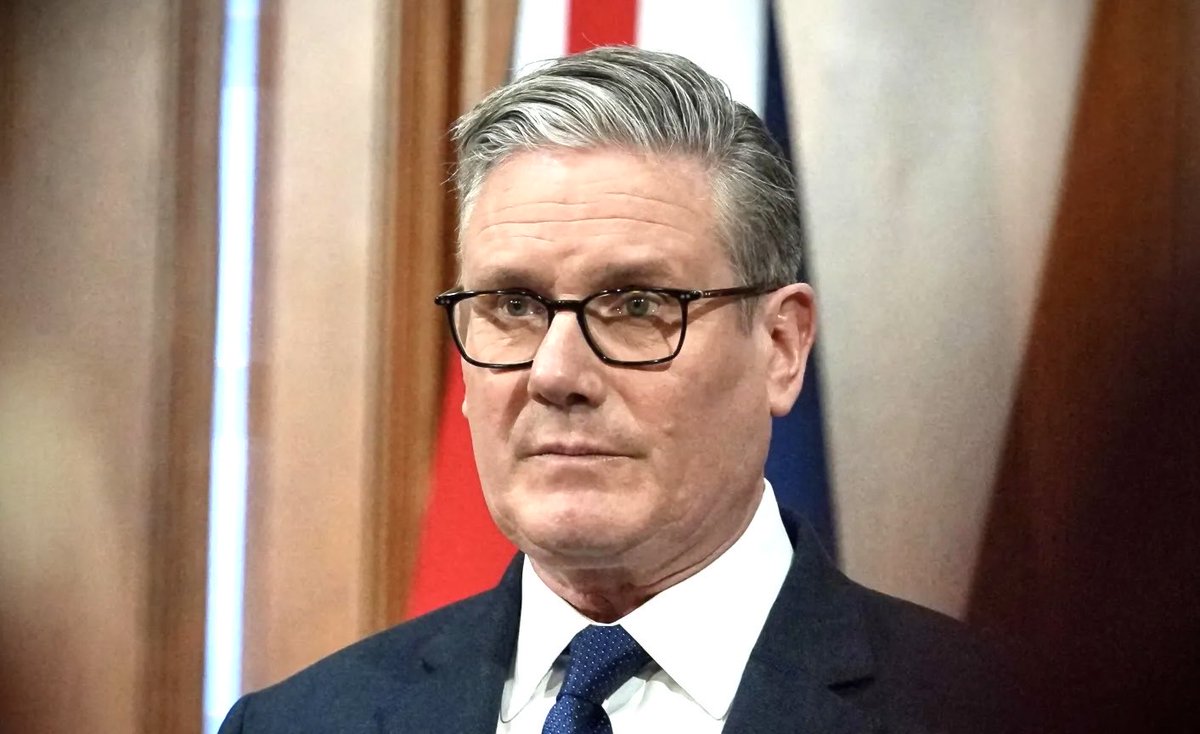
British Prime Minister Keir Starmer is expected to announce on Monday that he will step aside as prime minister following mounting pressure from Labour MPs who want Andy Burnham to take over the party leadership.
Speaking on behalf of the government on Sunday, Business Secretary Peter Kyle declined to discuss Starmer’s immediate plans but acknowledged that the prime minister understood the political situation confronting him.
“I don’t want to come on here and be delusional that there is no process, there are no forces at work which are challenging the prime minister as leader – that is clearly the case,” he told the BBC’s Sunday with Laura Kuenssberg programme.
For weeks, Starmer and his supporters had maintained that they were prepared to resist any leadership challenge from Burnham or any other contender, a position they repeated before Burnham’s successful return to Parliament through the Makerfield by election.
Downing Street reiterated that stance on Sunday, referencing Starmer’s remarks after Burnham’s victory on Friday, when he insisted he would contest any attempt to remove him as party leader.
Although Kyle admitted he was uncertain about developments in the coming days, he portrayed Starmer as carefully weighing his options while considering the country’s interests.
Kyle revealed he had lengthy discussions with the prime minister on Friday.
“He was very mindful of the interests of the country, and in that conversation he repeatedly said to me and asked my advice on what I believe the country wanted at this moment in different circumstances.”
While refusing to disclose the advice he offered, Kyle stressed the need for Labour to navigate the uncertainty responsibly.
“We are a tight group of people, and we are now facing a period of political uncertainty, and we need to find a way to get through this that puts the country first. This is what we are trying to do.”
Kyle, a close ally of Wes Streeting, who resigned as health secretary last month and has declared his intention to seek the premiership, said leadership contests were generally preferable but should not undermine party stability.
Asked whether he favoured a full leadership race rather than a possible uncontested takeover by Burnham, Kyle replied that contests were “better wherever possible, that needs to be balanced with the needs of maintaining authority of a party”.
He also urged Labour to avoid repeating mistakes made by the Conservatives.
He said the party should “learn the lessons of the Tories and make sure that any change that may or may not happen is done in a functional way, and in a way that keeps the government focused on the needs of the people”.
However, Kyle cautioned those expecting Burnham’s arrival alone to solve Labour’s challenges, arguing that the Conservatives had often wrongly assumed that replacing leaders would automatically improve their fortunes.
He said Labour should remember that “whenever they saw a challenge in their party, they always thought that changing the person at the top would fix everything, and that palpably, patently, is not the case”.
Burnham strengthened his leadership ambitions after winning the Makerfield seat with a commanding margin over Reform UK, securing more than 50 per cent of the vote and a majority exceeding 9,000.
His supporters initially believed around 200 Labour MPs backed his bid, roughly half of the parliamentary party, but that number has reportedly grown, fuelling expectations that he could become Labour leader and prime minister without a formal contest if Starmer agrees to a swift departure timetable.
Reports suggest several ministers who had previously supported Starmer privately advised him on Friday to decide on an exit schedule before the weekend ended or risk being pushed from office, potentially through intervention at Tuesday’s Cabinet meeting.
Under Labour rules, any challenger seeking the leadership must secure support from at least 20 per cent of Labour MPs, equivalent to 81 lawmakers.
Although Streeting insists he has enough backing to qualify, supporters of both Starmer and Burnham reportedly doubt his chances. Observers believe wavering MPs may ultimately rally behind Burnham if they view him as the likely victor.
Should Starmer leave office, Britain would be on course to have its seventh prime minister in a decade, despite his landslide election victory just two years ago, when Labour secured a majority of 174 seats.
His tenure has been marked by a series of controversies and policy reversals, including disputes over winter fuel payments and the appointment of Peter Mandelson as Britain’s ambassador to Washington.
Labour’s declining poll numbers have intensified concerns within the party, while Starmer’s personal popularity has fallen sharply. Reform UK has reportedly led national polling for more than 300 consecutive surveys, prompting growing fears among Labour MPs that, without a leadership change, Nigel Farage could win the next general election.