

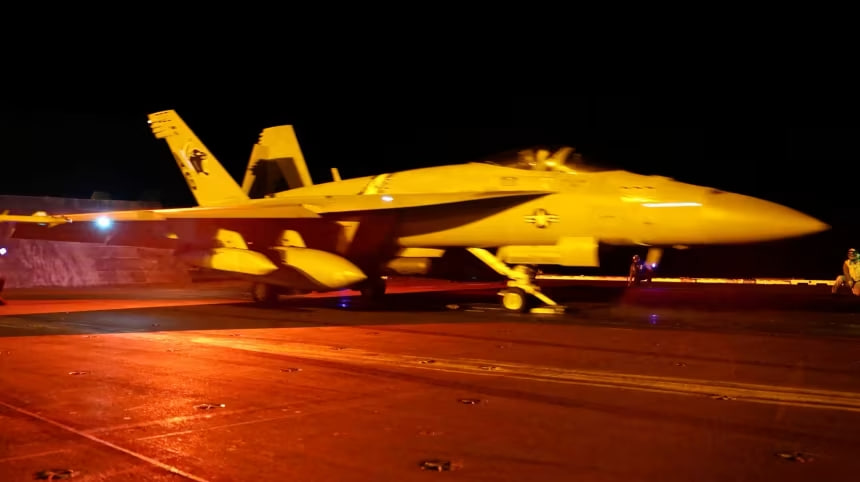
The United States military escorted 40 commercial vessels carrying about 18 million barrels of oil through the Strait of Hormuz on Tuesday, marking the highest wartime movement of commercial vessels through the strategic waterway since the conflict between the United States and Iran began, according to two US officials familiar with the operation.
Before the war began more than six months ago, about 20 million barrels of oil were transported through the Strait of Hormuz each day.
The US officials said American forces deployed air, maritime and space based assets during the operation to protect the vessels while continuing strikes against Iranian military capabilities that could threaten commercial shipping in the strait.
US forces also faced several waves of Iranian drone attacks during the escort operation and successfully neutralized anti ship cruise missiles, one of the officials said.
The operation came as Washington increasingly focuses its military strategy on the Strait of Hormuz, seeking to weaken Iran’s ability to disrupt commercial shipping while maintaining a naval blockade of Iranian ports.
According to the officials, the strategy forms part of a broader “full court press” by the administration of US President Donald Trump to increase economic pressure on Iran’s leadership.
Despite the successful operation, US officials acknowledged that the conflict is unlikely to end quickly, while energy companies remain cautious about sending vessels through the waterway even under military protection.
The continued uncertainty has also contributed to elevated energy prices and turbulence in global bond markets.
One US official said other priorities identified by Trump, including efforts targeting elements of Iran’s nuclear programme, have effectively been “backburnered” as US Central Command concentrates its resources on securing the Strait of Hormuz and restricting oil exports entering or leaving Iranian ports.
Trump has also recently indicated that he is prepared to leave Iran’s highly enriched uranium stockpile buried and monitor it through satellite imagery, despite previously describing securing the material as a major priority.
During Tuesday’s operation, US forces struck nearly 60 military targets around the strait, including air defence installations, radar systems, maritime equipment, mine laying capabilities and communications facilities, while simultaneously escorting the commercial vessels.
The second US official said American forces expect to continue offensive operations around the waterway because Iran has demonstrated an ability to rebuild its military capabilities.
The official compared the continued strikes to “mowing the grass” and a game of “whack-a-mole”, describing them as necessary to gradually reduce Iran’s ability to threaten commercial shipping.
US Seeks To Reduce Iran’s Leverage
The military operations form part of a wider US strategy aimed at gradually reducing Iran’s ability to use the Strait of Hormuz as economic and strategic leverage.
The second US official said the US naval blockade had prevented Iran from exporting oil since July.
Trump said Wednesday that the latest US strikes targeted more than Iranian radar installations and were intended to prevent Tehran from tracking vessels travelling through the strait.
“They were trying to see the ships,” he said from the Oval Office. “They can’t see it because they have no radar, because we blew it up, and we blew up much more than their radar last night.”
Trump did not specify the additional targets but said the United States remained in control of the Strait of Hormuz and had demonstrated its ability to attack Iranian military assets along the coast while protecting commercial vessels from incoming attacks.
However, it remains unclear whether the sustained military campaign will ultimately force Iran to concede to US demands or how long such an outcome could take.
US Treasury Secretary Scott Bessent said earlier in the week that oil shipments through the strait had increased, reporting that more than 17 million barrels per day passed through the waterway on Monday.
“That is not Iranian control of the strait,” Bessent said.
US officials have argued that the Strait of Hormuz is becoming a less valuable strategic asset for Iran, pointing to the increasing movement of commercial vessels as evidence.
Iran, however, is still believed to view its ability to threaten commercial shipping and disrupt traffic through the waterway as an important source of leverage.
Shipping companies remain uncertain about whether the United States can maintain a sustainable system for protecting commercial vessels.
US officials have also argued that the volume of oil moving through the strait may be significantly higher than publicly reported because vessels are increasingly switching off their tracking transponders to avoid detection.
The first US official said most, if not all, of the 40 vessels escorted through the waterway on Tuesday had switched off their transponders.
One person familiar with the shipping industry questioned the credibility of the administration’s claims about shipping volumes, saying, “Safe to say the administration has not covered itself with credibility,” while adding that even if the reported daily increases were genuine, “I don’t know anyone who thinks the average is that much.”
Commercial shipping companies are largely deciding whether to transit the strait on a vessel by vessel basis, according to two people familiar with the situation.
The cost of chartering an oil tanker through the waterway has also risen sharply, with some estimates putting the price above $500,000 per day. The high rates have created an additional financial incentive for companies prepared to take the risks associated with the journey.
However, the wider shipping industry continues to seek stronger assurances about safety.
Insurance costs for vessels remain elevated after rising sharply at the beginning of the conflict, increasing the financial burden on maritime operators.
Reports of Iranian attacks against vessels travelling through the strait have also continued to discourage some shipping companies from using the waterway.
Oil is only one category of energy cargo transported through the Strait of Hormuz. Liquefied natural gas shipments appear to be facing even greater caution because of the potentially catastrophic consequences of an attack on vessels carrying highly flammable cargo.
US officials acknowledge that establishing a sustained flow of commercial traffic will require time and continued military operations.
The US military must also continue striking Iranian military capabilities around the strait that were partially rebuilt during the recent pause in fighting.
At the same time, Washington hopes regular escort missions will persuade shipping companies that commercial vessels can safely navigate the waterway.
The US military plans to expand the cleared shipping corridor through the strait by next month, allowing vessels greater room to manoeuvre and potentially increasing the volume of oil transported through the waterway.
The vessels escorted on Tuesday included ships registered under the flags of several countries, including Saudi Arabia and France.
Earlier in the conflict, the US military attempted to establish a similar escort programme known as Project Freedom.
The initiative was quickly suspended after its announcement caught several key Gulf allies, including Saudi Arabia, by surprise and prompted threats to restrict US access to military bases and airspace for operations against Iran.
US officials now say the conflict has entered a different phase, with greater regional support for escort operations.
The first official said support had increased as Houthi rebels have also launched attacks against Saudi Arabia, strengthening regional backing for US efforts to protect commercial shipping through the Strait of Hormuz.