
Maazi Tochukwu Ezeoke, Chief Executive Officer of Njenje Media and Coordinator of the Village Boys Movement, has described former Anambra State Governor, Peter Obi, as the presidential candidate of the Nigeria Democratic Congress (NDC), following a series of diplomatic and policy focused engagements in London.
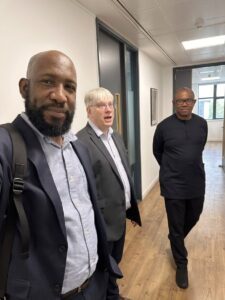
Ezeoke made the remarks while reflecting on Obi’s recent meetings in the United Kingdom, where he accompanied the former presidential candidate to discussions centred on Africa’s evolving role in global affairs.
“Peter Obi is the NDC Presidential Candidate,” he stated.
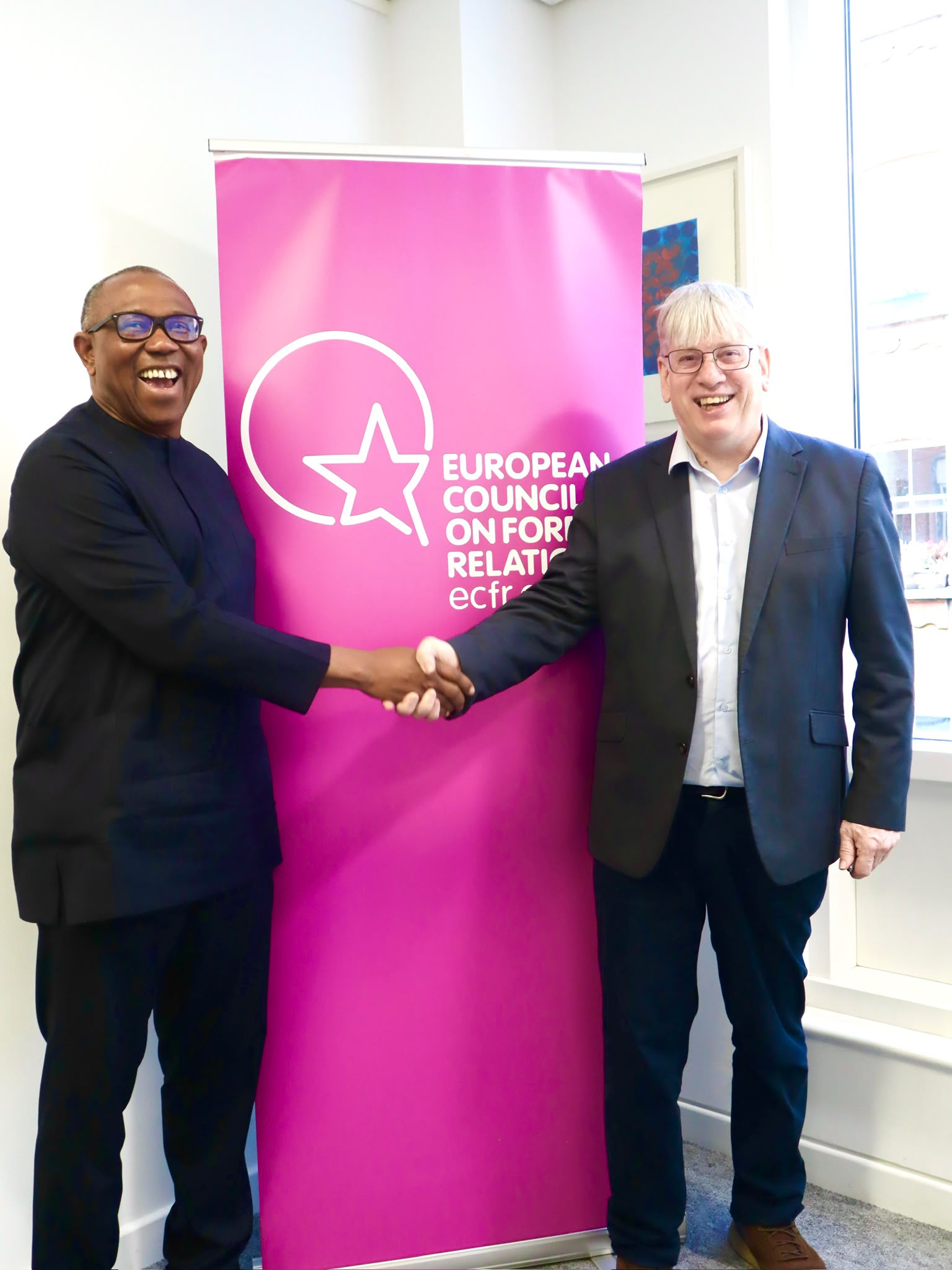
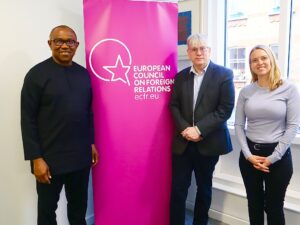
He said one of the key highlights of the visit was a strategic meeting with Alex Vines, Director of the Africa Programme at the European Council on Foreign Relations (ECFR), where discussions focused on repositioning Africa within the global economic and political order.
According to him, Obi consistently advocated for a shift in how the world engages Africa, stressing that the continent should no longer be viewed through narrow narratives of aid dependency, instability, or crisis management.
“What stood out throughout the engagement was Peter Obi’s consistent and deliberate advocacy for a new international approach toward Africa, one rooted not in pity or patronage, but in partnership, respect, and shared strategic interests,” Ezeoke said.
He noted that Africa has historically been framed in limiting terms, despite its demographic strength, economic potential, and geopolitical importance.
“For decades, Africa has too often been discussed within narrow frameworks of aid, instability, poverty, and crisis management,” he said.
Ezeoke added that Obi’s position during the meetings emphasised Africa’s need to be recognised as an active stakeholder in shaping the global economy, rather than a passive recipient of international attention.
“Peter Obi’s position during these conversations was both clear and compelling: Africa must no longer be treated merely as a recipient of global attention, but as an essential stakeholder in shaping the future global economy and international relations,” he stated.
He further explained that Obi drew comparisons between Africa and other emerging global regions such as India and Southeast Asia, arguing that Africa deserves similar strategic recognition and long term engagement.
Ezeoke also highlighted Obi’s emphasis on Nigeria’s central role in this evolving global conversation.
“He emphasized that just as the world increasingly recognizes the strategic importance of countries and regions such as India, Indonesia, and parts of Southeast Asia, Africa deserves the same level of seriousness, engagement, and long-term partnership,” he said.
According to him, Obi believes Nigeria possesses significant human and material resources that could position it as a leading force in Africa’s development if supported by effective leadership and institutional reform.
“With its vast human capital, entrepreneurial population, natural resources, and regional influence, Nigeria possesses the capacity to become a major driver of economic growth and innovation on the African continent,” he said.
Ezeoke added that the engagements reinforced Obi’s broader vision of repositioning Africa in global discourse through practical policy engagement rather than rhetoric.
“What became increasingly evident during the meetings was Peter Obi’s determination to reposition Africa within global diplomatic and economic discourse, not through rhetoric alone, but through constructive engagement, credibility, and policy-driven conversations,” he stated.
He concluded that the discussions in London underscored the need for Africa to move from the margins of global decision making to a more active and strategic role in shaping international outcomes.

“The message from London was unmistakable: Africa’s role in the world must evolve from passive participation to active partnership,” he said.