

Power, Accountability, and the Crisis of Public Trust: Rebuilding the Institutions that Serve the People
Being a text of Guest Lecture by Dr. Sam Amadi, Director of Abuja School of Social and Political Thought (TAS) on the 5th Year Memorial Event and Innocent Chukwuemeka Chukwuma Impact and Legacy Lecture Series at the Center for Memories, Enugu Nigeria on April 9, 2026
Preface and Summary:
This lecture is about Mr. Innocent Chukwuemeka Chukwuma, a man whose whole adult life could be described as a long stretching effort to make power accountable. Accountability has three dimensions that Innocent, as we call him, pursued. It is about power, defining who should exercise power, how power should be exercised, and to what purpose. The first is primarily a concern of politics and constitutional theory. The second is the focus of administration law and public administration, and the third is what political economy struggles with. In a significant sense, Innocent’s adult life on earth touched the intersections of these branches of the discourse of power and accountability.
The summary of my presentation is that the primary concern about social knowledge is how to manage power. And it starts with deciding on who should exercise power, how and for what purposes. Societies that have effectively settled the questions about who should exercise political power, how and for what purposes have succeeded. Societies that have not settled such questions about political have not succeeded. The settlement of the questions about power is never permanent. It is revisable. New challenges arise that call to question the old answers. The society that will continue to succeed will find the resources to answer the old questions in new ways that satisfy the dialectics of a new world.
Can we generalize on how the questions of power have been answered in successful societies? I think the answer is yes. In these societies, power has been coupled with effective control on its uses. In those societies, citizens and technocrats have effectively exercised oversight functions to ensure that power remains within the boundaries of authorization and dedicated more or less to the pursuits of public good based on existing consensus. In these successful societies, there is legitimate expectation matched by active demand for accountability from those entrusted without political power. Let me be arrogant to stay that this is an iron-rule of social progress. It applies to every society, whether democratic or non-democratic. But it applies more to democratic societies or societies like Nigeria that pretend to be democratic.
Innocent Chukuma’s legacy is that he recognized these fundamental truths about social progress and dedicated his life in pursuit of these truths. He started as an impressionable student activist and became a passionate human rights activist professional, a robust policy scholar and ultimately, a policy technocrat. He was an activist in the streets confronting police and security agents. He became a human right professional writing reports about the pathologies of power that dehumanize people and providing accountability to abuse of power. Then he became a funder building institutions of accountability and civic resilience to control the use and abuse of political power. He came full circles. Every thing Innocent did as an adult was a search for answers to the three fundamental questions of power. Everything Innocent did was to build accountability structure so political power would be exercised by those chosen by the people in the manner that they authorize through the law and for the purpose of promoting their happiness, safety, and prosperity.
Let us now explore the intricacies of these questions and their answers.
Why Bother about Power?
This paper is about power, political power and how to manage power in a manner that promotes the good of the public, that is the common good or public good as some may call it. Why do we have to care about power? The simple reason is that power is the essential ingredient to get thing done. It is the ability to do thing, to accomplish tasks. From this perspective, power is the most important issue to settle in human society. The most important social science theories have been answers to the questions of power such as who should exercise power in a political community? What makes the exercise of power legitimate? How do we make the exercise of power effective? What do we do to protect power from abuse?
The most influential theory about the origin of political power and the validity of its exercise is the social contract theory. This theory has two major variants propagated by Thomas Hobbes and John Locke. The Hobbesian version is that power is what we all possession in roughly equal measure in the state of nature. Everyone is authorized to exercise this power for his selfish interests to the detriment of everyone else. The consequence of the natural state is that no one is assured of his survival in a war of all against all. The solution is for everyone to surrender this natural power of self-determination to a Leviathan, a tyrant if you like, who rules over us to protect us from death. The Lockean theory presents a different picture of the state of nature. In the state of nature, we have natural rights to basic freedoms, chiefly the right to self-determination. But we are not able to enjoy the fullness of our happiness and wellbeing when each of us exercises the power of self-determination alone. In a political community we need to enter into a social contract and create government to enforce these basic freedoms. This social contract is the foundation of representative democracy and the fundamental rights we have in modern constitutions. These theories are explanations of social realities. The latter version has been the more dominant and at the heart of democracy. Whichever theory you accept the common fact is that political power belongs to the people. But the people cannot effectively exercise it as individuals. They have to transfer the power to a group of persons to exercise on their behalf. The purpose of the transfer is to better protect their rights and ensure their happiness and prosperity.
Because political power is in the people, we talk about the sovereignty of the people. Sovereignty rests with the people because power belongs to the people. Nigeria’s former ruling party got it right with the slogan: “Power to the People”. But the people cannot exercise political power individually hence the power goes to the political community represented by the government the people have put together. The representative government exercises political power on behalf of the people through institutions that are designed and managed in pursuit of the interests of the people defined as public good.
Power matters because that is what we need to achieve the plans and interests we have as human beings. Power is at the heart of the right to self-determination which is the essence of being human. There is no political equality if we do not have equal political power. In an organized political community, we have transferred this political power to government. This power has to be made effective, legitimate, and accountable for the purpose of the transfer to be realized. In the rest of the paper, I will focus on how we can achieve this triple element of political power, legitimacy, effectiveness, and accountability.
The Fight to Make Power Legitimate and Effective:
As a student union activist, Innocent was concerned about the dynamics of power that defined the relationship between students and teachers and management. Everyone who was a student at a Nigerian university in the 80s and late 1990s knows that the central question in student’s life is to what extent students should be allowed to govern themselves outside the institutions of university administration. The right to student unionism is conceived as a counterbalance to the power of the university administration to manage university life. Whereas studentsa agree to be managed by rules set by the Senate and Councils of University, they claim the right to govern themselves in some other important issues through their elected representatives. This is how to better understand the question of the right to student unionism, which Innocent and many of his fellow student leaders advocated in campuses in Nigeria.
At the heart of the right to student unionism is the right to self-determination. The right to self-determination has been the posterchild of international human rights and democracy. Human rights matter because people matter. People matter because they have dignity. Dignity means that human beings ought not to be coerced, enslaved or forced to serve the needs and interests of other people to the detriment of theirs. We have the right to express ourselves, to direct ourselves and decide what we think is in our own interest. This is easy to do if we are alone in the world. No one can compel a person who is alone in the world. As soon we enter into a community self-determination becomes difficult. We have to interact with one another, and decisions have to be made for the collective good.
Political community is about collective decision-making. How to make decisions about what affects many different people is the essence of political community. When the political community is small. self-determination works through deliberation and decision-making by all persons. All those affected by a decision come together under one roof and decide what ought to be done. This is the case with popular democracies we had in ancient Athens and Ala-igbo. All adults come to the Agora or the Nzuko to express their views on the important issues of the day. The views of the majority of assembly carry the day. In such small, acephalous societies, power is easier managed as its legitimacy is secured by the possibility of each person contributing directly to decision-making. For now, let us forget that in both Athens’ Agora and Igbo’s Nzuko neither females nor adult non-citizens participated in the deliberation and voting.
When the political community is large and disperse, as it is with modern political communities, all the adult citizens cannot come together in one place to deliberate and decide on the important issues of the day. In such societies, there must a political device to ensure self-determination and fairness. The people must determine their fate. They have to fashion the laws that guide their affairs. And they cannot meet together in one roof in the Agora or the Nzuko to do so. The idea of representation was fashioned as a device to maintain self-determination. The people elect a few of them to represent them at the assembly and make laws on their behalf. At the same time, they elect a few to execute the laws that the legislators will make. In Athens, the citizens took part in settling disputes and determining criminal guilt. In Igbo acephalous communities, the people who met at the Nzuko to make laws also determine guilt and settle disputes. But in our modern societies, we have created a caste of independent people who act as jurors to determine guilt and settle disputes. This is the judiciary arm.
What comes clear from this elementary brief about government is that representation, which is now termed representative democracy, is built on the simple idea that people ought to be the ones who determine their affairs. In a political community beyond the small city and village, the only viable way for self-determination is through representative democracy. And representative democracy is all about ensuring that the people govern themselves through the representatives they choose through election. We may forget this, but it is important that we remember that democracy is the mean of organizing power so that the people will exercise their right to self-determination by electing people who will make laws and take decisions on their behalf for the collective good.
Therefore, the practice of representative democracy requires three important principles to operate. First, that the people freely choose those who will make laws and take decisions about the collective good. Second, that the process of making this choice is such that treats all citizens as equal. Third, that those who are chosen to represent the people make laws and take decisions only for the good of the people. Fourth, that there are procedures to ensure that the people can compel the representatives to protect their interest and remove them when they fail to do so.
Free and Fair Elections:
The most important principle of democracy is that the people should freely choose those who will represent them to make the laws and decisions that will protect their freedoms and enhance their happiness and prosperity. This makes the institutions of elections the most fundamental institutions of the state. It determines who exercises power on behalf of the people. This is the heart of democracy. Foremost political scientist, Robert Dahl lists some criteria that “a process for governing an association would have to meet in order to satisfy the requirement that all members are equally entitled to participate in the association’s decisions about its policies”. The list includes (a) effective participation, (b) voting equality, (c) enlightened understanding, (d) control of agenda, and (e) inclusion of adults. The first two are the most important criteria for democratic process.
The institution of free and fair should be such that guarantee that (a) adult citizens all have the opportunity to vote freely to choose their leaders, (b) that all votes count equally (that means, no one’s vote weighs more than another), and (c) the results of the voting accurately determine the declaration of results. When the first condition of free and fair election is achieved, we describe the electoral process as free. Free means that no citizen is under compulsion of any sort not to vote or to vote for someone not his or her choice. The second and third conditions relate to the fairness of the electoral process. If votes are not counted accurately, or the result declared does not correctly flow from the accurate tally of votes, then the election is not fair and violates the fundamental right of self-determination which is expressed in political equality.
So, the legality and legitimacy of exercise of political power in any political community rest on the process by which power is transferred to some to exercise on behalf of others. In a democracy, the people transfer that power to the few amongst them through a free and fair election. In a non-democracy, whether a monarchy or an aristocracy, few who are powerful or come from a line of conquerors grab power from others and exercise it without the consent or authorization of the people. In a democracy, the first process of accountability for power is that it is exercised by those authorized in a free and fair election. It is for this purpose that the Nigerian constitution wisely prohibits the exercise of political power by means other than democratic elections. It is also for this reason that the Supreme Court has affirmed that political power in every level of government in Nigeria must be exercise by those chosen by the people through democratic means.
How Democratic is Nigeria?
Looking at the crisis of the Nigerian state the first question to ask is how democratic is the Nigerian state. Is power exercised by the people through the representatives they duly elect to decide for their interest? Innocent and his colleagues fought for the right to student unionism, which is nothing more than allowing students to exercise the right to elect fellow students who will manage those issues that do not concern the administration of the university. When Innocent left university and joined Civil Liberties Organization (CLO) he continued advocacy for human rights and democracy. That campaign resulted in Nigeria’s return to civil rule. Since 1999 Nigeria has been holding periodic elections. In a formal sense, this qualifies Nigeria to be a democracy. We can say that political power is legitimately exercised in Nigeria because the people transfer political power to those in government through free and fair elections. But is it really so.
We may take for granted that elections are held periodically. We may even take for granted that because we undertake the ritual of periodic elections, we have satisfied the condition of accountability associated with acquisition of political power. But that is not so. First, is election in Nigeria free? Not so. Yes, the Nigerian constitution grants citizens who are 18 years and above the right to register to vote. This is adult suffrage in line with global best practice. But the modalities and logistics of registration of votes often disenfranchise some would-be voters. Nigeria is yet to fashion a smooth process that enables those who want to register to vote to do so at any time without too many hassles. This is how to make the constitutional guarantee of right to vote meaning.
Elections are not free if some citizens can be prevented from voting through violence or other illegitimate exercise of force. The fact that the electoral process is highly militarized and violence is often perpetrated against some voters is enough to disqualify Nigerian elections from being free. We should not forget the experience of the 2023 governorship election where some Igbo voters were chased away from the polls in Lagos because of political preferences. The government has done nothing about that chronic violation of the right of self-determination of Nigerian citizens. Interestingly, the violence was perpetrated at the behest and with the protection of highly placed public officials. If this level of impunity can occur without official actions against the perpetrators how credible are the institutions of electoral integrity? There are countless other instances of violence used to either scare voters away from voting or force voters to vote against their will. These actions constitute violations of law and undermine the accountability of power in our society. The problem is that there are no institutional efforts to protect the right of self-determination of the people. The Independent National Electoral Commission (INEC) has neither passion nor ability to prosecute electoral offences and there is no election offences commission to fight these impunities.
Still on free and fair election, Nigeria has established framework for effective management of elections. At the heart is the electoral law and the agency that manages elections in Nigeria, the Independent National Electoral Commission (INEC). The underlying principle of electoral process in Nigeria is that elections should be free and fair so that those who exercise political power in Nigeria will be persons duly elected by the people and therefore readily responsive to the people. The guarantor of this principle is an INEC that is independent and impartial in its management of elections. If this worked as designed, the people get to elect those they want with a commitment that these elected would serve their interest otherwise they will be voted out. The magic of democratic governance rests on the incentive that the electoral system provides for good and accountable governance. Free and fair electoral system makes elections to be competitive. Competitive elections ensure that those in public office have real fear of being voted out next time. And since politics is a career, they have better incentives to serve the people or at least try and respond to the people so that they can retain their job. Where elections are not competitive, meaning there are no credible threats of losing reelections, public officeholders do not have a credible threat of not been reelected. Therefore, they may not have sufficient incentive to govern well or effectively respond to the people.
This is how the incentive structure of democracy works. The incentive structure is the competitiveness of election underwritten by a free and fair process protected by an independent and impartial election management body. Scholars have tried to find a basis to conclude that democracies outperform autocracies in generating development. The only coherent theoretic basis to prefer democracy over autocracy with respect to ability to generate development is through a better incentive structure. If democracy works as designed, then it has the capacity to generate good governance which may lead to development. If democracy does not work as designed because its electoral process is not competitive, then it lacks that incentive structure and could be worse than an autocracy.
This is where Nigeria is today. Its election is shambolic. It is not competitive. Incumbents do not face credible threat of losing reelection by the voting, counting and declaration of results. Therefore, they are not responsive to the electorates. There is no accountability because the main institution of accountability is broken.
The institution of election in Nigeria is not just INEC. If we follow the classical definition of institution by the Nobel Laureate in economics and leading economic historian, Douglas North, institution includes formal and informal rules, procedures, norms, and values that enable or constrain actions. In the case of electoral system in Nigeria, the institutions of elections extend to electoral law, mechanisms, and procedures for the conduct of elections, and actors and agents in the electoral system. Guaranteeing free and fair election requires an electoral law that meets the requirement of constitutional due process and that protects the fundamental rights of the people. Arguably, Nigeria has such a law in the Electoral Law 2026. But there are serious gaps.
Experience in electoral malpractices, especially since 2023 has thrown up many gaps in our electoral law. The most notables are the process for the appointment of the leadership of the electoral management body and the process for counting, collecting and announcing results. Electoral umpires are still appointed by an incumbent president who faces reelection and therefore a party in an electoral contest. This undermines the independence of the umpire. Efforts since 2007 presidential election to reform this appointment model by creating a system of competitive appointment of INEC commissioners by independent judicial body culminating in the Uwais report have failed against the wave of self-serving politics. The tragedy has become real. Today, we are preparing for a presidential election where the Chairman of INEC is facing a vote of no confidence by the leading opposition coalition because he is perceived to be biased in favor of his appointer, the President, who is standing for reelection.
Accuracy of votes is a critical component of a free and fair electoral system. Nigerian elections have been routinely manipulated. The highpoint could be in 2007 when a justice of the Nigerian Supreme Court declared that the 2007 presidential election was a sham. The result barely escaped nullification as a minority panel of the apex court validated it. The brutal castigation of his election made President Yaradua admit the necessity of a comprehensive electoral reform and appointed prominent scholars, professionals and statesmen into a committee headed by retired Supreme Court justice Uwais to review and reform Nigeria’s electoral system. The key recommendations of that committee were not implemented after the death of President Yaradua in office. But the clamor for the reform of the electoral system continues to agitate the minds of Nigerians who understand the fundamental importance of a credible, free and fair electoral system to the protection of fundamental rights and the promotion of good governance.
One area that needs reform has been the counting, collation and declaration of election results. Most electoral malpractices occur at the nexus of counting, collation and declaration of results. Oftentimes, when the polls close and results are counted and voters leave the polling unit, the magic starts. Fictitious election results are generated and strange winners are announced. Sometimes, during the manual collation of results across different and difficult terrains, desperate politicians smuggle fake result sheets and rig the election. This necessitates calls for use of technology to defeat the election riggers. The backbone of the use of technology for electoral integrity is the use of Bimodal Voter Identification System (BEVAS) to ensure only voters who are biometrically accredited can vote. This removed the possibility of ghost voters and controlled the numbers of votes that can come from a polling unit. The electoral law supports this innovation by nullifying any election result that is higher that the number of electronically accredited voters recorded real-time by the BEVAS machine. The Supreme Court gave its imprimatur to this innovation and its safeguard, and this has restored credibility to an important aspect of the electoral process.
But there is still a chink in the amour of electoral integrity. Even with electronic accreditation, politicians continue to rig election. The fact that voting, counting, collation, and declaration of results are manual means that desperate politicians and corrupt electoral officials can still falsify results. To address this loophole, in 2022, INEC leadership and electoral reformers demanded for an electronic transmission of results from the polling units to secure electronic platform immediately after counting and recording of votes. The ruling party’s Senators defeated a proposal in the legislature to include electronic transmission in the 2022 electoral law. After going back and forth, a watered-down version that gave INEC the discretion to choose a mode of transmission of election results was adopted as a compromise. In exercise of its power under the law, INEC made a regulation mandating polling officers to electronically transmit election results from the polling unit to its electronic viewing portal and to its secure electronic storage. INEC promoted electronic transmission of results as the elixir for election rigging and committed that it would electronically transmit election results real-time in the 2023 general elections.
INEC failed to deliver on its promises. During the presidential elections INEC failed to electronically transmit the results of the presidential election despite transmitting those of federal legislative election conducted at the same time. Polling officers reported that they were given wrong passwords and could not transmit the results of the presidential election. INEC could offer no good explanation about this apparent sabotage of the integrity of the election. It blamed technology hitch, claiming that its electronic platform collapsed. But the Amazon Web Service, the web service provider, denied that its system was down anywhere in the world on election day. The biggest surprise and betrayal was that INEC lawyers asked the tribunal to absolve it of any responsibility to electronically transmit election results because the requirement to electronically transmit election result is not mandatory on it, despite it made a regulation in this regard. The tribunal accepted this argument and it was affirmed by the Supreme Court. This became the gold standard justification for electoral malpractices in Nigeria, invented by the very institution that is tasked to protect the integrity of elections. The end of the story is that INEC is the one that designed the most robust safeguard for electoral integrity; INEC is also the one that undermined that safeguard and, through its lawyers, provided the argument to justify its deliberate destruction of electoral integrity.
Many lessons come from this nasty experience with electoral integrity in Nigeria. First, is the clarity that enacting strong laws does not translate to having strong and effective institutions. The entire 2023 electoral advocacy was about forcing into electoral law the provision on electronic transmission of election results. Little attention was paid to the internal rules and procedures of INEC decision-making and the quality of its institutional integrity. This is a manifestation of legal fetishism that undermines the advocacy for accountable use of power for the promotion of common good. Late US political philosopher and Harvard Professor, Judith Sklar, deployed what she called ‘legalism’. She defined legalism as “The ethical attitude that holds ethical conduct as a matter of rule-following, and moral relationships to consists of duties and rights determined by rules”. Legalism prescribes that the answer to every situation of failure is to prescribe more and better rules with stiffer sanctions. Rules are important components of institution. But rules require other things, including morals, culture, and process, to work. Rules need a dynamic that makes rules constraining enough. In the case of the rule on electronic transmission of results in the 2023 electoral elections, rules were not constraining enough in the face of weakness or non-existence of other forms of institutions.
So, the first lesson is that when we advocate for strong institutions, we should not forget the human and cultural elements in the design of the institutions. There is even a more elementary problem with designing and running institutions. It is that when we make rules, we make rules that are not comprehensive and are not properly fitted to the problem that needs to be solved. This manifests in two forms as formalism and tokenism. Formalism is the notion that the rules that matter for transformation are the formal rules. So, during electoral reform we focus all attention on the electoral law and the constitutional provisions relating to elections. Then we forget the structure of the electoral institutions, the internal rules and procedures that constrain or enable actions of relevant stakeholders, and the informal incentive structures that generate disruptive and corrupt behaviors during elections. The result of this oversight is that we either compound the problem or leave it unsolved. The cause of this is the lack of rigor in diagnosing social problems and the overreliance on lawyers, especially litigation lawyers, in crafting and implementing institutional reform.
The problem of tokenism relates to the lack of real commitment to institutional reform. We want to take the glory of institutional reform without the difficulties that go with it. Tokenism is like applying first aid to a victim of serious accident. You are not supposed to stop there. That is the beginning, not the end. The medication should continue to binding the woods, conducting necessary surgeries and thoroughly examining for other underlying illnesses that could retard healing and restoration. Tokenism limits us to just the visible symptoms, and makes us overlook the real causes of unwellness. In the case of electoral reform, we do not focus enough on the judiciary. We do not care about the system of appointment of judges and members of the tribunal, the fact that the appointment procedure has been thoroughly corrupted that only those who are feeble both in knowledge and morals make it to the upper echelon of the judiciary where determinative actions are taken in support or against public good. Today, we all can attest that it is the judiciary that is effectively destroying the accountability of public governance through free and fair elections. The election rigger’s strongest weapon against electoral integrity is the judiciary. While we are busy with constitutional amendment to remove from the president the power to appoint INEC commissioners, we have neglected the most dangerous weapon fashioned against fair and free election as a mechanism of accountability in the use of political power in Nigeria: the judiciary.
Incredible elections create deep distrust of electoral system and electoral democracy. Nigerians do not have confidence in the electoral system and INEC. The latest Afrobarometer report on Nigeria highlights that about 75% of Nigerians have deep distrusts of INEC and the judiciary. This was before the debacle of the 2023 presidential election. I will guess that the distrust of INEC could rise up to 90% of Nigerians. Nigerians are reluctant to register to vote because they believe that elections do no matter because politicians will always find a way to win and retain power without authorization by the people. Those who registered would not come out to vote because they fear violence or do not believe that the results of the actual votes will not count. Because our election gets worse every electoral circle, more and more citizens, especially young Nigerians, sit out national elections. They vote for the favorite stars during BBN shows, but do not vote during national election. Our elections have moved from 60% turnout to 40%, to 20% and now 18% of registered voters. This is the result of deepening public distrust arising from deep failure of electoral justice.
Another component of this deepening distrust is that political actors no longer believe that there is any value in seeking judicial remedies in the event of electoral disputes. They now say that they will settle the dispute at the polling units. No more resort to courts because the courts are perceived as part of the ruling party. This is public distrust of state institutions writ large. You can imagine what we get when we move from ‘go to court’ as a cynical reminder of helplessness to ‘we will not go to court; we will fight it out at the polling unit’ as a battle cry for self help.
The Failure of the Justice System:
The failure of the justice system complements the failure of the electoral system for the simple reason that free and fair elections are not just instrumentally useful. They are also intrinsically useful. Free and fair elections matter not just because they provide incentive for good governance. They matter principally because they are inherently good. They satisfy our right to self-determination. By choosing our leaders in a free and fair election, we prove that we are politically equal. It is a matter of justice, electoral justice to ensure that elections are free and fair. When elections are not free and fair, there is a violation of fundamental human rights and a failure of justice. The failure of the courts as a safeguard against abuse of power by the state and citizens is not entirely only the fault of judges who are both corrupt and ill-educated. It is also the fault of lawyers, especially senior lawyers, whose lack of professional ethics and good sense enabled politicians to capture the judiciary.
My brothers and sisters we have lost the judiciary in Nigeria. The judiciary is the most distrusted public institution in Nigeria now. Citizens are reluctant to seek justice in courts hence there is a growing spate of self-help through resort to illegal use of force. I have had conversations with judges who lament how the system constrains them from doing justice to all people without fear or favor. Those judges who want to be honest and competent in their job, most times, female judges, are exposed to the risk of stunted career. If you are not corrupt and willing to help politicians clings to office, you may not continue higher in the bench. If being honest and good at your job means you will not reach the higher rung of the profession, would you have the incentive to continue to be honest and competent? This systemic bad incentive means that despite the work we do with law reform, we will continue to have bad outcomes in the years and decades to come.
The result is that the public loses trust in the justice system. They become passively aggressive or outrightly violent against the state. This is the source of the crisis of insecurity in our society today, especially in the Southeast. Many violent criminals in the southeast are victims of state violence who have not received justice from the state and as a result become insurgents against the state and fellow citizens who are not up in arms with them. This is one explanation for the rise of the so-called IPOB violence in the southeast. Many southeast youths were brutalized and killed by Nigerian soldiers for no good reason and without due process.
I recall the example of the killing of 21 youths in Emene, here in Enugu State by the Nigerian military. The story is that these youths were on normal morning keep-fit exercise when they were brutally killed by Nigerian soldiers on the allegation that they were IPOB members. This is unlawful killing. I wrote to the Governor of Enugu State to conduct a judicial inquiry into the killing as required by law. The Governor disregarded my appeal and many of his supporters attacked me for interfering in the affairs of Enugu State when I am not from Enugu State. I threatened to go to court if the Governor fails to do his duty. The Governor refused to take action to ascertain how 21 youths were killed in his state. I went to the High Court and asked for mandamus to compel the Governor to institute a judicial inquiry into the killings. I won the case in the High Court. The Governor still refused to do his duty to the people of the state and appealed to the Court of Appeal. The matter is still pending.
Now, this is the point. The constitution protects the life of every Nigerian and anyone living in Nigeria. No one should be deprived of his or her life without due process. The Governor of a state has powers and obligation to institute a judicial inquiry when deaths occur in such circumstance. How come the Governor did not care that 21 youths were killed without due process in his state? How come the association of lawyers in the state did not pressure the Governor to take action? How come citizens of Enugu State did not ask for some form of inquiry? Why was it convenient for nothing to be done? Answers to these questions will answer the question why the rise of criminal violence and impunity in the southeast. You can multiple this instance in thousand times across the southeast in the last eight years.
The point is that the collapse of justice is not only about the failure of judges to be honest, fearless and competent in adjudicating disputes between citizens and government or between citizens themselves. It is also about the failure of every other institution that has responsibility in administering justice in the society like the police and elected officials. When these institutions fail to deliver justice as prescribed in law and in accordance with natural justice, the failure generates public distrust. The distrust can lead to lack of engagement of citizens with public affairs. In that sense, citizens have become desensitized about civic issues. We have that phenomenon today where our citizens are not committed to the preservation of the Nigerian state because they believe that the state is irredeemable. Deep public distrust can also lead to organized attack against the state. If the people lose confidence in the value of their citizenship they either disconnect from commitment to the state and engage in varied forms of silent aggression against the state or they boldly attack the state in the form of terrorism or insurgency.
From this narrative what we have been suffering in the southeast as Unknown Gunmen or IPOB -terrorism is partly a result of deep failure of governance. The youths of southeast are victims of terror by the state and from the depth of their anger and suffering many of them have become terrorists against the state. If the Governors of Southeast have been responsible enough to protect their citizens, the state of insecurity we experienced as Unknown Gunmen would not have happened. Irresponsible governance generated distrust and anger against the state. This gubernatorial irresponsibility has a lot to do with bad electoral system that entrenches electoral injustice. So, our problems are connected because the causes are connected.
Problems in Search of Solutions:
I have used two examples of election and administration of justice to illustrate the quality of our institutions and that they generate public distrust and passion or active aggression to the state. How do we save our society from the grim realities of state failure arising from the failure of accountability? I believe that solutions are embedded in the problems. If we pay attention to the problem we will get clues about solutions.
So, what is the problem? How does it manifest? The problem is that we have disjoined power from accountability. We have assumed that power has inherent corrective mechanism and therefore we have not constructed real and effective controls that guarantee that power does not veer off from its authorization and when it does, it does not escape sanctions and pullback. This tendency not to couple power and control is at the heart of our problem. In our traditional societies we constructed power and control together. So, even in the constitutional monarchy of the Yoruba states, the Oba could be forced to commit suicide as a check against abuse of power. The traditional Igbos have little to worry about abuse of power because power is held by the Umunna and released to whosoever has a duty to perform and tied to the performance of that duty. Aba Women could rise up against colonial taxmen without hearing the message of ‘no-taxation-without-representation’, because their cultural value teaches them that ‘Igbo enweghi eze’, Oha bu eze.

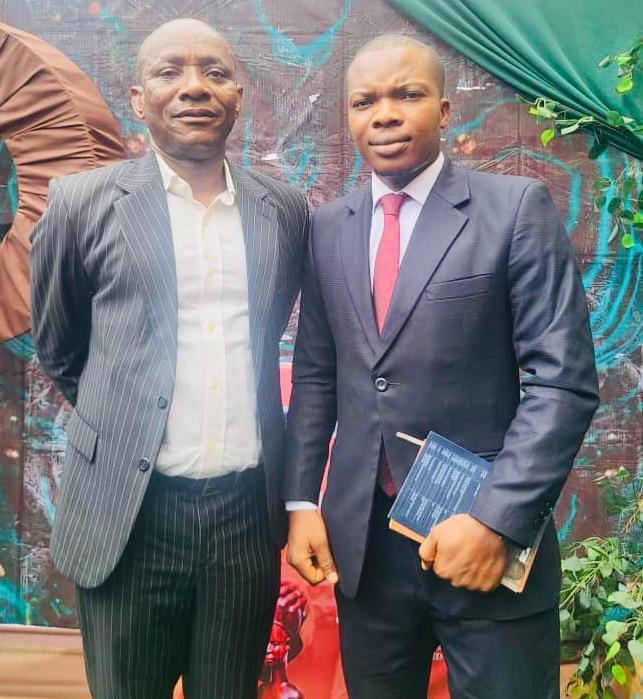
In-House Counsel, Chicason Group of Companies, representing,Founder, NESH Foundation.

The crisis of institution in Nigeria is bad adoption of liberal democratic institutions without the values and informal mechanisms that undergird and lubricate them. This is the problem of formalism. The answer to formalism is to begin first not with adopting rules and institutions that have worked elsewhere. You begin by understanding the problem and how it manifests and propose solutions that are organically linked to the real (not imagined) conditions of your society. If you do this, you will get a whole picture of the behavioral landscape that needs to be reformed to overcome the problem. Let us use the example of rape against women. If we study the problem we will see the many ramifications, some of them cultural, some of them institutional, and others simply failure of enforcement. From this rounded diagnosis, we cannot just amend the criminal code without creating a community that can make effective demand on the institutions with new responsibility to enforce new laws. We cannot just enhance criminal sanctions without taking action about the incentive for justice officials to take up the cases and prosecute them diligently and fairly.
The point then is we must be comprehensive, radical, and smart in the solutions we bring to solve social pathologies. Because these pathologies have been evolutionary, we must have a sense of timing. We should never be discouraged if we do not find immediate answers. We should hold on and continue in the advocacy and implementation with necessary revisions, not abdication, and wait for the ripeness of the new initiatives.
Institutional change is evolutionary because institutional problems evolved. But if we are smart and committed, as Innocent Chukwuemaka Chukwuma was, we will be successful in changing our institutions in due time.
Thank you.